
The Cambi auction house event dedicated to collectible European majolica and porcelain returns on June 12th. This year some important majolica will be beaten, some coming from the workshops of Castelli d'Abruzzo, including a splendid sixteenth-century cup attributed to Orazio Pompei in compendium style and from the seventeenth-century period the very refined plate depicting the allegory of autumn represented as a grape harvester and executed by Francesco Grue around 1650-1660, or those by Gironimo Pompei, Carlo Antonio Grue, Aurelio Grue and others. Rich in dynamism are the bodies of satyrs and bacchantes that animate the scenes of the two plaques decorated in the Grue workshop, perhaps by Carlo Antonio himself, depicting the wedding procession of Bacchus and Ariadne.
The important porcelain table clock from the Real Fabbrica Ferdinandea of ??Naples is perhaps the rarest object presented in this sale. Decorated with phytoform motifs and triumphs of arms that accompany two allegorical figures of Time that reveals the Truth.
Very refined examples of seventeenth-century majolica inspired by Savona are the baccellato basin with an unusual unicorn figure and two exceptional large pharmaceutical containers made in Piedmont by workers of Ligurian origin in the so-called "naturalistic calligraphic" style.
The monumental sculpture of Augustus III, created in the 19th century in a single piece measuring 78 cm high, offers a splendid demonstration of the skill of the Viennese modellers.
The sensuality of the nineteenth-century porcelain odalisque from Kiev is one of the last lots presented in the catalogue; taken from a neoclassical bronze model by Jean Jaques Pradier that the director of the factory purchased in Paris to have reproduced in porcelain.
The Best Awards
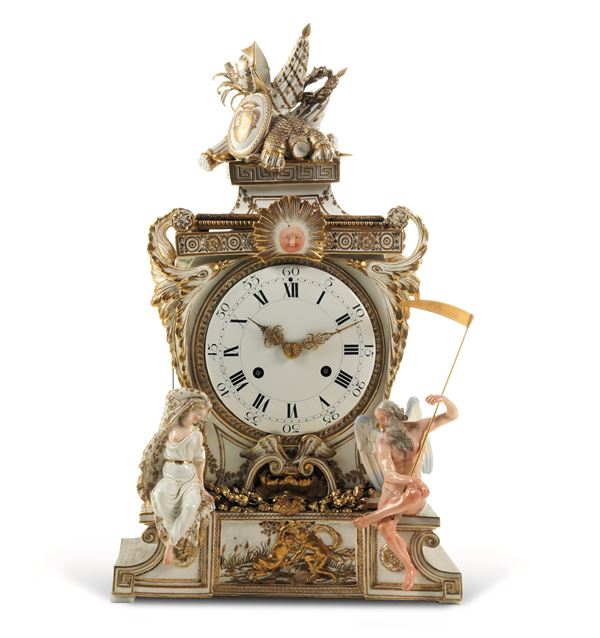
Lot N. 103
Orologio da tavolo Napoli, Real Fabbrica Ferdinandea, 1775 circa
Porcellana, bronzo e metallo dorato. Marca: assente. Dimensioni: altezza cm 49; 29,2x20. Conservazione: buona; restauri alla figura del “Tempo” (braccia, [..]
Estimate
€ 65.000,00 / 85.000,00
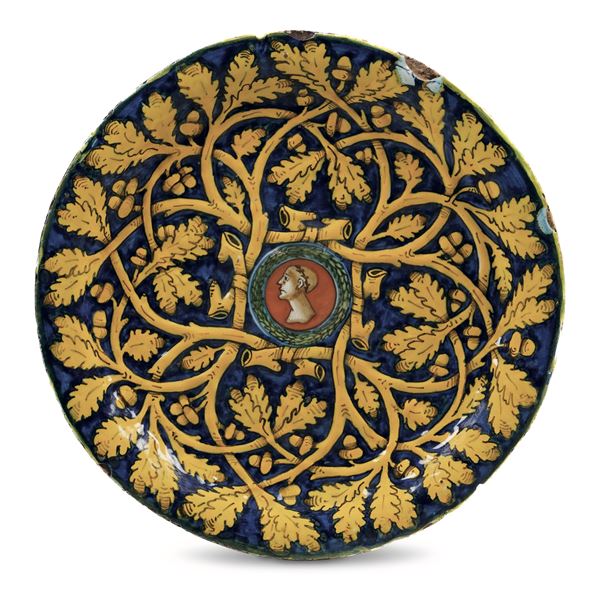
Lot N. 6
Piatto Urbino, 1540-1545 circa
Maiolica. Diametro cm 25. Conservazione: mancanze al piede; piccole sbeccature al bordo Piatto di foggia a basso e ampio cavetto ad orlo estroflesso, poggiante [..]
Estimate
€ 2.500,00 / 4.500,00
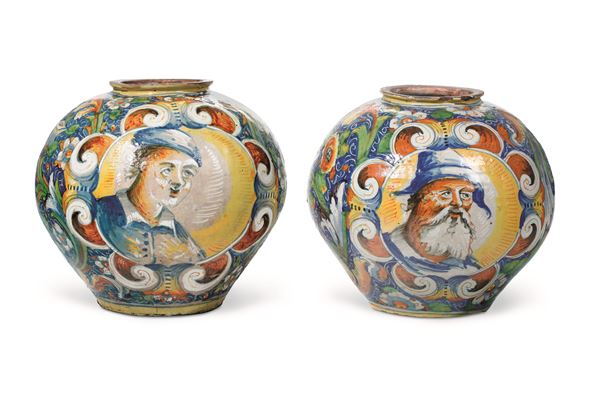
Lot N. 16
Coppia di vasi globulari Venezia, bottega di mastro Domenego, seconda metà del XVI secolo
Maiolica policroma a gran fuoco. Altezza cm 28 circa. Conservazione: ottima; insignificanti felature e qualche sbeccatura ai bordi. Vasi dal corpo sferoidale decorati [..]
Estimate
€ 5.000,00 / 6.000,00
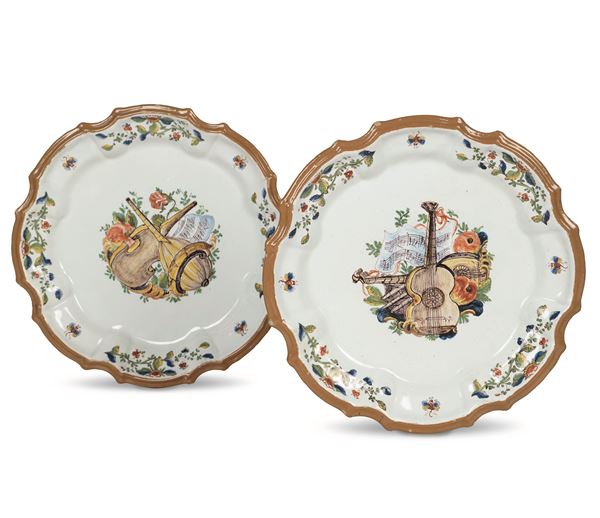
Lot N. 63
Coppia di rari piatti Nove, Manifattura di Pasquale Antonibon, 1750-1775
Maiolica policroma a gran fuoco. Marca: "E.C.C." in rosso. Diametro cm 23,7. Conservazione: ottima; insignificanti sbeccature ai bordi. Piatti dalla tipica forma [..]
Estimate
€ 5.000,00 / 6.000,00
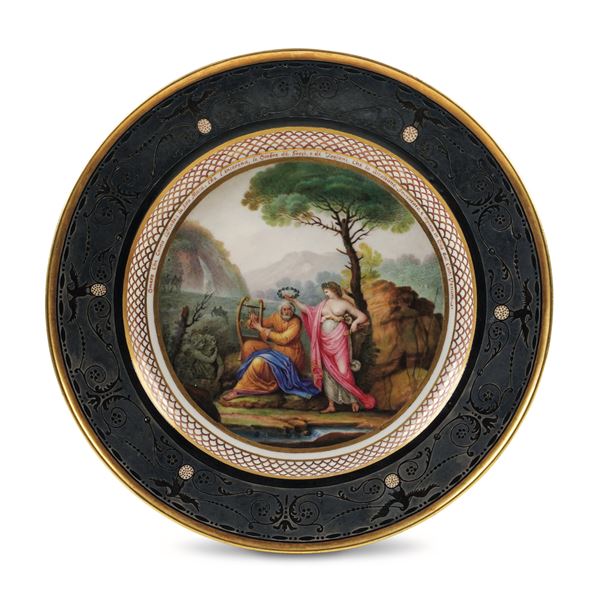
Lot N. 110
Eccezionale piatto Napoli, Real Fabbrica Ferdinandea, 1800 circa Decorazione di Domenico Venuti
Porcellana. Marca: ".n." con corona, in rosso. Diametro cm 23,5. Conservazione: ottima. Il piatto è decorato in policromia, argento e oro da Domenico Venuti, il [..]
Estimate
€ 6.000,00 / 7.000,00
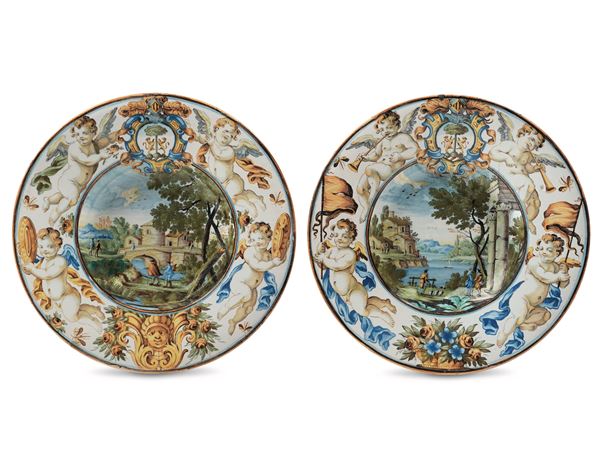
Lot N. 31
Due piatti Castelli, Carmine Gentili, 1700 circa
Maiolica. Diametro cm 23,6. Conservazione: ottima. Due tondini, con larga tesa e cavetto, dal corpo sottile, interamente rivestiti di smalto stannifero, sono decorati [..]
Estimate
€ 6.000,00 / 8.000,00
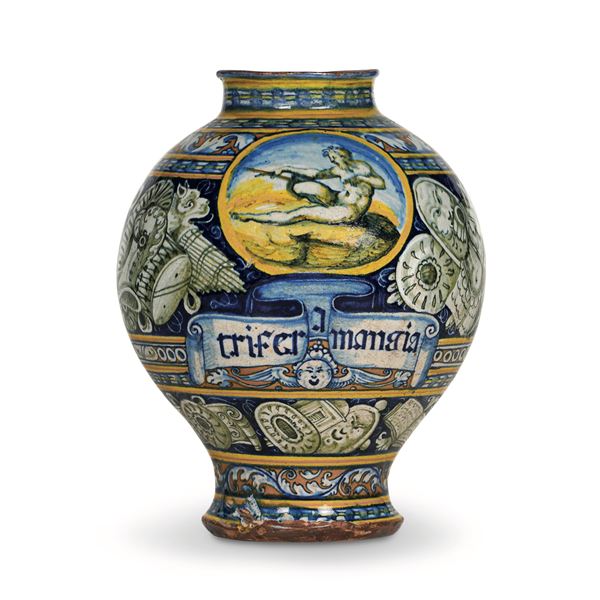
Lot N. 11
Boccia Faenza, 1550-1570 circa
Maiolica. Altezza cm 31. Conservazione: collo ricomposto e base con bordo ripreso in restauro con minime mancanze di smalto Si tratta di una tipica “boccia” da [..]
Estimate
€ 5.500,00 / 7.500,00
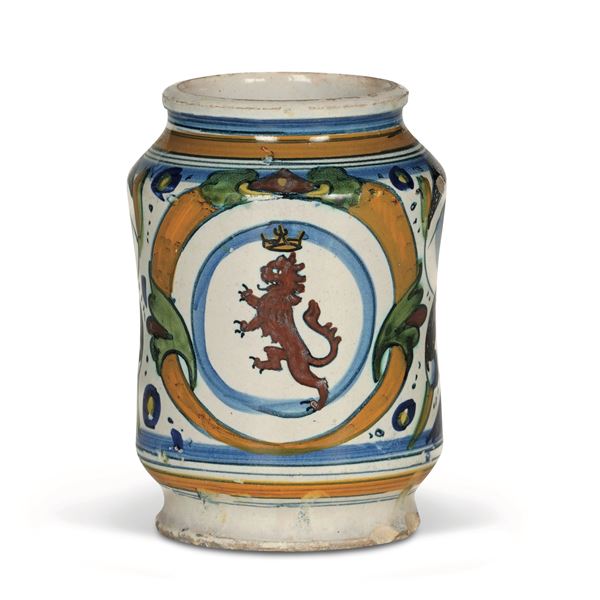
Lot N. 1
Albarello Montelupo, 1520 circa
Maiolica. Altezza cm 13,8. Conservazione: ottima; qualche sbeccatura al bordo della base L’albarello presenta la canonica forma del vaso da farmacia, cioè [..]
Estimate
€ 2.000,00 / 2.500,00
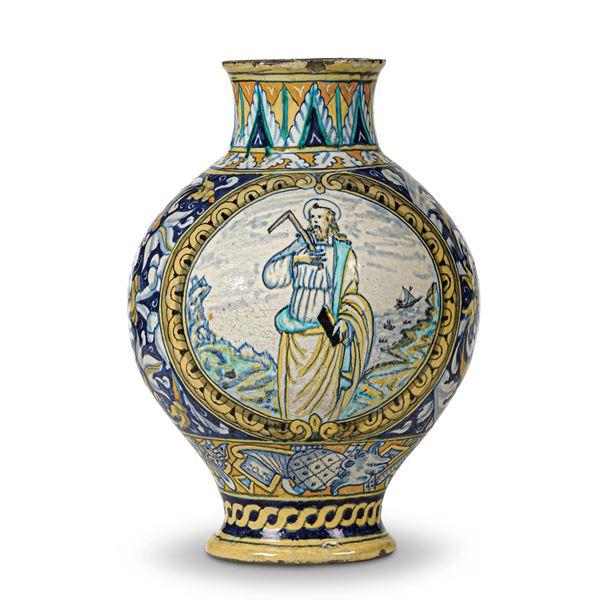
Lot N. 22
Boccia Palermo, datata 1604
Maiolica. Altezza cm 32,2. Conservazione: ottima; piccole sbeccature ai bordi; insignificante felatura al collo. Vaso da farmacia globulare con un grosso medaglione, [..]
Estimate
€ 4.000,00 / 5.000,00
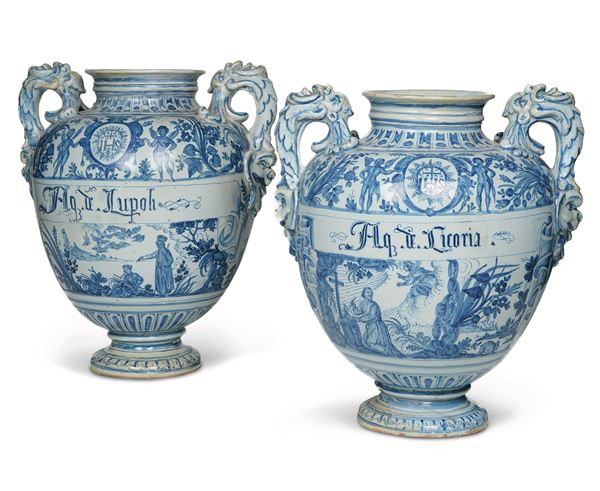
Lot N. 46
Due grandi recipienti farmaceutici Piemonte, metà circa del XVII secolo
Maiolica. Marca: assente. Altezza cm 41 circa. Conservazione: il vaso per acqua di cicoria presenta parte del piede rotto in 4 frammenti e ricomposto; piccoli restauri [..]
Estimate
€ 2.000,00 / 3.400,00
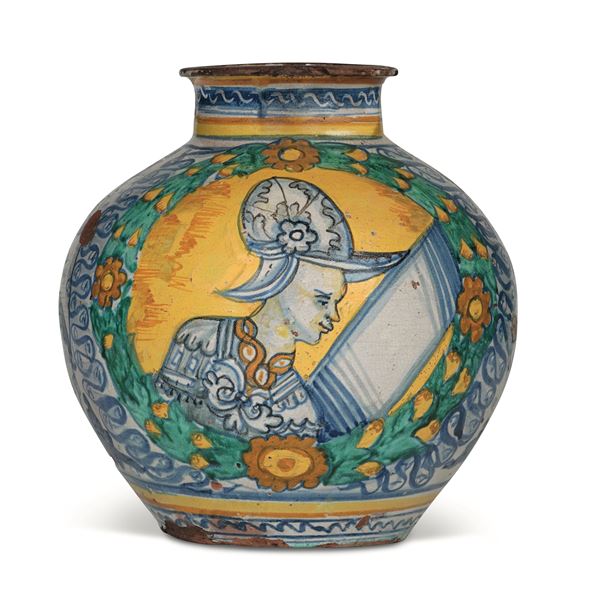
Lot N. 23
Vaso globulare Sciacca, inizio del XVII secolo
Maiolica policroma a gran fuoco. Altezza cm 27. Conservazione: qualche sbeccatura e cadute di smalto ai bordi. Il vaso a boccia è decorato sul fronte da una riserva [..]
Estimate
€ 800,00 / 1.200,00
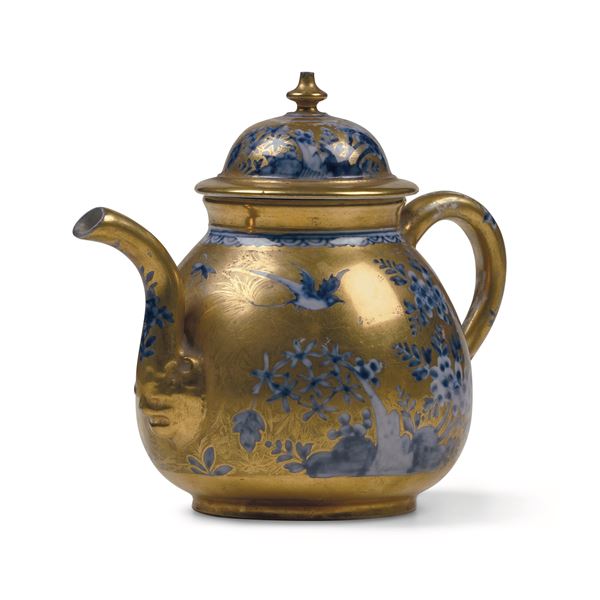
Lot N. 130
Teiera Meissen, verso il 1725 Decorazione in oro, probabilmente Augsburg, 1730 circa
Porcellana. Marca: spade in blu. Altezza cm 14. Conservazione: ottima; insignificanti usure all'oro. La teiera è stata dipinta dapprima in blu presso la manifattura [..]
Estimate
€ 2.000,00 / 2.600,00
Experts for the auction