Cambi Auction House's live auction ‘Sculpture and Art Objects’ will offer a refined selection of antique works, spanning a wide time span, from Gothic art to the Renaissance, up to evocative Baroque and late Renaissance expressions. The variety of lots for sale - sculptures and objets d'art in terracotta, marble and bronze - testifies to the richness and plurality of Italian and European artistic traditions, with works that recount centuries of aesthetic and cultural evolution.
Among the most significant lots in the auction are some objects from the Collection of Panayotis Tsolakos, known as Panos, one of the leading figures in Italian ceramics and contemporary sculpture. Born in Greece in 1934 and moved to Faenza in the 1960s, Panos combined his passion for ceramics with a strong interest in ancient art, particularly Gothic and Renaissance sculptures. His creative approach emphasised the idea of unfinished works, seeking in ancient sculptures the sign of an intense reflective and philosophical process. The main lot in the collection is a Madonna and Child Enthroned, in polychrome wood, dated to the early 14th century, an emblematic example of Umbrian-Abruzzese Gothic art that testifies to Panos' love for tradition and his artistic sensitivity.
The auction on 10 December will also present a series of exceptional works from other private and institutional collections. These include a selection of Italian terracottas ranging from the 15th to the 19th century, exemplifying the mastery of the workshops and artists who contributed to the Italian artistic landscape. A Madonna and Child with Angels stands out, attributed to the workshop of Benedetto da Maiano, a polychrome terracotta from the second half of the 15th century. This piece reflects the delicacy and balance typical of the Florentine Renaissance style.
Also from the same tradition, another significant lot is a bust of a child by Sandro di Lorenzo, known as the ‘Master of the Turbulent Children’. This portrait, dated to the first half of the 16th century, is made of modelled terracotta and captures the vivacity and expression of an infant.
Another important terracotta on auction is a Madonna and Child, attributed to Giuseppe Maria Mazza, dating from the 17th-18th century and from the Emilian tradition. The figure of the Madonna, finely crafted in modelled terracotta, embodies the serenity typical of religious images of that period.
The auction includes a popular scene with pipers signed and dated 1833 by Bartolomeo Pinelli, one of the most important artists of the Roman period. In modelled terracotta, the work depicts a lively scene from the Italian Christmas tradition, in which bagpipe players are captured in a moment of animated festivity.
Among the marble sculptures, the auction features an oval relief with the portrait of a cardinal, a 17th century Roman Baroque work from Stefano Bardini's historical collection, which he attributed to Alessandro Algardi. This high quality marble relief captures with great elegance and delicacy the face of a cardinal, typical of the Baroque sensibility.
Another marble lot that attracts attention is the Veiled Madonna by Luigi Bienaimé, signed and dated 1864. The work depicts a Madonna wrapped in a veil, a theme that recalls the sculptural tradition of 19th century Rome. Made of marble, this sculpture displays the refinement of Bienaimé's technique and his sense of plasticity, accentuating the effect of light and shadow on the face and drapery, which gives the work a feeling of serenity and mystery.
The auction also features a number of art objects of great historical and artistic value, including a pair of reliefs depicting the four Evangelists, attributed to Cosimo Fancelli, made in Rome in the mid-17th century. These reliefs, in cast, gilded and chased bronze, are fine examples of Baroque mastery in the art of metalwork.
Another lot of great interest is a late Italian Renaissance Corpus Christi, signed and dated 1599 by Giovanni Antonio Gualterio. The carved ivory, of great refinement, depicts the crucified Christ with extraordinary attention to anatomical details and the dramatic nature of the scene.
Finally, on auction we find a Trapani Madonna, made by Trapani craftsmen (probably Tipa's workshop) in the 17th-18th century. This sculpture, carved in ivory, depicts the Madonna with an expression of great sweetness and composure.
Among the most significant lots in the auction are some objects from the Collection of Panayotis Tsolakos, known as Panos, one of the leading figures in Italian ceramics and contemporary sculpture. Born in Greece in 1934 and moved to Faenza in the 1960s, Panos combined his passion for ceramics with a strong interest in ancient art, particularly Gothic and Renaissance sculptures. His creative approach emphasised the idea of unfinished works, seeking in ancient sculptures the sign of an intense reflective and philosophical process. The main lot in the collection is a Madonna and Child Enthroned, in polychrome wood, dated to the early 14th century, an emblematic example of Umbrian-Abruzzese Gothic art that testifies to Panos' love for tradition and his artistic sensitivity.
The auction on 10 December will also present a series of exceptional works from other private and institutional collections. These include a selection of Italian terracottas ranging from the 15th to the 19th century, exemplifying the mastery of the workshops and artists who contributed to the Italian artistic landscape. A Madonna and Child with Angels stands out, attributed to the workshop of Benedetto da Maiano, a polychrome terracotta from the second half of the 15th century. This piece reflects the delicacy and balance typical of the Florentine Renaissance style.
Also from the same tradition, another significant lot is a bust of a child by Sandro di Lorenzo, known as the ‘Master of the Turbulent Children’. This portrait, dated to the first half of the 16th century, is made of modelled terracotta and captures the vivacity and expression of an infant.
Another important terracotta on auction is a Madonna and Child, attributed to Giuseppe Maria Mazza, dating from the 17th-18th century and from the Emilian tradition. The figure of the Madonna, finely crafted in modelled terracotta, embodies the serenity typical of religious images of that period.
The auction includes a popular scene with pipers signed and dated 1833 by Bartolomeo Pinelli, one of the most important artists of the Roman period. In modelled terracotta, the work depicts a lively scene from the Italian Christmas tradition, in which bagpipe players are captured in a moment of animated festivity.
Among the marble sculptures, the auction features an oval relief with the portrait of a cardinal, a 17th century Roman Baroque work from Stefano Bardini's historical collection, which he attributed to Alessandro Algardi. This high quality marble relief captures with great elegance and delicacy the face of a cardinal, typical of the Baroque sensibility.
Another marble lot that attracts attention is the Veiled Madonna by Luigi Bienaimé, signed and dated 1864. The work depicts a Madonna wrapped in a veil, a theme that recalls the sculptural tradition of 19th century Rome. Made of marble, this sculpture displays the refinement of Bienaimé's technique and his sense of plasticity, accentuating the effect of light and shadow on the face and drapery, which gives the work a feeling of serenity and mystery.
The auction also features a number of art objects of great historical and artistic value, including a pair of reliefs depicting the four Evangelists, attributed to Cosimo Fancelli, made in Rome in the mid-17th century. These reliefs, in cast, gilded and chased bronze, are fine examples of Baroque mastery in the art of metalwork.
Another lot of great interest is a late Italian Renaissance Corpus Christi, signed and dated 1599 by Giovanni Antonio Gualterio. The carved ivory, of great refinement, depicts the crucified Christ with extraordinary attention to anatomical details and the dramatic nature of the scene.
Finally, on auction we find a Trapani Madonna, made by Trapani craftsmen (probably Tipa's workshop) in the 17th-18th century. This sculpture, carved in ivory, depicts the Madonna with an expression of great sweetness and composure.
The Best Awards
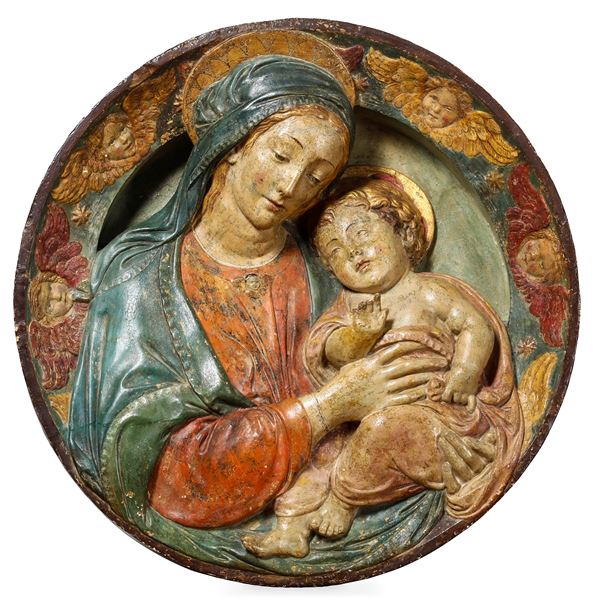
Lot N. 15
Benedetto da Maiano
(1442 - 1497)
Workshop of
Firenze, seconda metà del XV secolo Importante rilievo raffigurante Madonna con Bambino e cherubini
Estimate
€ 25.000,00 / 30.000,00
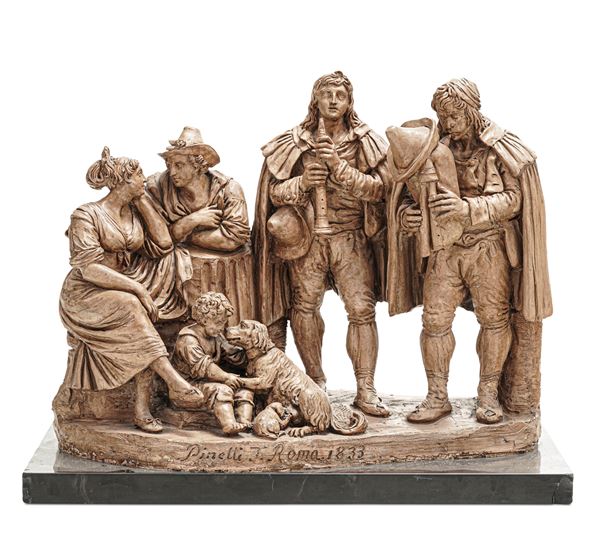
Lot N. 120
Bartolomeo Pinelli
(Roma, 1751 - Roma, 1835)
Scena popolare con zampognari
gruppo in terracotta, cm 38x48 Firmato sulla base 'Pinelli. F. Roma. 1833'
Estimate
€ 10.000,00 / 15.000,00

Lot N. 109
Giuseppe Maria Mazza
(1653 - 1741)
Attributed to
Bologna, prima metà del XVIII secolo. Madonna con Bambino
Già collezione Commendatore Silvio Ferrara, Roma. Etichetta cartacea sul retro Rilievo in terracotta entro cornice in legno intagliato con motivi floreali. Largh. [..]
Estimate
€ 8.000,00 / 10.000,00
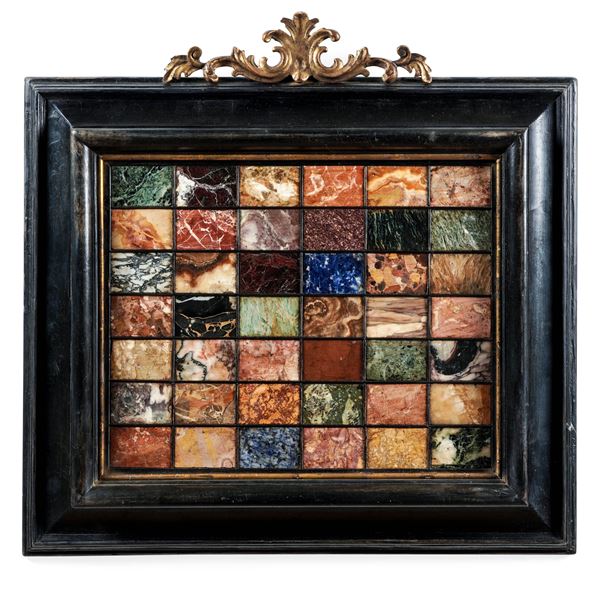
Lot N. 132
Campionario di marmi e pietre dure colorate. Probabilmente Roma, XVIII secolo
Cornice in legno modanato ed ebanizzato con cimasa in legno intagliato e dorato. cm 54x40, con cornice cm 75x72
Estimate
€ 1.800,00 / 2.500,00
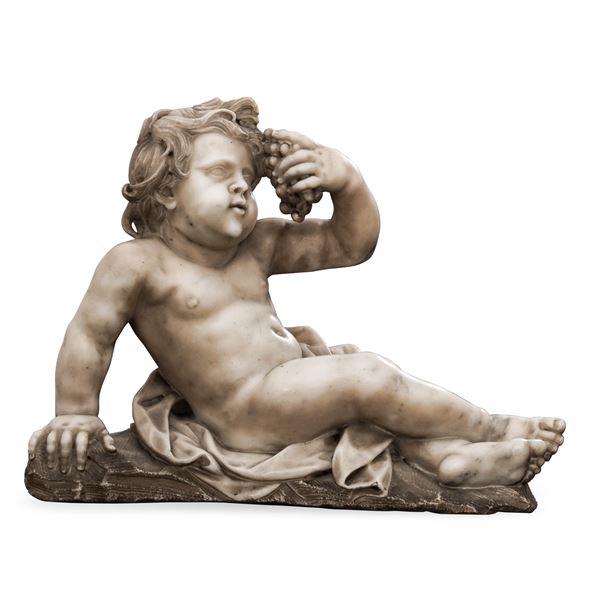
Lot N. 80
Bacco giovinetto. Arte barocca bolognese del XVII secolo
Estimate
€ 5.000,00 / 6.000,00
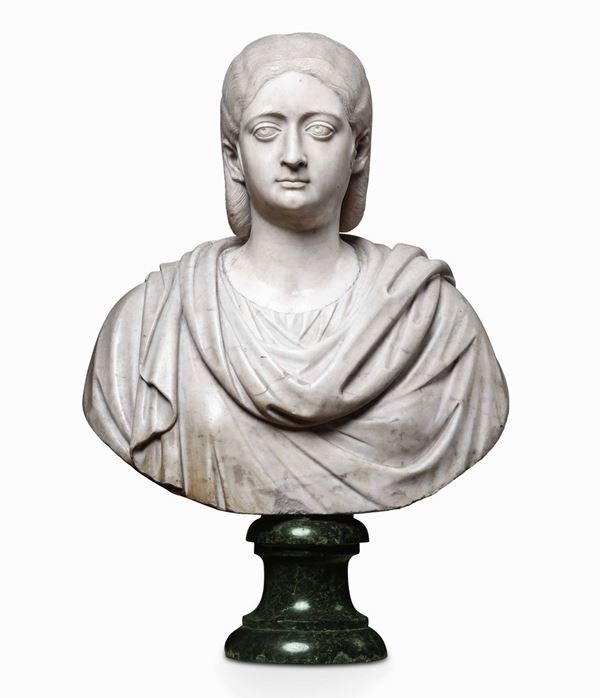
Lot N. 81
A marble bust, Rome, 16/1700s Sallustia Orbiana
Estimate
€ 6.000,00 / 8.000,00
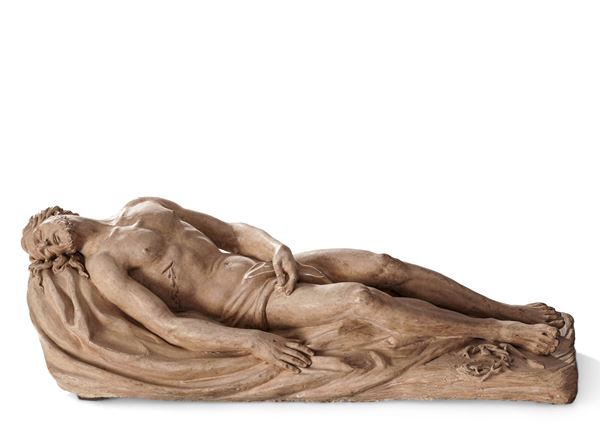
Lot N. 113
Arte barocca italiana, XVII-XVIII secolo Cristo deposto
Estimate
€ 5.000,00 / 6.000,00
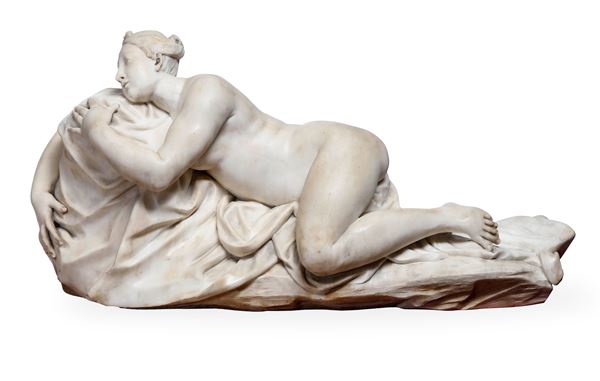
Lot N. 82
Arte barocca italiana del XVII secolo Figura mitologica femminile dormiente, Eos (?)
Estimate
€ 3.000,00 / 4.000,00
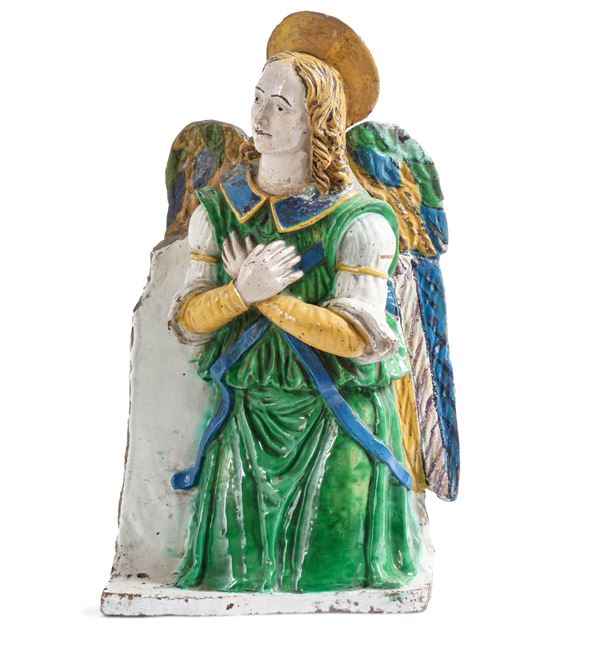
Lot N. 17
Benedetto Buglioni
(1459 - 1521)
Workshop of
Arte rinascimentale del XV-XVI secolo Angelo orante
Estimate
€ 2.000,00 / 3.000,00
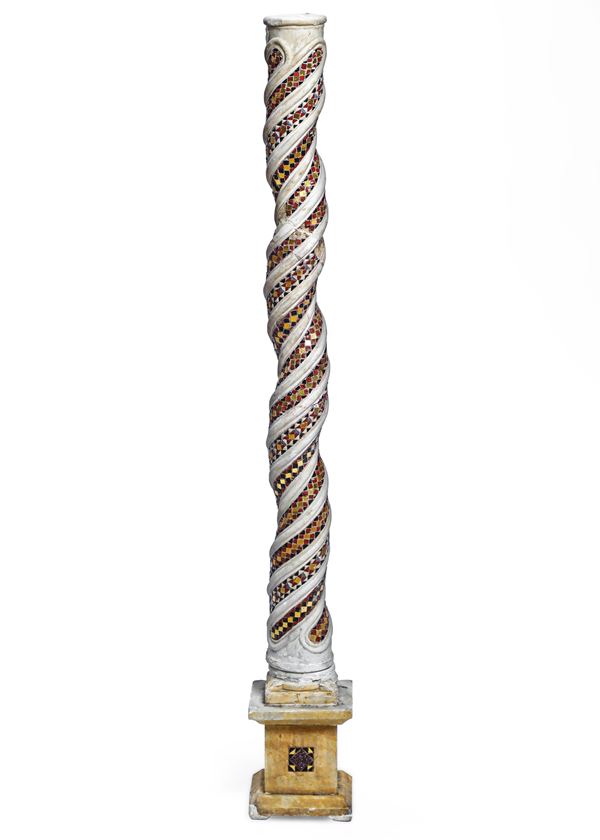
Lot N. 2
Arte cosmatesca, possibile XIII secolo Colonna tortile in pasta vitrea policroma e dorata
Base a plinto antica ma non coeva
Estimate
€ 4.000,00 / 5.000,00

Lot N. 72
Fonditore italiano del XVI-XVII secolo Quattro candelieri a balaustro
Estimate
€ 3.000,00 / 5.000,00
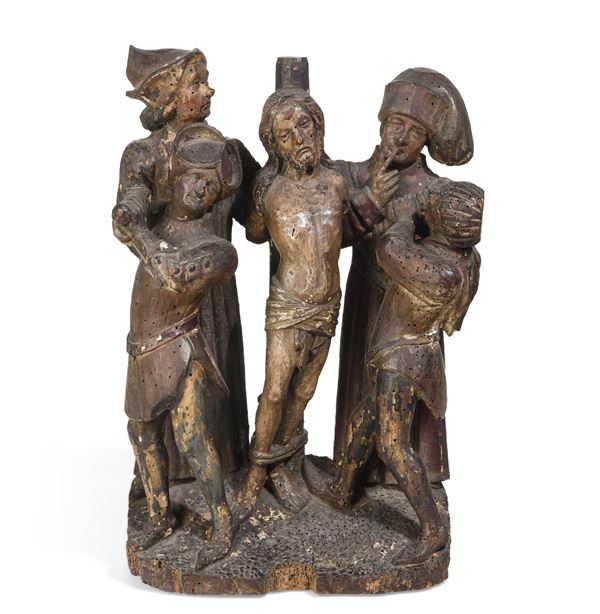
Lot N. 33
Flagellazione di Cristo. Germania, XVI secolo
Gruppo scultoreo in legno policromo
Estimate
€ 2.000,00 / 3.000,00
Experts for the auction
Lorenzo Bianchini Massoni
Sculpture