Cambi Auction House presents a new sale dedicated to European Decorative Arts and 20th-Century Italian Ceramics, featuring over 250 lots from various private collections.
The catalogue offers an extensive journey through 20th-century Europe, creating a dialogue between materials, techniques, and styles. From France to Austria and Italy, the selection brings together significant works by artists and manufacturers who shaped the taste and aesthetic evolution of the last century.
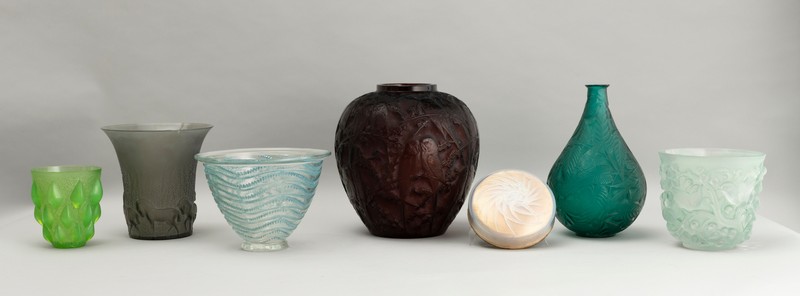
In the French section, a remarkable group of glassworks reflects the excellence of the manufactories of Émile Gallé, Daum, Schneider, René Lalique, and Le Verre Français. Particularly noteworthy are two works signed Daum, Nancy: the rare polychrome pâte-de-verre vase on a circular foot, embellished with large applied drops and a delicate decoration of wheel-engraved floral bouquets, dating to around 1920 (lot 64 – €1,500–2,000); and the rare sculptural vase in the form of a pumpkin, in blown polychrome pâte de verre with a long applied stem and asymmetrical mouth, circa 1900 (lot 75 – €5,000–6,000).
Also of great interest is the large and rare rectangular tray in wood with brass fillets, featuring a central decoration of a rooster among branches in marquetry of various woods and ivory, created by Rosalie Duvinage (widow of Ferdinand Duvinage), France, circa 1880, signed “FD Bté” at lower right (Ferdinand Duvinage Breveté) (lot 104 – €5,000–6,000).
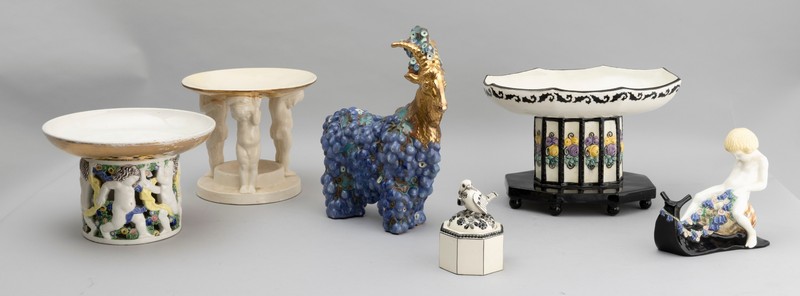
Representing Austria are several rare works by Michael Powolny, a pioneer of Viennese ceramics, including a sculpture depicting a goat covered in grape clusters (lot 32 – €5,000–6,000) and a centerpiece with dancing putti, both in earthenware and made in Vienna around 1910 (lot 30 – €3,000–4,000). The auction also includes works by Karl Hagenauer, such as the profile of an African woman carved in wood (lot 21 – €1,200–1,500), as well as rare examples of Zsolnay production, testament to the quality of Central European decorative arts.
The second section of the sale is dedicated to 20th-Century Italian Ceramics, outlining a century of creativity, from early modernist experiments to the most visionary outcomes of the post-war period.
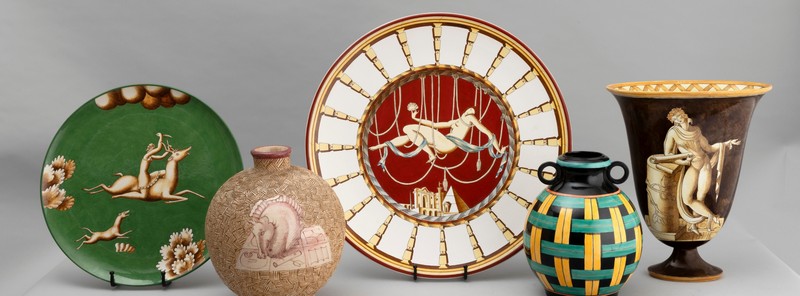
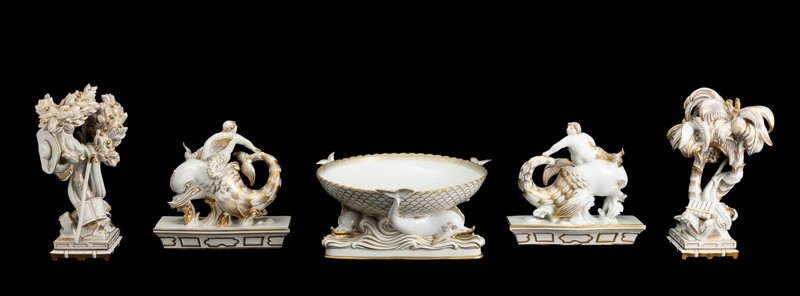
Among the key figures is Gio Ponti, represented by a diverse group of works, including refined porcelain pieces with gilt third-fire decoration for Richard Ginori, Pittoria di Doccia, Sesto Fiorentino. Particularly noteworthy are The Music table triumph element (lot 131 – €4,000–5,000) and The Poetry triumph element (lot 132 – €4,000–5,000), both dating to around 1927.
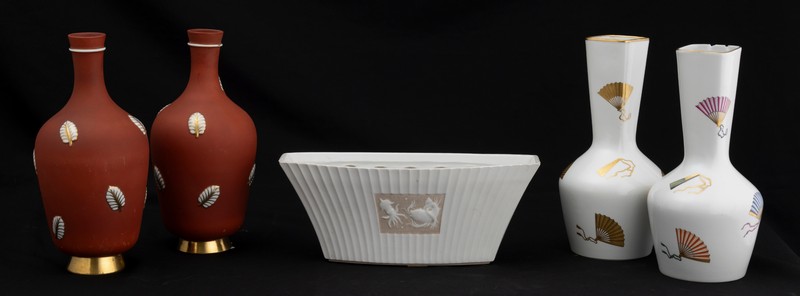
Also by Gio Ponti are the majolicas for Richard Ginori, including a bell-shaped terracotta vase with sepia decoration of a classical figure, produced at the Pittoria di Doccia, Sesto Fiorentino, around 1925 and known as The Architect (lot 160 – €8,000–10,000). Of rare elegance is the spherical vase with faux-straw finish and monochrome decoration of a horse’s head and putto with dove, executed at the same manufactory around 1930 (lot 161 – €4,000–5,000). Completing the group is a large ornamental turquoise stoneware vase with a relief figure of a winged mermaid, for Richard Ginori, San Cristoforo, Milan, around 1930 (lot 162 – €2,500–3,000).
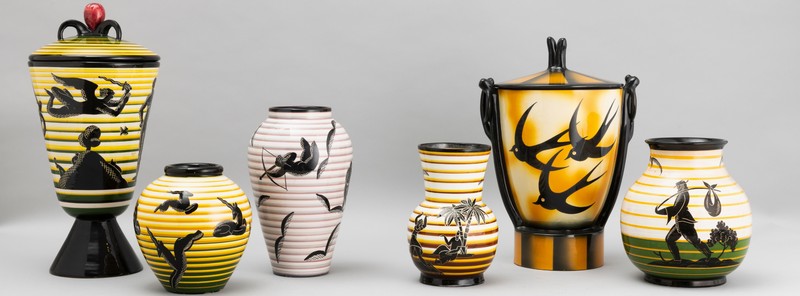
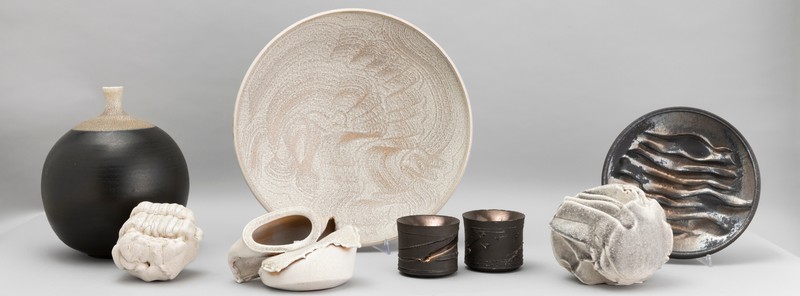
The catalogue also includes vases by Giovanni Gariboldi and Guido Andloviz, ceramics by Guido and Bruno Gambone, works by Pietro Melandri and Carlo Zauli, as well as two rare sculptures by Arturo Martini, Judith and Holofernes (lot 116 – €4,000–5,000) and The Golden Cage (lot 117 – €3,000–4,000), both dated 1927. Among the most evocative works are the sculpture of a cat by Agenore Fabbri (lot 228 – €1,200–1,500) and the pair of seated peasant figures by Giovanni Grande for Manifattura Lenci, Turin, 1930 (lot 212 – €2,000–3,000). The journey concludes with an elegant wheel-turned ceramic vase with polychrome horizontal bands by Ettore Sottsass for Bitossi, Montelupo, circa 1960 (lot 250 – €3,000–4,000).
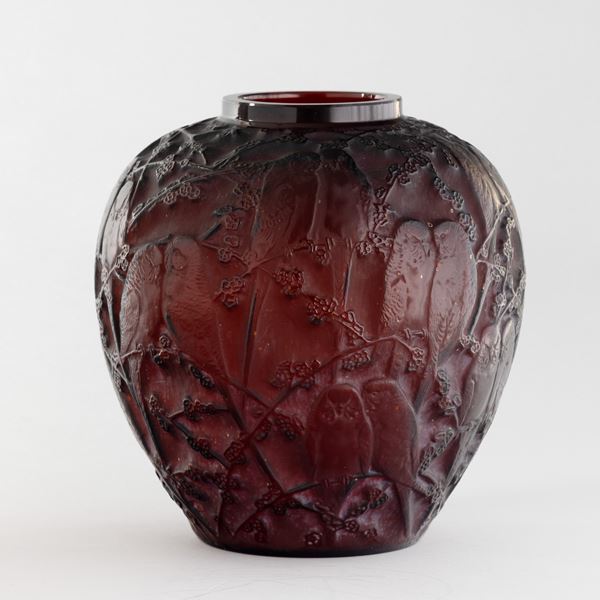
René Lalique
R. Lalique, France 1920 ca
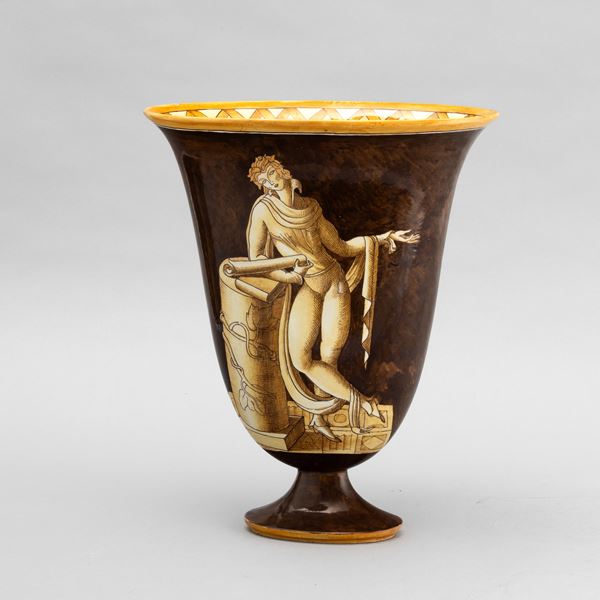
Gio Ponti
Richard Ginori, Sesto Fiorentino 1925 ca L'Architetto
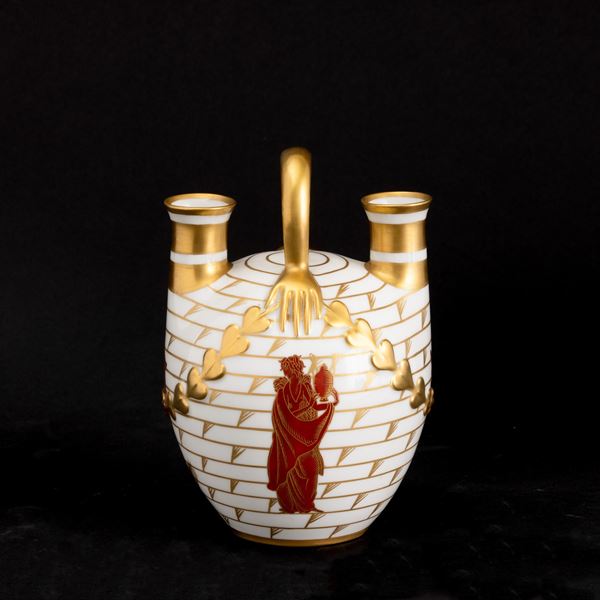
Gio Ponti
Richard Ginori, Sesto Fiorentino 1927 ca
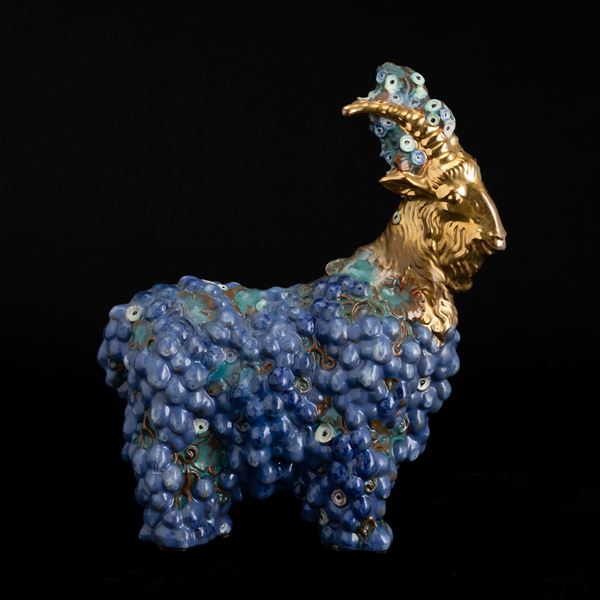
Michael Powolny
M. Powolny, Vienna 1910 ca
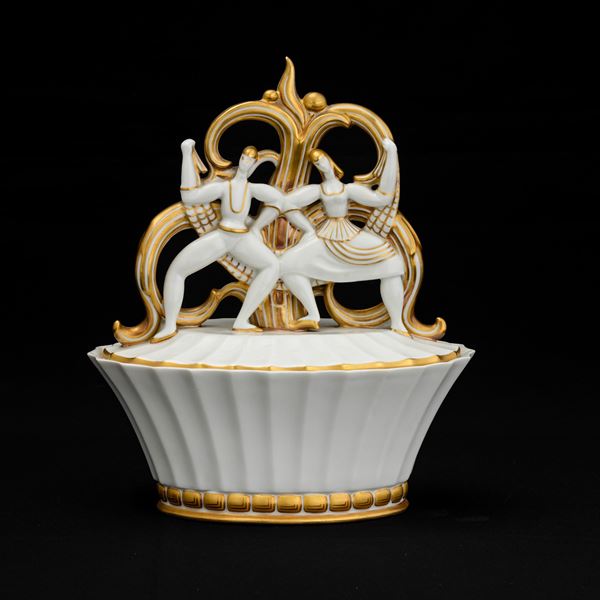
Gio Ponti
Richard Ginori, Sesto Fiorentino 1927 ca Omaggio agli Snob o Balletto
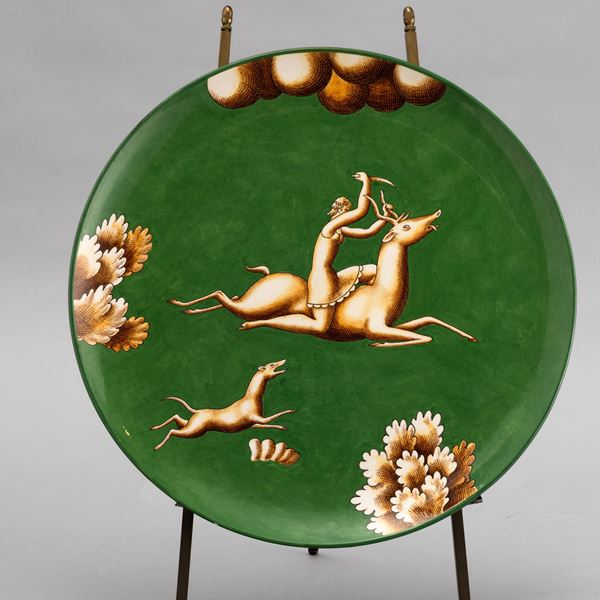
Gio Ponti
Richard Ginori, Sesto Fiorentino 1928 ca L'Amazzone col pugnale
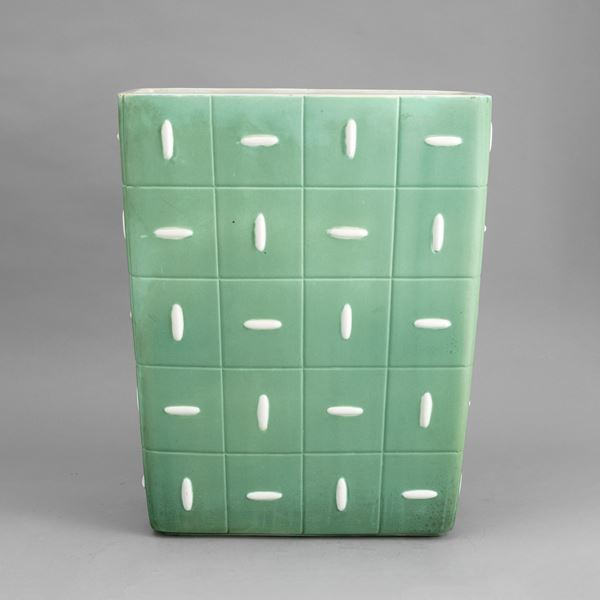
Giovanni Gariboldi
G. Gariboldi, Richard Ginori, San Cristoforo, Milan 1950 ca
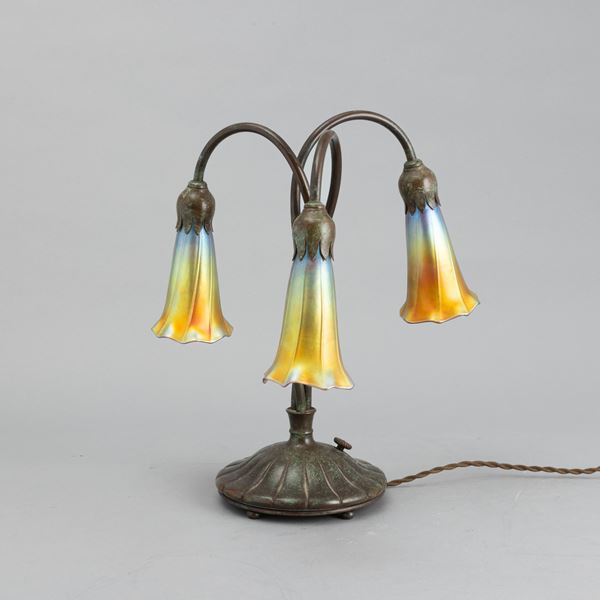
Louis Comfort Tiffany, New York 1900 ca
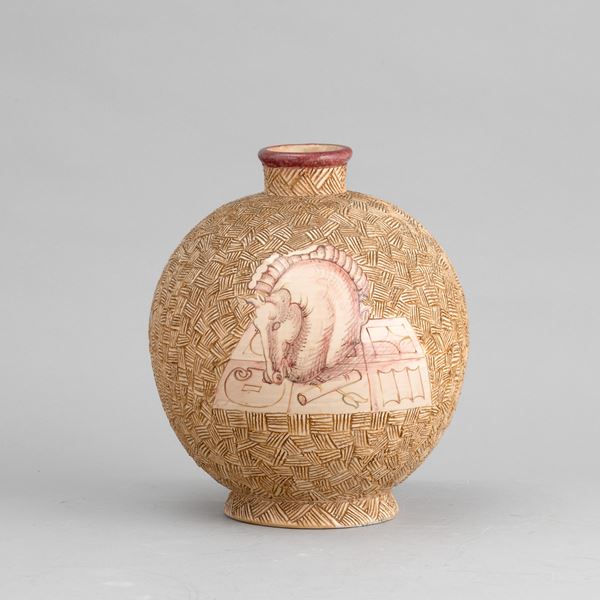
Gio Ponti
Richard Ginori, Sesto Fiorentino 1930 ca
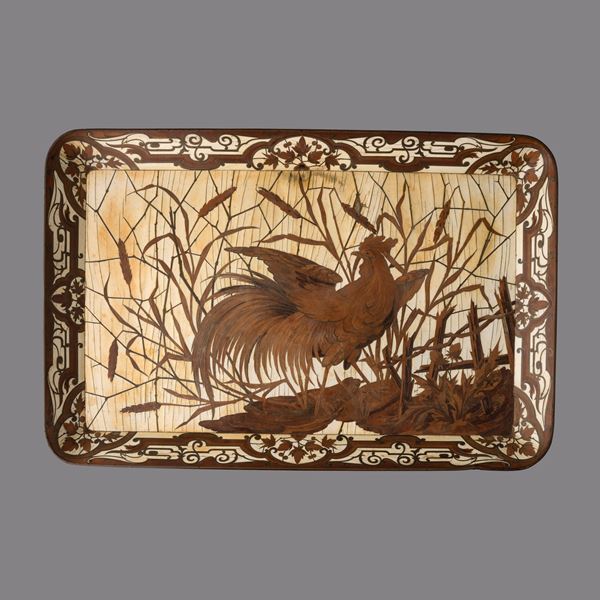
Rosalie Duvinage (vedova Ferdinand Duvinage)
R. Duvinage, France 1880 ca
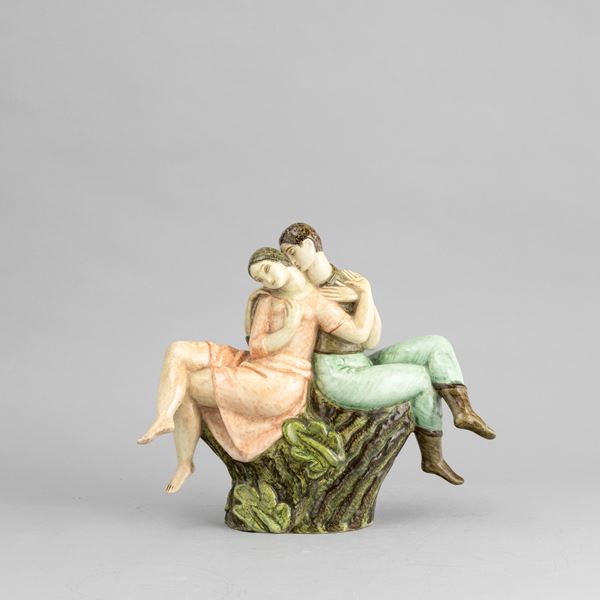
Giovanni Grande
G. Grande, Lenci, Turin 1930 Amanti sul tronco
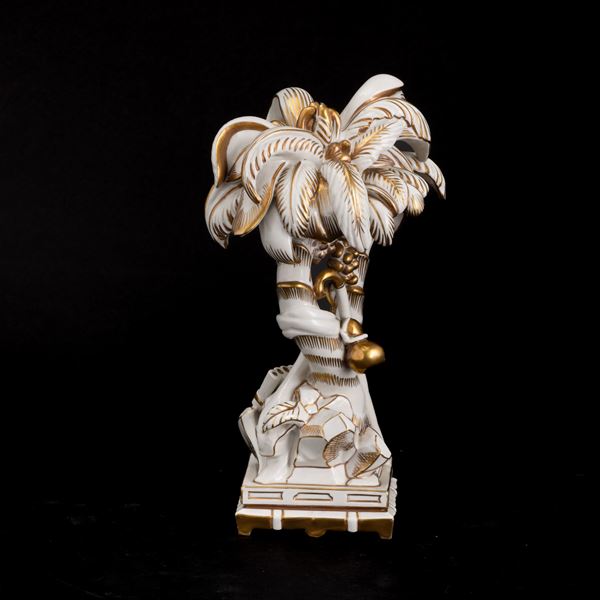
Gio Ponti
Richard Ginori, Sesto Fiorentino 1927 ca La Musica