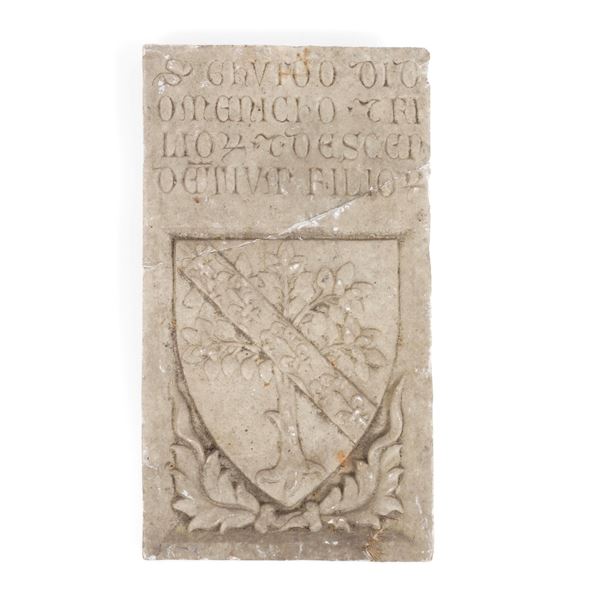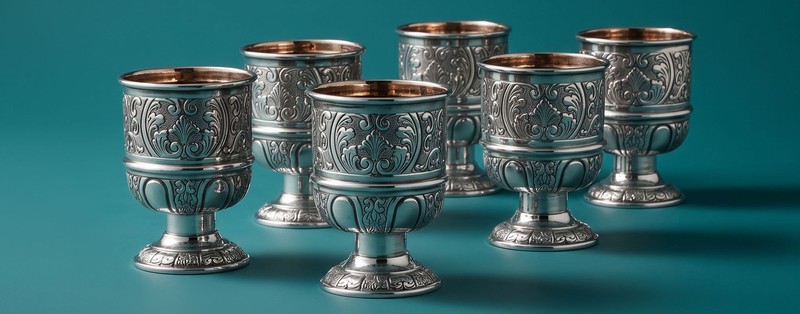
Small sculptures and artefacts, bronzes and ceramics, busts and architectural models, natural history objects and souvenirs, paintings, books and magazines: a heterogeneous universe, built up over time through encounters, journeys, discoveries and curiosity. This is the Wunderkammer of Ettore Mocchetti, founder and longtime editor-in-chief of AD Italia, which in September 2026 Cambi Casa d’Aste will present in a sale devoted to the objects he collected in his private world.
Not a collection assembled according to any systematic criterion, but rather a constellation of presences capable of conveying something of the gaze, eclectic spirit, erudition and curiosity of the man who chose them. Objects differing widely in period, provenance, type and value coexist side by side, following the thread of a free-ranging curiosity drawn as much to art and architecture as to the applied arts, antiquity, nature and distant cultures.
The sale will unfold across three separate events, conceived to reflect the different facets of Ettore Mocchetti’s Wunderkammer: a live auction, scheduled for Tuesday, 22 September in Genoa, featuring a cross-section of works and objects of various kinds, and two timed auctions devoted respectively to books and works of art, both concluding on Wednesday, 23 September.
As in the Wunderkammern of old, it is the juxtaposition itself that creates the narrative. A Capitoline Wolf may stand alongside a pietra paesina, an animalier sculpture beside an architectural model, an archaeological fragment next to an object discovered on a journey. Not necessarily rare pieces or masterpieces, then, but things capable of arresting the gaze, provoking an emotion, sparking an interest or suggesting an unconventional association.
The sale thus offers an unusual way into Ettore Mocchetti’s personal universe, while retracing the story of a figure who left a fundamental mark on Italian culture in the fields of architecture, design and the art of living.
An architect and journalist, Mocchetti founded AD Italia in 1981, the first international edition of Architectural Digest, and became its editor-in-chief. With his open-minded and anti-dogmatic personality, he helped shape the identity of the magazine and its distinctive way of portraying interiors. Architecture, design, art, antiques, decorative arts and lifestyles entered the pages of the magazine as parts of a single visual and cultural landscape.
The same freedom to move across and combine different periods, disciplines and languages without prejudice that characterised AD is reflected in the objects in his collections. Sculptures and small bronzes, marbles, ceramics and glass, decorative elements, fragments and reproductions of antiquity, animalier creations, devotional objects, objets trouvés and curiosities from different cultures make up a surprising repertoire in which the boundaries between art, decoration, memory and simple personal fascination deliberately become fluid. And this collection did not come together by chance, nor from a mere desire to accumulate; rather, it followed a compelling inner logic: the inexhaustible pursuit of Beauty.
Among the most significant sections of the sale is part of Mocchetti’s library, comprising books and magazines devoted to architecture, design, art, museums, great collections and antiques. From Palladio to Le Corbusier, from Frank Lloyd Wright to Mario Botta, from the collections of the Medici and Gonzaga families to the Hermitage and the Fondation Cartier, these publications reveal part of the wealth of images and knowledge that nourished and accompanied his editorial work. They are joined by numerous issues of AD, a tangible record of a long and passionate publishing success.
This inventory of a life also includes works and objects capable of standing out individually: paintings by Salvatore Fiume and Ercole Pignatelli, a work by Augusto Murer, as well as screenprints and works on paper; and even two tempera paintings signed by Ettore Mocchetti himself.
Yet it is above all by looking at the collection as a whole that the true meaning of the sale emerges. The value of this Wunderkammer does not lie in the pursuit of a homogenising uniformity—something that never belonged to Mocchetti—but in the possibility of reconstructing, through objects, a personal geography of the gaze and spirit of a man of many talents and infinite interests. Objects observed, chosen and preserved. Traces of passions, journeys, encounters and fascinations which, brought together for the last time before dispersing into new homes, form an indirect yet eloquent portrait of a man who made curiosity both a working tool and a way of engaging with the world and the multiplicity of its legacies.
After all, one of his favourite mottos was: “to be curious”. Referring to his beloved magazine, but a concept that can perfectly be applied to the meaning of this enchantment, Mocchetti wrote, not long before his death: “Every aesthetic and existential journey does not follow the deterministic unfolding of a predefined evolutionary route, but rather, like life itself, presents itself as a magmatic, intensely vital and at times contradictory layering of inspirations and choices, of innovations, revivals and rediscoveries, sometimes marked by exclusion, sometimes by interaction, from Neo-Modernism to the ethnic, from the Classical to Postmodernism, from Minimalism to a Classical style revisited with a touch of irreverence in a modernist vein, a little Art Deco, a little Thirties, to maximalist Neo-Baroque, to the fusion-confusion of styles, to contamination (…)”.
And again: “The sentiment that drives my personal collecting stems from a curious, eclectic and cosmopolitan fascination, and is firmly anchored in three founding values that are more relevant today than ever: emotion, which is the primary psychological engine behind every choice; a passion for Beauty, as a compass with which to navigate the Babel of languages; and the desire to remind ourselves, but above all others, of the major and minor, public and intimate aspects of our stories, which, after all, make History.”
It is in these thoughts, in these words, that the deeper meaning of the Mocchetti artefacts we are offering at auction truly resides.
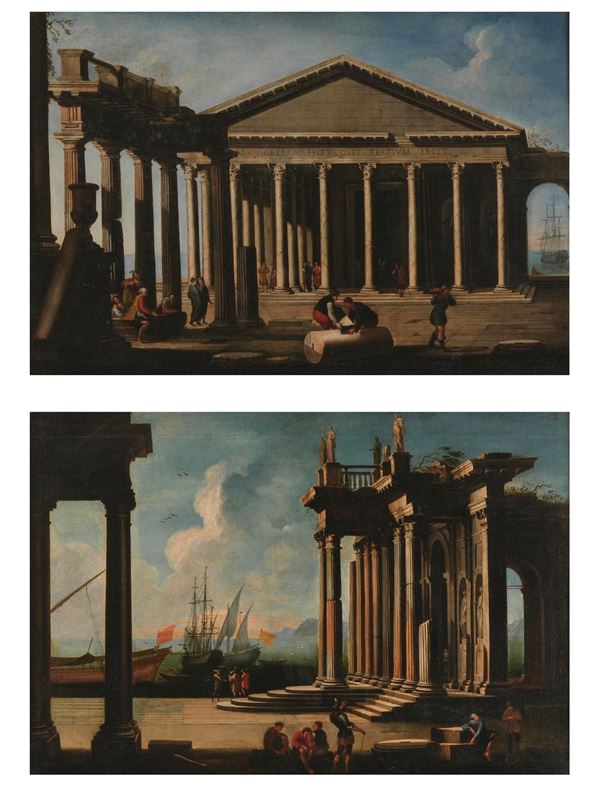
Scuola italiana del XVIII secolo Veduta ideale col Pantheon e Veduta ideale di porto
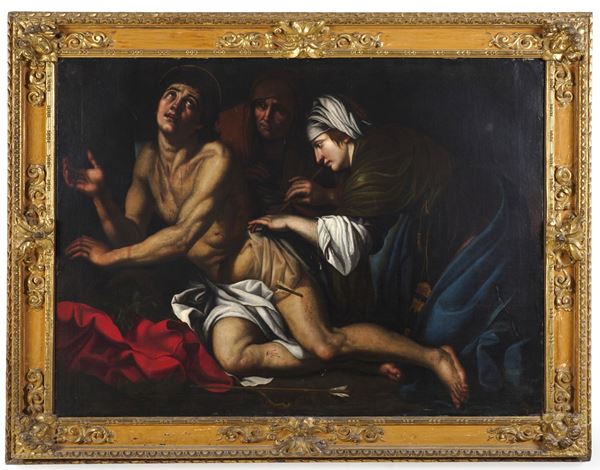
Francesco Rustici
San Sebastiano curato dalle pie donne
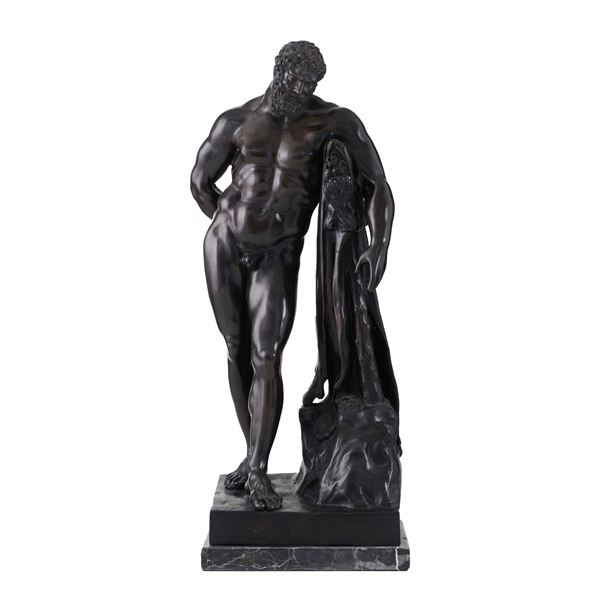
Ercole Farnese, copia dall'antico, XIX-XX secolo
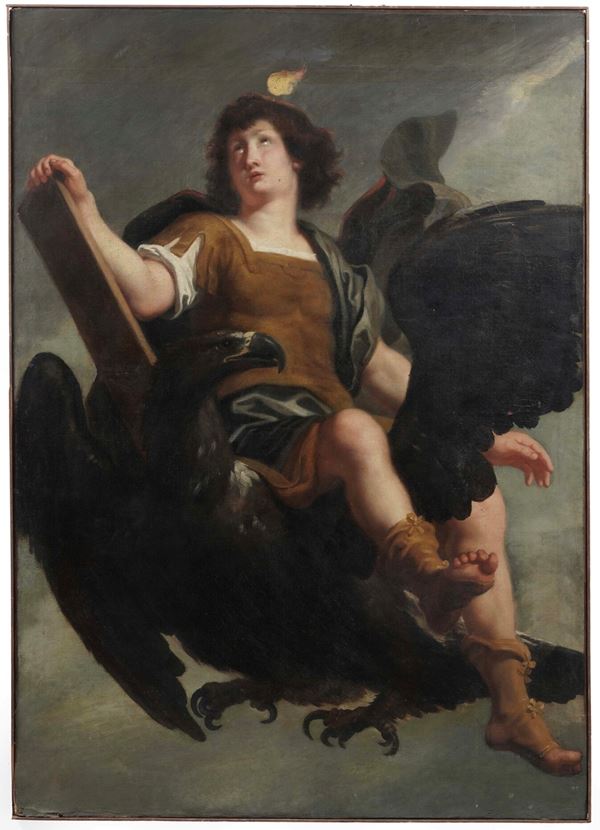
Scuola del XVII secolo Ganimede
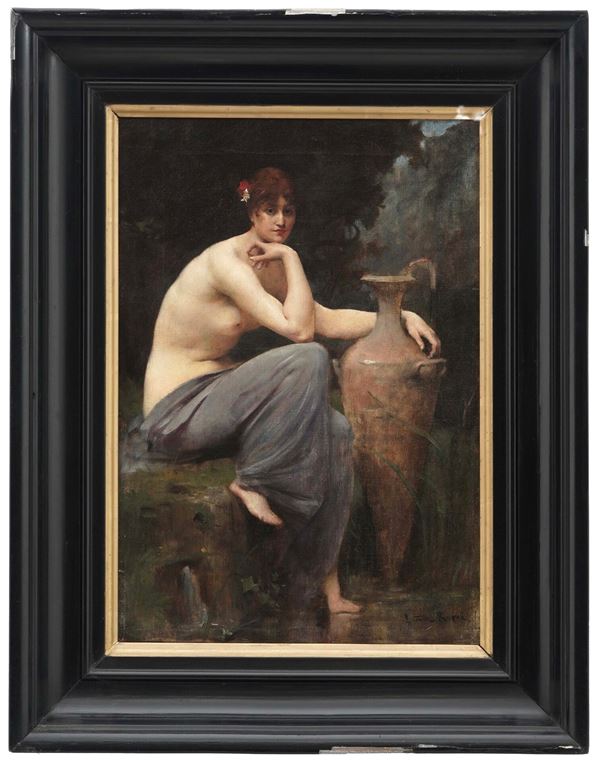
Lionel Royer (1852-1926) Nudo femminile con anfora
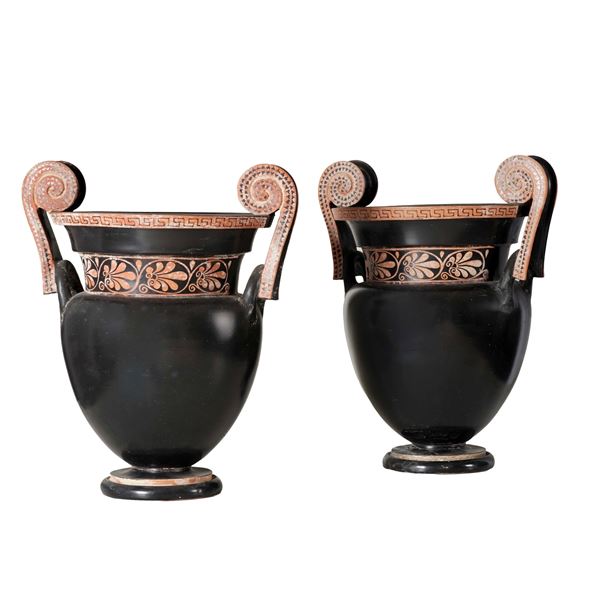
Coppia di crateri a volute di gusto archeologico. XX secolo
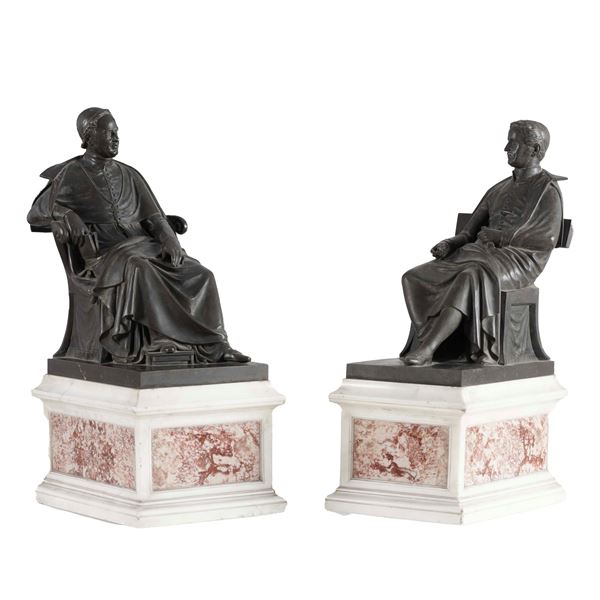
Fonditore del XIX secolo Pio IX e il Cardinale Giacomo Antonelli
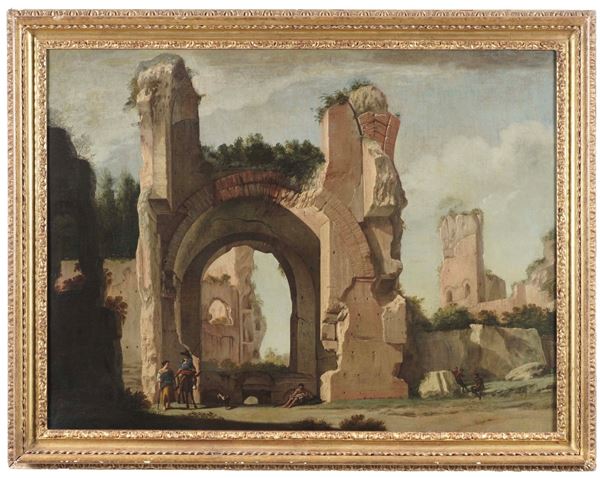
Scuola romana del XVIII secolo Paesaggio con rovine e viandanti
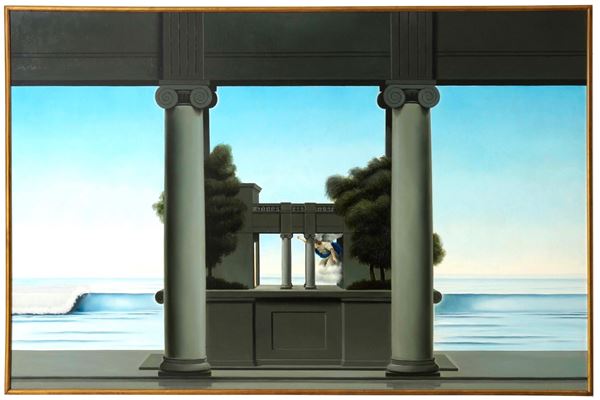
Paolo Pietro Collini
Il presagio del doppio
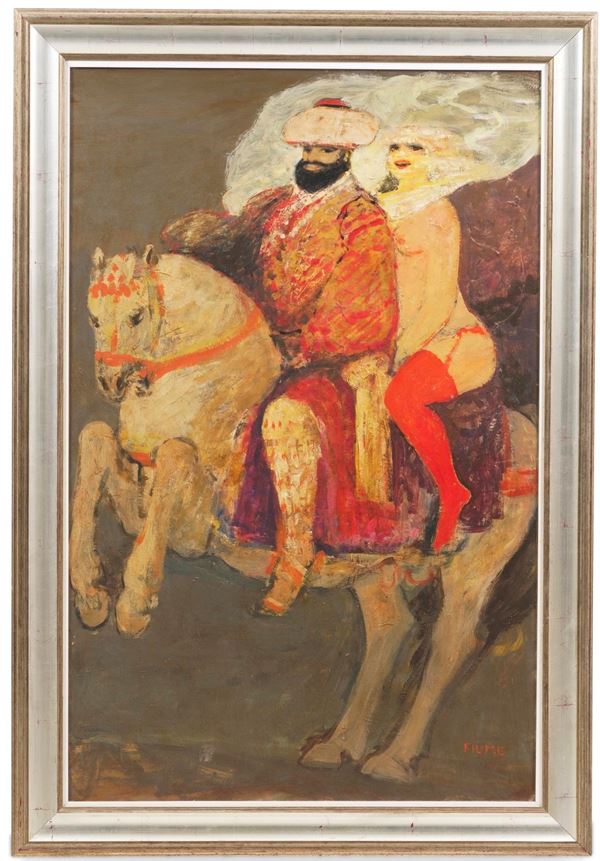
Salvatore Fiume
Figure
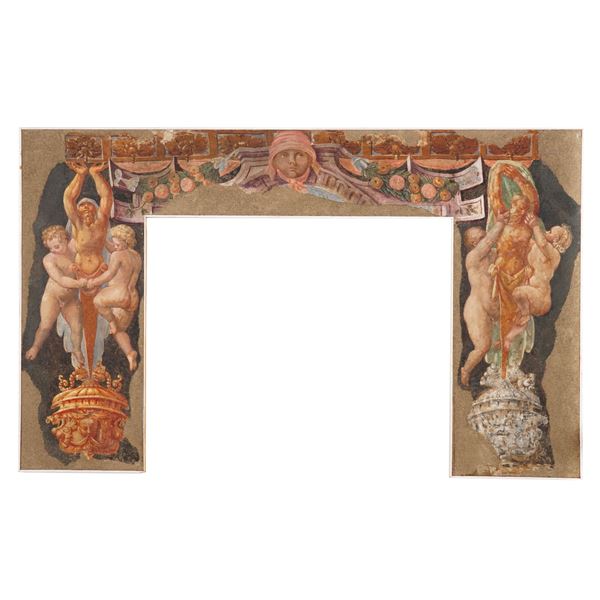
Nei modi della scuola del XVI secolo Figure di telamoni, con putti, mascheroni e festoni di frutti