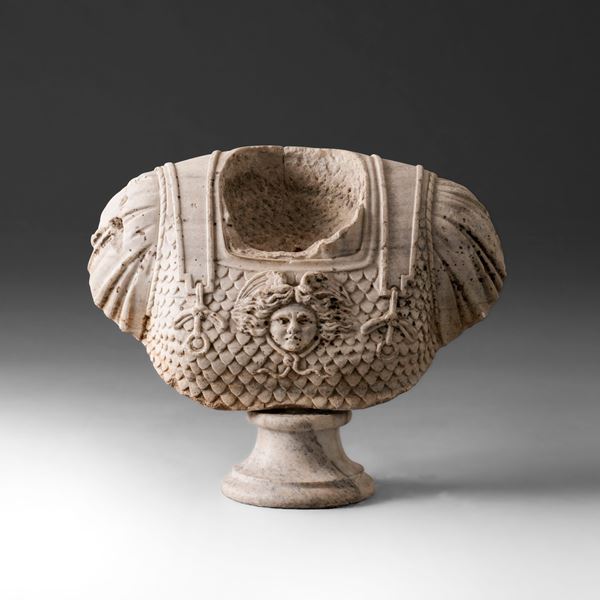
The auction dedicated to the Collection of Ancient Arts of Professor Ferdinando Cappelletti brings together a group of works of extraordinary quality, carefully selected over a lifetime of study, research, and collecting passion. Sculptures, Old Master paintings, silverware, and works of art engage in dialogue along a rich and multifaceted path that reflects the Professor’s cultured eye and refined aesthetic sensibility.
The pre-auction exhibition, open to the public on Friday 21, Saturday 22, and Monday 24 November from 10 a.m. to 6 p.m., will allow visitors to admire the works and explore the complexity and richness of a collection that unites personal taste, knowledge, and scholarly rigor.
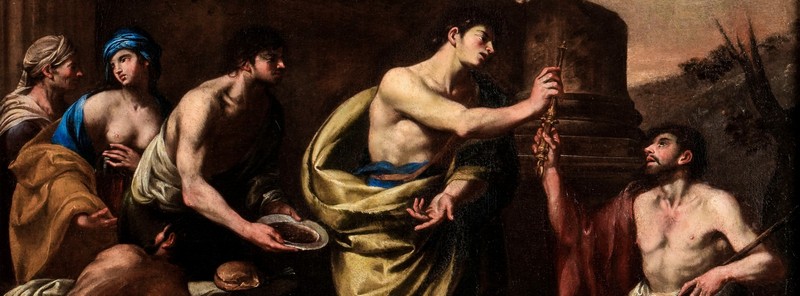
Among the most significant paintings are the refined 16th-century portrait Young Gentleman by Scipione Pulzone, a master of Roman portraiture, and the evocative biblical scene Jacob and Esau by the Neapolitan Antonio de Bellis, a vivid expression of 17th-century narrative sensibility. Accompanying these is a group of 18th-century portraits by Sebastiano Ceccarini, distinguished by their formal elegance and clear luminosity.
Of great charm is the series of marble busts and reliefs depicting Roman emperors, produced between the 16th and 19th centuries, symbolizing the continuous rediscovery of antiquity in European collecting. Among them stands out the rare “all’antica” bust of Paolo Antonio Mollo, Duke of Lusciano and considered the look-alike of Ferdinand IV of Bourbon, an autograph work by the Catanese sculptor Antonio Calì. This piece finds an ideal counterpart in the precious Resting Hercules, a polychrome porcelain produced by the Royal Ferdinandea Factory in the last quarter of the 18th century, a pinnacle of Neapolitan craftsmanship.
Another particularly interesting group concerns the portraits dedicated to the Bonaparte family: the sisters Elisa Baciocchi and Paolina Borghese, as well as the young Zelaide, are depicted in neoclassical taste by Tuscan masters such as Pietro Benvenuti, Lorenzo Bartolini, and Pietro Tenerani. Enriching this section is the splendid group The Arnina Nymph, a major work from Bartolini’s Florentine period, revealing his grace and formal balance.
The itinerary concludes with a selection of polychrome marbles and breccias, along with modeled terracotta works executed in Rome between the 18th and 19th centuries for travelers and collectors of the Grand Tour. Names such as Bartolomeo Cavaceppi, Benedetto Boschetti, and Joseph Gott attest to the refined international spirit of these productions.
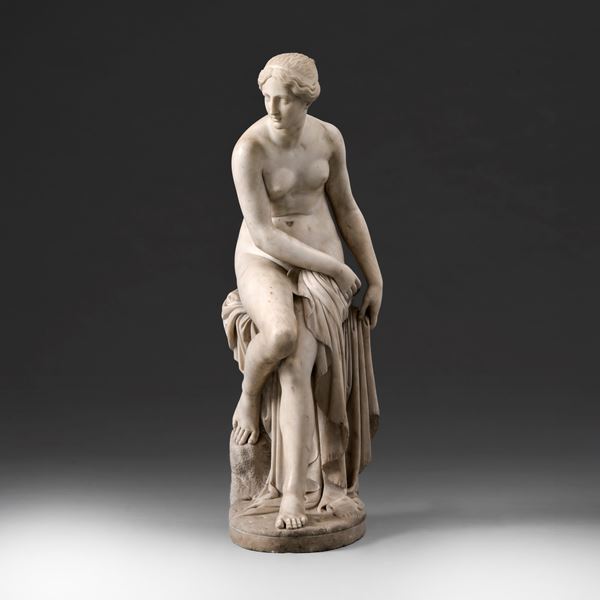
Nymph. L. Bartolini et al., Florence, early 1800s
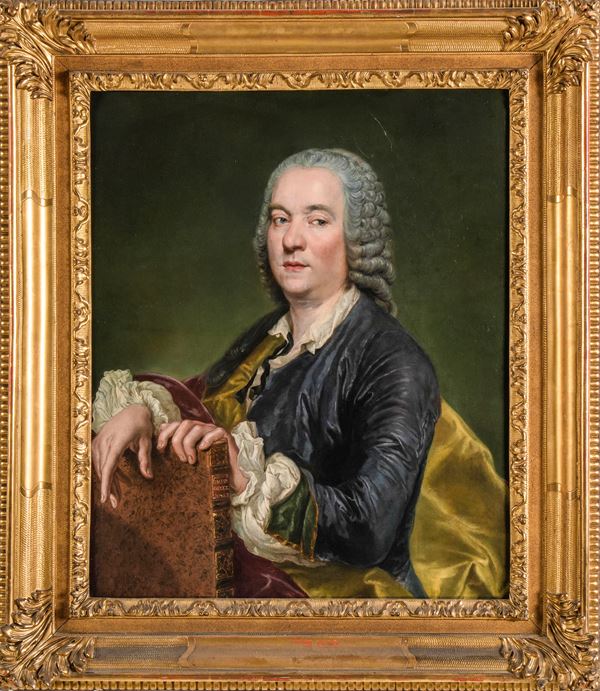
Alexander Roslin
A. Roslin, Portrait of a gentleman
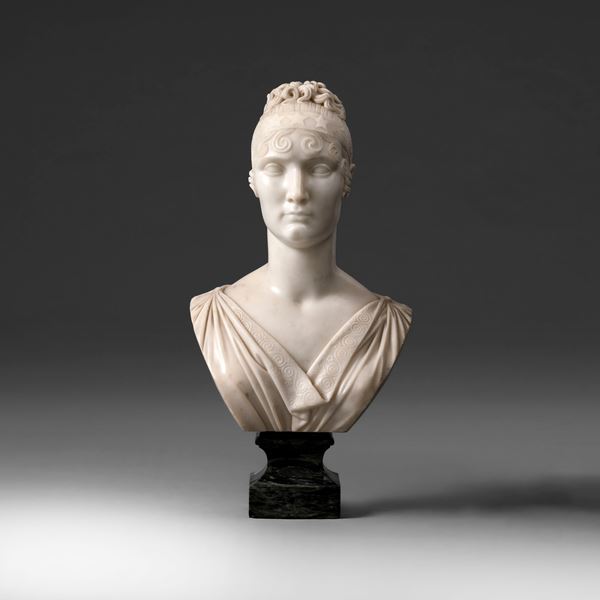
Elisa Baciocchi. Marble, L. Bartolini (attr.), 1800s
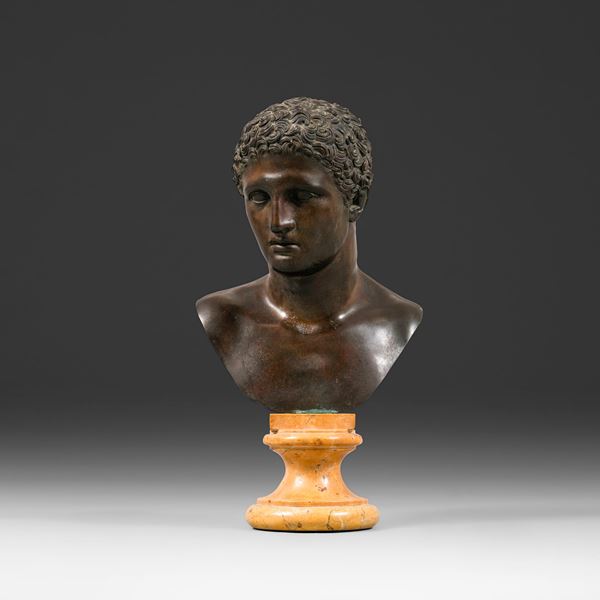
Antinous. Fonderia Sommer, Naples, 1800s
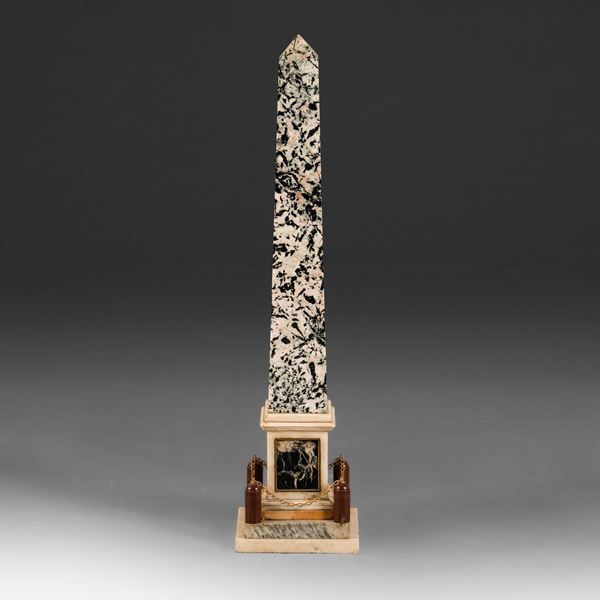
Black cipollino marble obelisk, Grand Tour art, Rome, 1800s
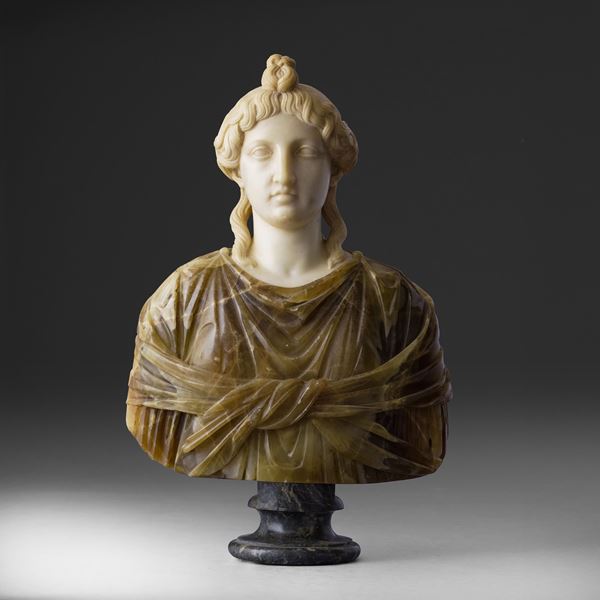
Isis. Circle of J. Gott, Neoclassical Roman art, 1800s
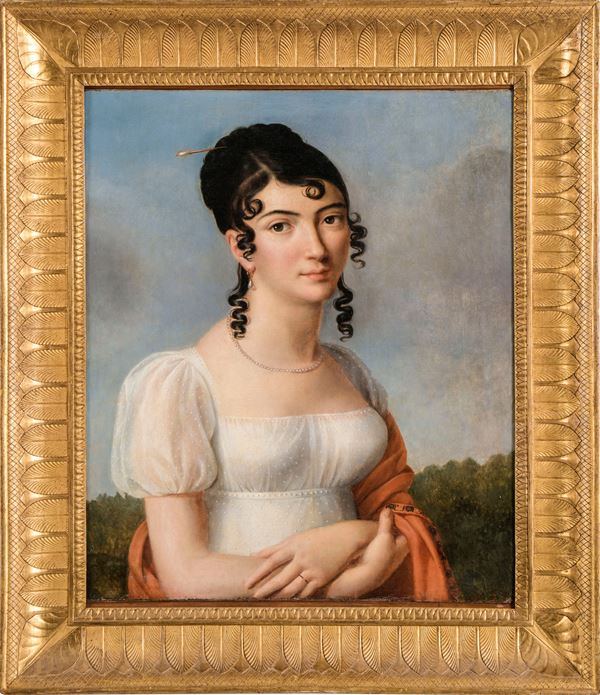
Pietro Benvenuti
P. Benvenuti, Portrait of Elisa Bonaparte Baciocchi
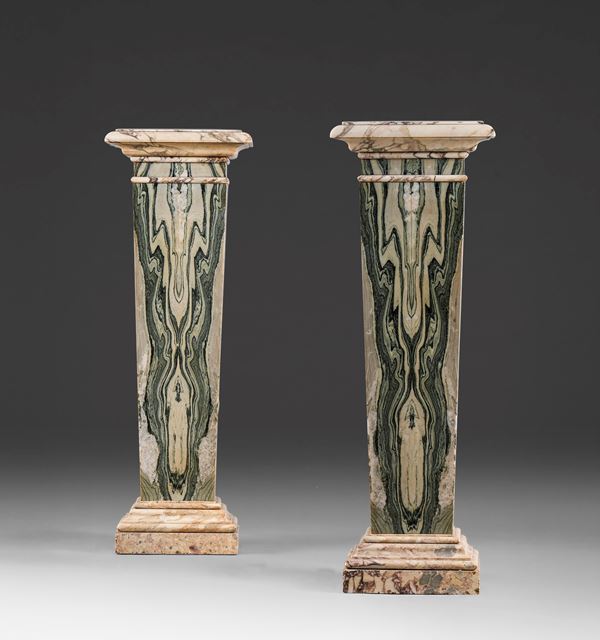
Two marble pedestals, 1800s
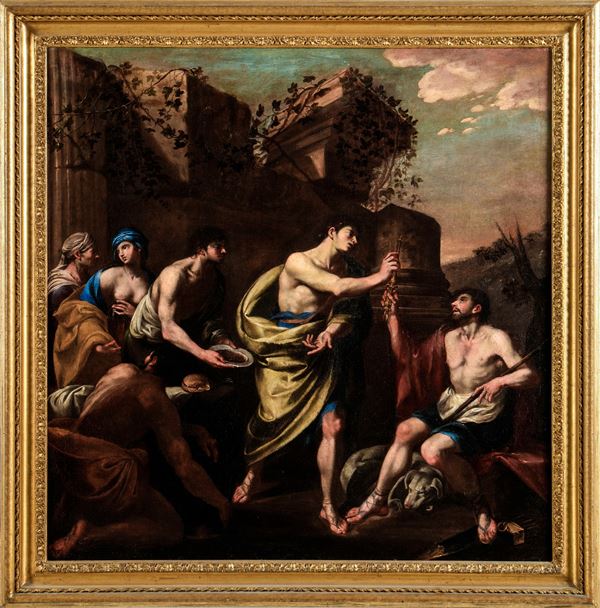
Antonio De Bellis
A. De Bellis, Jacob and Esau
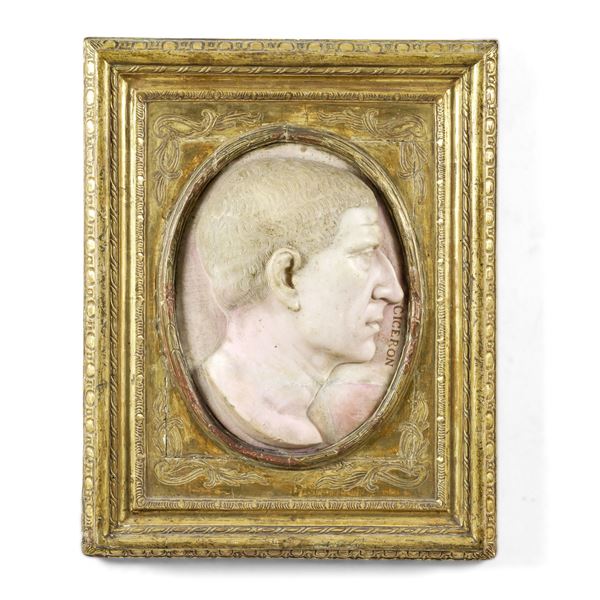
Marble relief of Cicero, Italy, 15/1600s
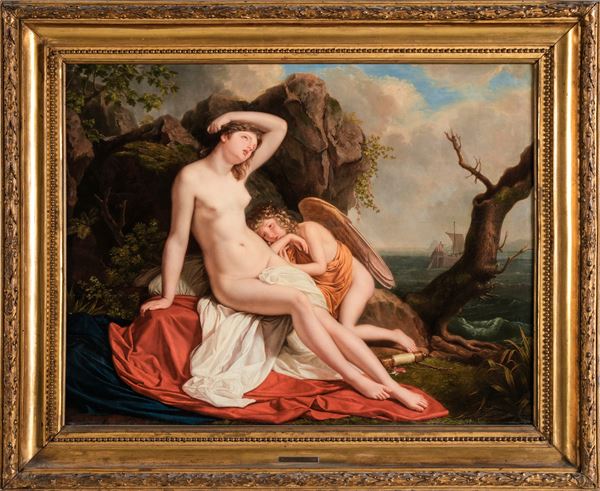
Ariadne abandoned on Naxos, Neoclassical school, late 17/1800s