131
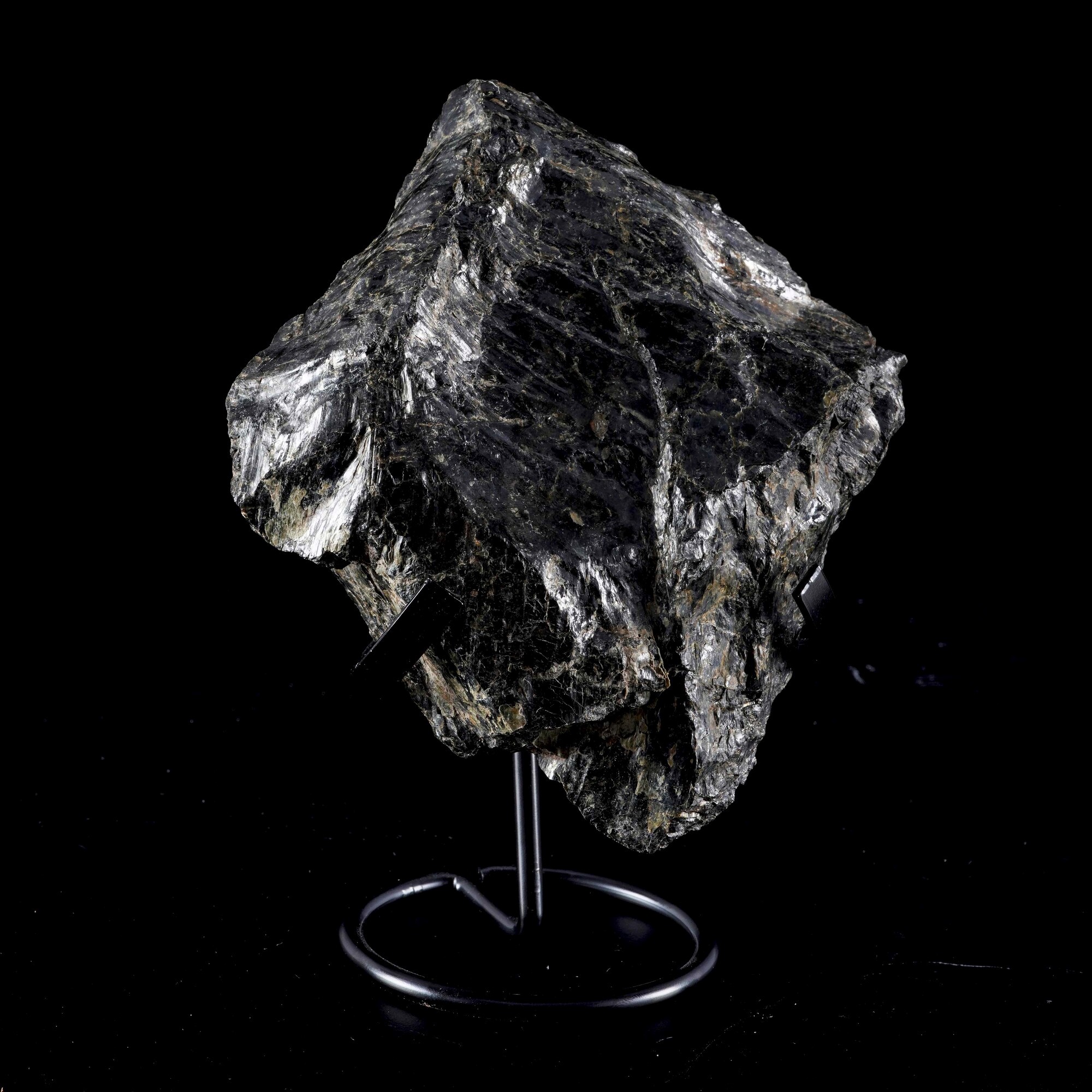
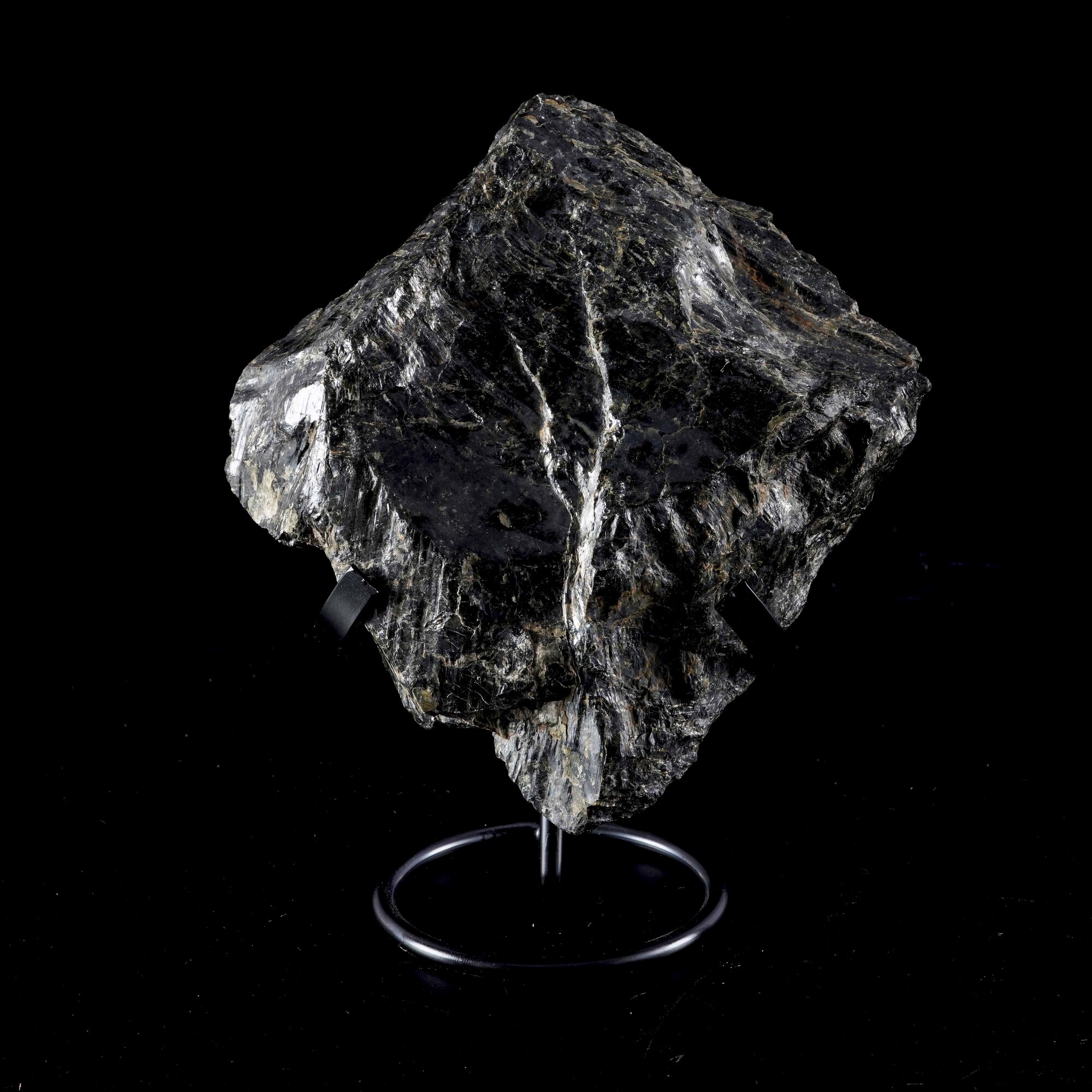
A fragment of raw obsidian
€ 50,00 / 100,00
Estimate
Currency Conversion
Description
A fragment of raw obsidian
gr 923
W. 15 - D. 14 cm
Rhyolitic volcanic glass (~70% SiO₂) — amorphous, lacking a crystalline structure
Origin
from a private collection in Liguria
More information
Typically found on the Aeolian Islands (Lipari, Italy), Mexico, the United States (Oregon), and Iceland, it is not a true mineral but a mineraloid: a natural volcanic glass formed by the extremely rapid cooling of silica-rich felsic lava—too fast to allow the atoms to organize into an ordered crystal lattice. It typically forms at the edges of lava flows or lava domes in recent volcanic settings (from the Tertiary period to the present). Lacking cleavage, it exhibits a characteristic conchoidal fracture that produces extremely sharp edges. Hardness 5–5.5 on the Mohs scale, density 2.35–2.60 g/cm³, predominantly black in color, sometimes with bands or spots due to inclusions of magnetite or steam (known as “mahogany” or “snowflake” obsidian).
Historically used since prehistoric times for the production of tools and cutting weapons (blades, arrowheads) thanks to the extremely sharp edges obtained by chipping; today it is used in jewelry, decorative objects, and even in experimental ophthalmic surgery due to the precision of its cut; highly prized by collectors for its glassy luster and varieties with optical effects (rainbow obsidian, golden obsidian).
Time auction 1251
Historia Naturalis
mon 26 October - fri 13 November 2026
The description sheets do not always indicate the state of conservation of the goods, we invite you to always request the condition report before making your offers
New lots currently at auction
L'Art de la Table
Lot 222
Servizio da tavola “Old Britain Castles” Inghilterra, Staffordshire, Manifattura Johnson Brothers, dopo [..]
L'Art de la Table
Lot 238
Servizio da tavola “À la corbeille” Limoges, Manifattura Haviland, XX secolo
Antique and Rare Books
Lot 144
Fullone, Abel (Foullon) (1513-1563 o 1565) Descrittione et uso dell’Holometro per saper misurare tutte [..]
Modern and Contemporary Art
Lot 103
Franco Angeli
Mediterraneo
Modern and Contemporary Art
Lot 112
Roy Lichtenstein
Crak!
L'Art de la Table
Lot 56
Servizio di posate. Londra XIX secolo, differenti argentieri e date (1837, 1840, 1860)
Old Master Paintings
Lot 73
Scuola veneta del XVIII secolo Ritratto di anziana
L'Art de la Table
Lot 303
Servizio da tavola Versace “Barocco” Germania, Manifattura Rosenthal , fine del XX secolo Modello di [..]
L'Art de la Table
Lot 237
Servizio da tavola Limoges, Manifattura Raynaud, XX secolo
L'Art de la Table
Lot 223