11
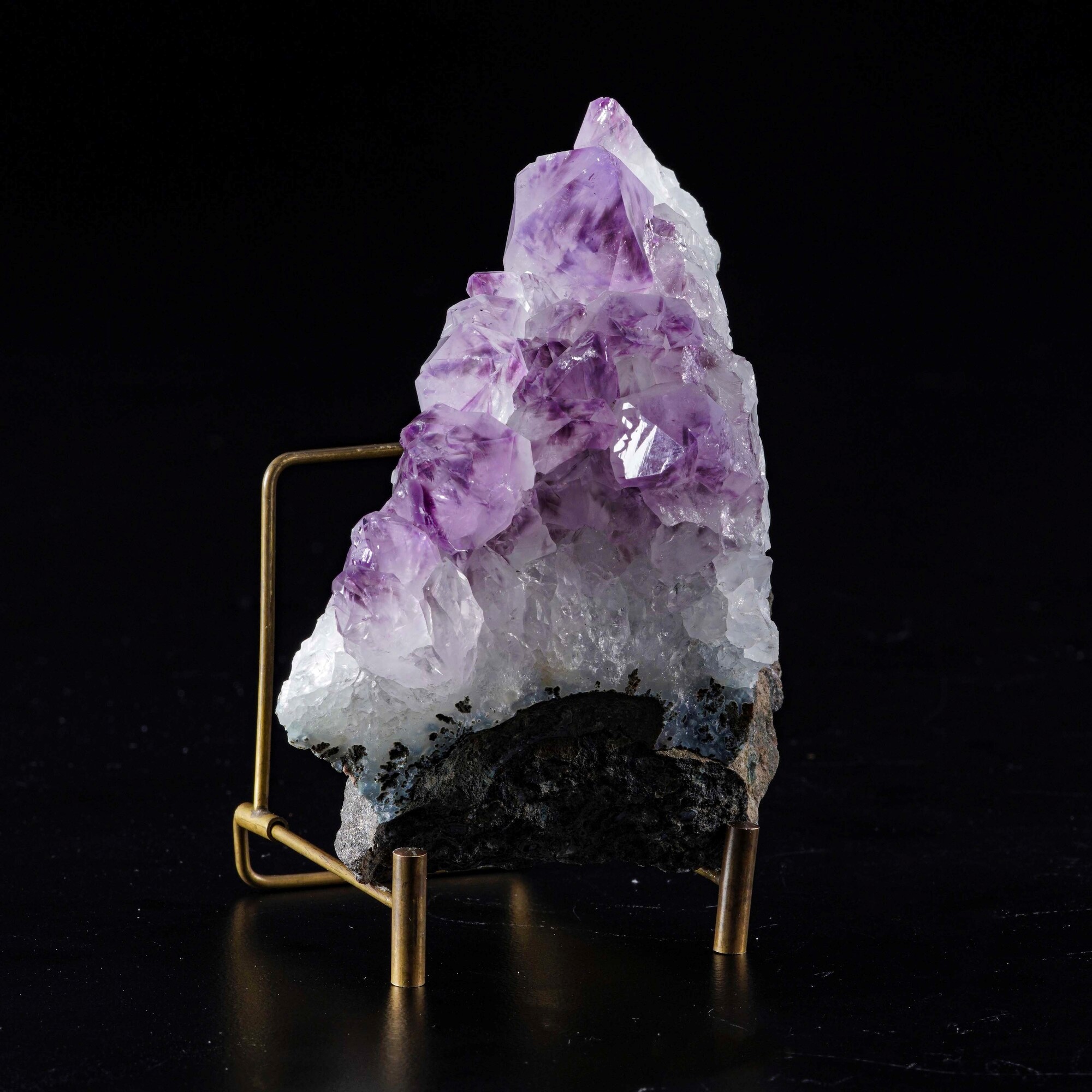
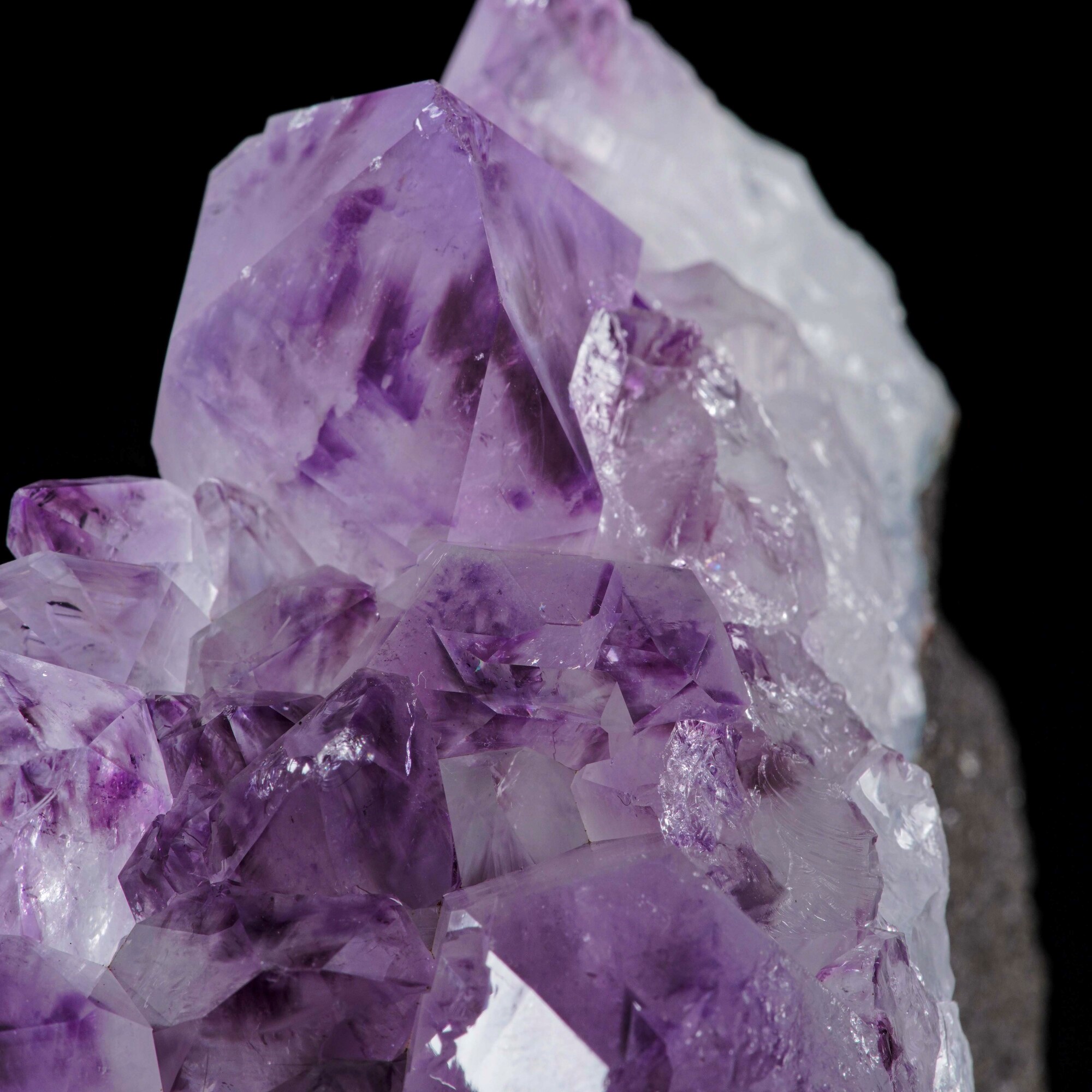
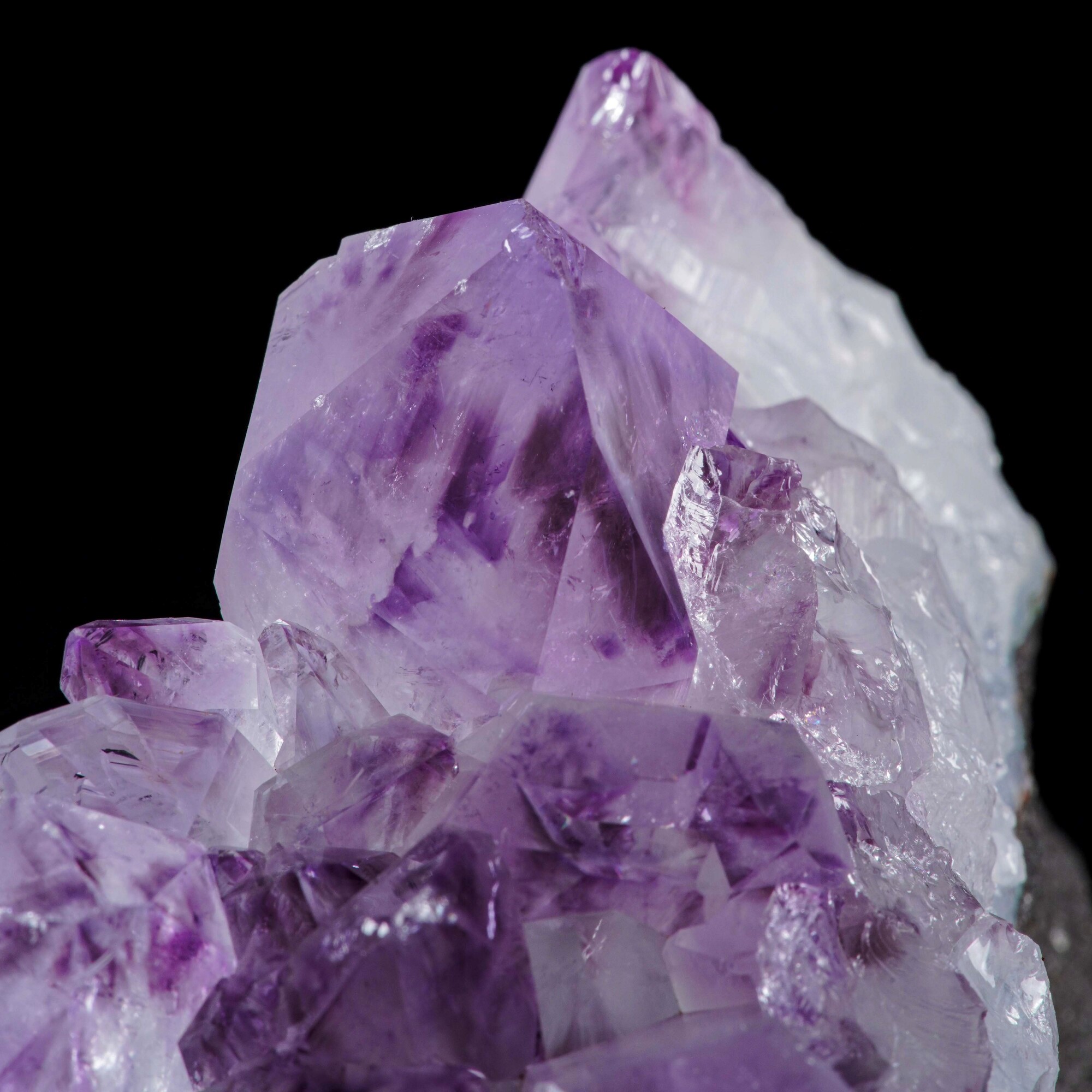
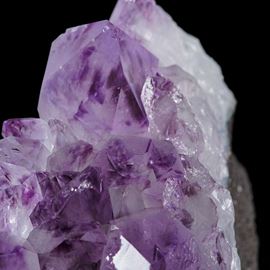
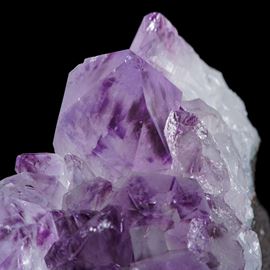
Amethyst cluster.
Time left
17g
13h
13m
45s
13/11/2026 14:10:00
Estimate
€ 50,00 / 100,00
Your bid
The reserve price has not been exceeded
The reserve price has been exceeded
€
Set your maximum bid
Description
Amethyst cluster.
W. 5 - H. 11 cm
Brazil, Ametista do Sul (state of Rio Grande do Sul) (?)
Origin
from a private collection in Liguria
More information
From the Greek "a-methystos," meaning "not drunk." In ancient times, it was believed that amethyst warded off drunkenness. Amethyst cups were sometimes carved. At the same time, it is said that the color of the red wine drunk from these cups was roughly the same as that of the cups themselves.
Amethyst is a variety of quartz with colors ranging from purple to violet, which owes its color to gamma radiation and the presence of trace amounts of iron in its crystal lattice.
Depending on its origin, the color of amethyst is distributed unevenly within individual crystals, and in geodes, the color is often more intense in the growth zones beneath the rhombohedral faces (at the tips). Occasionally, the color is more intense beneath the rhombohedral faces, giving the crystal a swirl-like appearance when viewed from above. In prismatic crystals, the color may appear in thin, ghost-like layers, while in scepter crystals and skeletal quartz, the color is typically concentrated along the edges and accompanied by smoky zones. Despite its intense color, the iron content occupying Si (silicon) sites in amethyst is quite low, ranging from 10 to 100 ppm.
When heated to more than approximately 300–400 °C, amethyst loses its purple color and often turns yellow, orange, or brown, coming to resemble the citrine variety of quartz. However, depending on the location and temperature during heat treatment, it can also become colorless or—rarely—green.
Time auction 1251
Historia Naturalis
mon 26 October - fri 13 November 2026
The description sheets do not always indicate the state of conservation of the goods, we invite you to always request the condition report before making your offers
Discover Similar Lots
Historia Naturalis
Lot 150
Amethyst cluster. Deep purple color
Historia Naturalis
Lot 36
Amethyst Ashtray
Historia Naturalis
Lot 10
Large fragment of an amethyst geode
Historia Naturalis
Lot 145
Amethyst cluster. Deep purple color
Historia Naturalis
Lot 146
Three fragments of an amethyst geode
Historia Naturalis
Lot 54
Large amethyst geode. Purple color
Historia Naturalis
Lot 119
Large amethyst druse with a calcite vein, mounted on a metal base
Historia Naturalis
Lot 117
Large amethyst druse on a metal base
Historia Naturalis
Lot 115
A large, elegant piece of amethyst set on a metal base
Historia Naturalis
Lot 138