
Evaluation Corrado Cagli
Corrado Cagli Valuations - Want to sell a Corrado Cagli piece? Request a complimentary and confidential valuation!Cambi Casa d'Aste will review your submission and offer a free-of-charge estimate, if your item is suitable for our auctions.
biography
Corrado Cagli was a prominent 20th-century Italian artist, born in Ancona in 1910 and moving to Rome in 1915, where he completed classical studies and attended the Academy of Fine Arts. Coming from a Jewish family, Cagli was known for his artistic versatility, working in painting, sculpture, ceramics, scenography, and tapestry design, as well as monumental art. His artistic education also extended to Paris and New York, where he lived for extended periods, enriching his style with international influences.
Throughout his career, Cagli experimented with various painting techniques such as encaustic and mosaic, developing a personal style that combined inspirations from the 15th century and Renaissance with geometric and abstract motifs. Early in his career, he focused on mural painting, creating works like the "Battaglia del Grano" mural in Umbria and the fountain of Terni. He also served as artistic director of the Rometti ceramics factory in Umbertide, modernizing its production.
During World War II, due to racial persecution, he was forced to leave Italy; upon his return, he deepened his exploration of abstraction, alternating between figurative and abstract art in a complex and innovative dialogue. He was a key member of the Roman School alongside painters such as Giuseppe Capogrossi and Emanuele Cavalli. Notable postwar works include "Invenzione con brio" (1949), "Lo scacciapensieri" (1950), and "Dal calendario del popolo" (1952).
Cagli exhibited widely in Italy and abroad, including the 1936 Milan Triennale and shows in New York. His works are held in public and private collections and remain subjects of auctions and critical study. His ability to blend tradition with technical experimentation made him a central figure in 20th-century Italian art.
Throughout his career, Cagli experimented with various painting techniques such as encaustic and mosaic, developing a personal style that combined inspirations from the 15th century and Renaissance with geometric and abstract motifs. Early in his career, he focused on mural painting, creating works like the "Battaglia del Grano" mural in Umbria and the fountain of Terni. He also served as artistic director of the Rometti ceramics factory in Umbertide, modernizing its production.
During World War II, due to racial persecution, he was forced to leave Italy; upon his return, he deepened his exploration of abstraction, alternating between figurative and abstract art in a complex and innovative dialogue. He was a key member of the Roman School alongside painters such as Giuseppe Capogrossi and Emanuele Cavalli. Notable postwar works include "Invenzione con brio" (1949), "Lo scacciapensieri" (1950), and "Dal calendario del popolo" (1952).
Cagli exhibited widely in Italy and abroad, including the 1936 Milan Triennale and shows in New York. His works are held in public and private collections and remain subjects of auctions and critical study. His ability to blend tradition with technical experimentation made him a central figure in 20th-century Italian art.
Past lots of Corrado Cagli
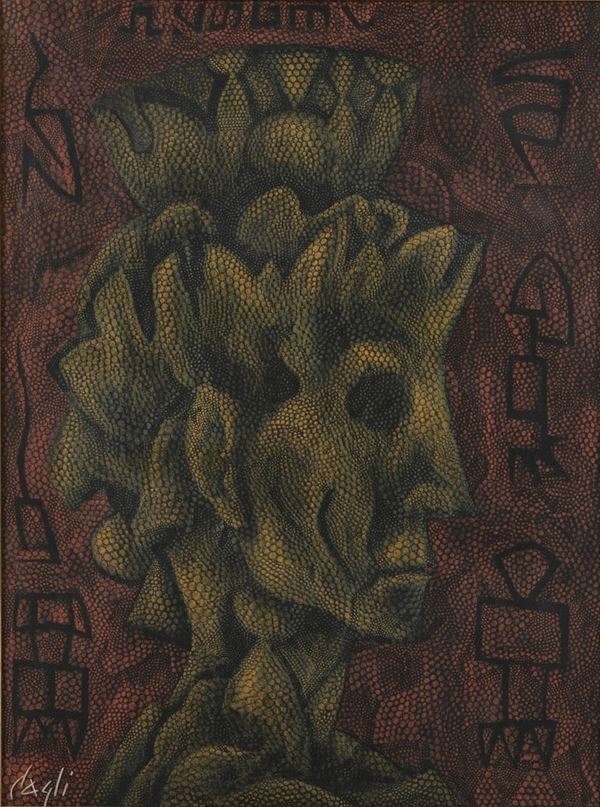

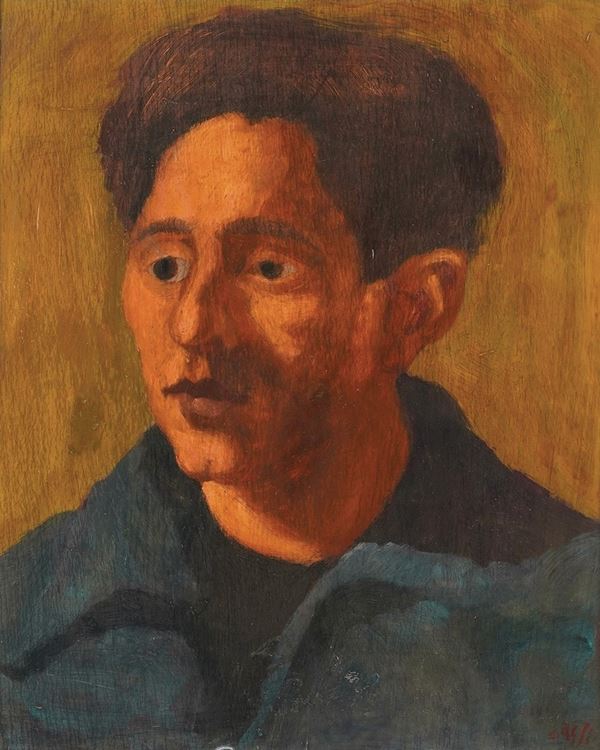
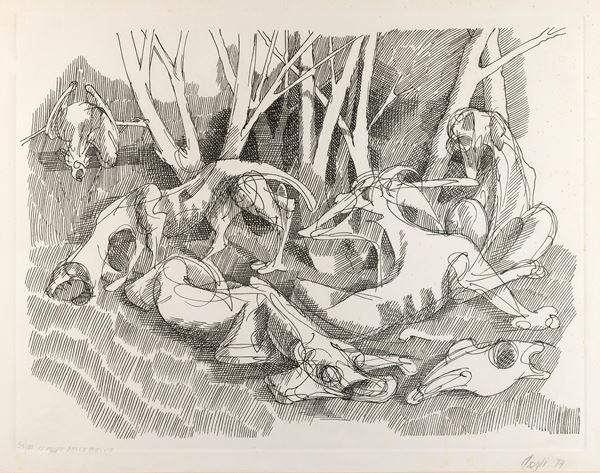
Corrado Cagli©
(Ancona, 1910 - Roma, 1976)
Qohele’let
firmato in basso a sinistra olio su tela cm 57X77
Sold
Corrado Cagli©
(Ancona, 1910 - Roma, 1976)
Albero
firmato in basso a destra olio su tela Largh. 49 - Alt. 68,5 cm
Corrado Cagli©
(Ancona, 1910 - Roma, 1976)
Attributed to
Autoritratto
tempera su tavola Largh. 25 - Alt. 35 cm
Sold
Corrado Cagli
(Ancona, 1910 - Roma, 1976)
Senza titolo
Nel lotto altre 5 opere di autori minori litografia da cm 44x64 a cm 70x100
Sold
Corrado Cagli©
(Ancona, 1910 - Roma, 1976)
Senza titolo
es. XX/XXV firmato e datato in basso a destra, numerato in basso a sinistra litografia Largh. 50 - Alt. 70 cm
Sold
Corrado Cagli©
(Ancona, 1910 - Roma, 1976)
Senza titolo
es. XI/XC firmato e datato in basso a destra, numerato in basso a sinistra acquatinta Largh. 59,5 - Alt. 79,4 Cm
Corrado Cagli©
(Ancona, 1910 - Roma, 1976)
Il pasto delle belve
es. 54/100 firmato e datato in basso a destra, numerato e intitolato in basso a sinistra acquaforte Largh. 70 - Alt. 60 [..]
Corrado Cagli©
(Ancona, 1910 - Roma, 1976)
Senza titolo
dedicato, firmato e datato in basso al centro penna su carta Largh. 18 - Alt. 24 Cm
Corrado Cagli©
(Ancona, 1910 - Roma, 1976)
Calcio minore
lotto composto da sei serigrafie es. 15/130 firmato e numerato a matita sul colophon
Corrado Cagli©
(Ancona, 1910 - Roma, 1976)
Senza titolo
firmato e datato in basso a destra firmato e datato al retro tecnica mista su carta Largh. 103 - Alt. 67 Cm