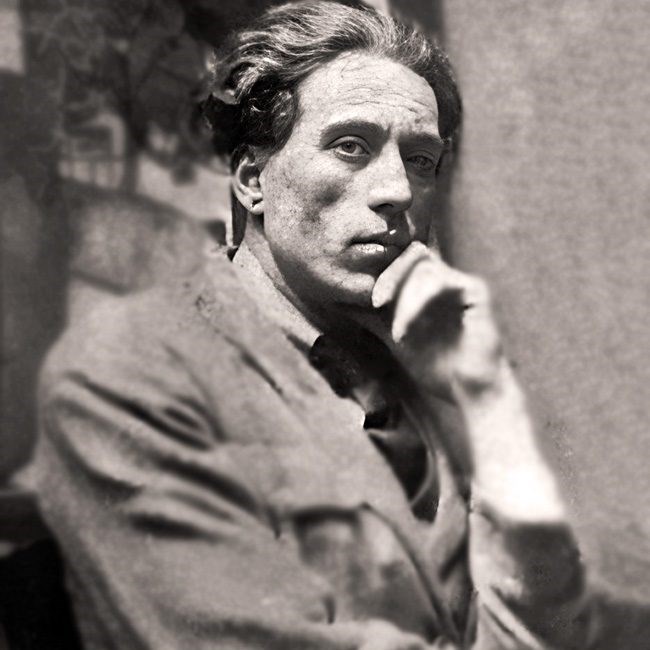
Evaluation Ottone Rosai
Ottone Rosai Valuations - Want to sell a Ottone Rosai piece? Request a complimentary and confidential valuation!Cambi Casa d'Aste will review your submission and offer a free-of-charge estimate, if your item is suitable for our auctions.
biography
Ottone Rosai (Florence, 28 April 1895 – Ivrea, 13 May 1957) was an Italian painter and one of the protagonists of twentieth-century contemporary art. Born on Via Cimabue in the heart of an ancient working-class neighborhood of Florence, to Giuseppe, a carpenter and woodcarver, and Daria Deboletti, Rosai came from a family of humble origins and artisans. Against his father's wishes, he pursued his artistic vocation by attending the State Institute of Art and subsequently the Academy of Fine Arts in Florence under the guidance of master Arturo Calosci. However, he was expelled from the Academy in 1912 following a serious dispute with the master. Determined to continue his artistic research, he continued to educate himself as a self-taught artist, refining his skills through Celestino Celestini's free school of engraving.
Rosai's artistic beginnings were characterized by the influence of Futurism and his friendship with Ardengo Soffici, one of the movement's principal exponents. He exhibited his first works in 1913 in Pistoia and subsequently in Florence, where he actively participated in the Florentine artistic scene. During World War I he enlisted as a volunteer and earned recognition for his service. In November 1920 he held his first solo exhibition in Florence, presenting still lifes, Tuscan landscapes, and family figures characterized by an increasingly personal artistic language. His life was tragically marked in 1922 by his father's suicide, who drowned himself in the Arno River due to debts, an event that profoundly influenced his subsequent artistic production.
In the 1920s and 1930s, Rosai developed a highly personal artistic vision, progressively distancing himself from the avant-gardes to embrace modern realism. His attention turned to everyday life and popular culture, depicting street scenes, café interiors, peasants, and workers with extraordinary concentration and sensitivity. Until 1929 he collaborated as an illustrator for fascist-era publications such as Il Selvaggio and Il Bargello. However, the signing of the Lateran Treaties in 1929 represented a violent ideological disappointment for Rosai, as he believed that fascism had betrayed the anticlerical positions of its early days, prompting him to publish a provocative text entitled Per lo svaticanamento dell'Italia (For the De-Vaticanization of Italy). In the 1930s his existential discomfort led him to live in isolated places, away from the community, and his painting became charged with anger and pessimism, as testified by his tormented self-portraits.
Rosai's consecration as a first-rate painter came in 1932 with a solo exhibition at Palazzo Ferroni in Florence, publicly praised by Soffici and De Chirico. In 1934 he participated in the Venice Biennale, consolidating his reputation in the Italian artistic panorama. From 1931 he collaborated with the magazine L'Universale, directed by Berto Ricci and subsequently by Romano Bilenchi, founded with the purpose of promoting his painting and defending the reasons for modern realism. In the same year he definitively abandoned his father's carpentry business to dedicate himself entirely to painting. In 1939 he was appointed professor at the Royal Artistic High School of Florence, and in 1942 he was assigned the chair of painting at the Academy of Fine Arts in Florence. During World War II he painted a series of self-portraits of touching expressive power and emblematic crucifixions, symbols of the terrifying events of the conflict. In 1954 he donated a Crucifixion to Florence, following the initiative of the Committee for Civic Aesthetics to renew ancient ruined tabernacles with works by contemporary artists. He died in Ivrea on 13 May 1957, leaving an artistic legacy of extraordinary importance in the panorama of contemporary Italian art.
Rosai's artistic beginnings were characterized by the influence of Futurism and his friendship with Ardengo Soffici, one of the movement's principal exponents. He exhibited his first works in 1913 in Pistoia and subsequently in Florence, where he actively participated in the Florentine artistic scene. During World War I he enlisted as a volunteer and earned recognition for his service. In November 1920 he held his first solo exhibition in Florence, presenting still lifes, Tuscan landscapes, and family figures characterized by an increasingly personal artistic language. His life was tragically marked in 1922 by his father's suicide, who drowned himself in the Arno River due to debts, an event that profoundly influenced his subsequent artistic production.
In the 1920s and 1930s, Rosai developed a highly personal artistic vision, progressively distancing himself from the avant-gardes to embrace modern realism. His attention turned to everyday life and popular culture, depicting street scenes, café interiors, peasants, and workers with extraordinary concentration and sensitivity. Until 1929 he collaborated as an illustrator for fascist-era publications such as Il Selvaggio and Il Bargello. However, the signing of the Lateran Treaties in 1929 represented a violent ideological disappointment for Rosai, as he believed that fascism had betrayed the anticlerical positions of its early days, prompting him to publish a provocative text entitled Per lo svaticanamento dell'Italia (For the De-Vaticanization of Italy). In the 1930s his existential discomfort led him to live in isolated places, away from the community, and his painting became charged with anger and pessimism, as testified by his tormented self-portraits.
Rosai's consecration as a first-rate painter came in 1932 with a solo exhibition at Palazzo Ferroni in Florence, publicly praised by Soffici and De Chirico. In 1934 he participated in the Venice Biennale, consolidating his reputation in the Italian artistic panorama. From 1931 he collaborated with the magazine L'Universale, directed by Berto Ricci and subsequently by Romano Bilenchi, founded with the purpose of promoting his painting and defending the reasons for modern realism. In the same year he definitively abandoned his father's carpentry business to dedicate himself entirely to painting. In 1939 he was appointed professor at the Royal Artistic High School of Florence, and in 1942 he was assigned the chair of painting at the Academy of Fine Arts in Florence. During World War II he painted a series of self-portraits of touching expressive power and emblematic crucifixions, symbols of the terrifying events of the conflict. In 1954 he donated a Crucifixion to Florence, following the initiative of the Committee for Civic Aesthetics to renew ancient ruined tabernacles with works by contemporary artists. He died in Ivrea on 13 May 1957, leaving an artistic legacy of extraordinary importance in the panorama of contemporary Italian art.
Past lots of Ottone Rosai

Ottone Rosai©
(Firenze, 1885 - Ivrea, 1957)
Strada
firmato e datato in basso a destra Timbro al retro della Galleria Edmondo Sacerdoti, Milano olio su tela Largh. 39,7 - Alt. [..]
Sold
Ottone Rosai©
(Firenze, 1885 - Ivrea, 1957)
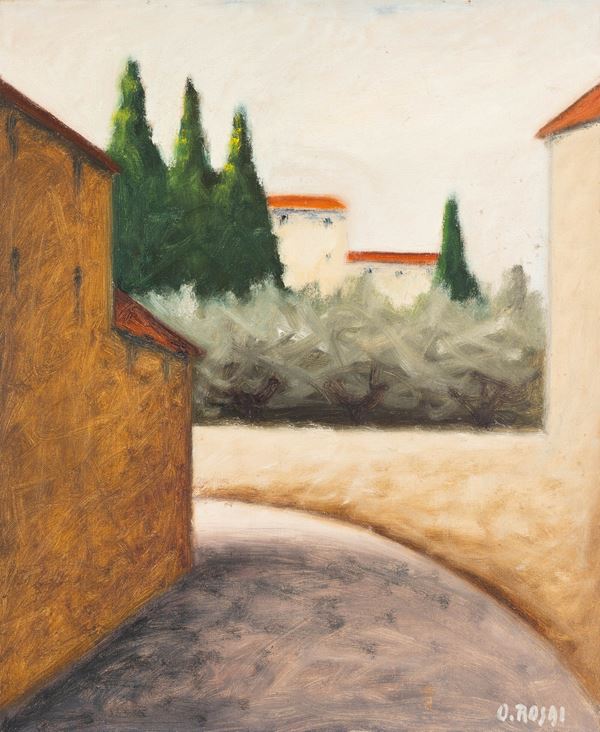
Strada in curva con case, ulivi, cipressi
signed lower right stamp and sign on the back by Rinaldo Rotta Gallery, Genoa oil on canvas W. 50 - H. 60 cm
Sold
Ottone Rosai©
(Firenze, 1885 - Ivrea, 1957)
Via San Leonardo
firmato in basso a destra datato al retro olio su tela Largh. 46,6 - Alt. 61,6 cm
Sold
Ottone Rosai©
(Firenze, 1885 - Ivrea, 1957)
Interno di osteria
firmato in basso a destra Etichetta al retro della Galleria d'arte L'Indiano, Firenze olio su masonite Largh. 29,6 - Alt. [..]
Sold
Ottone Rosai©
(Firenze, 1885 - Ivrea, 1957)
Giocatori di toppa
firmato in basso a destra Etichetta al retro della Collezione Giraldi, Livorno-Firenze olio su masonite Largh. 70 - Alt. [..]
Sold
Ottone Rosai©
(Firenze, 1885 - Ivrea, 1957)
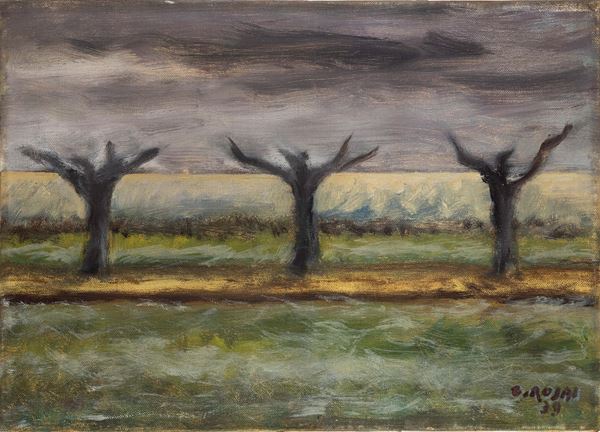
Winter (Three Trees)
signed and dated lower right label on the reverse from Galleria Genova, Genoa oil on canvas W. 35,3 - H. 25,5 cm
Sold
Ottone Rosai©
(Firenze, 1885 - Ivrea, 1957)
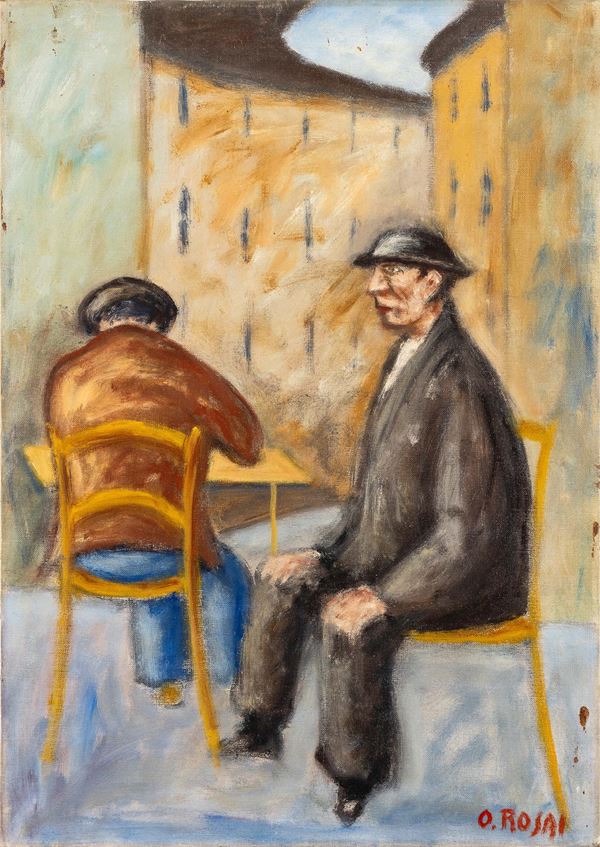
Interior of a Café
signed lower right stamps on the reverse from Galleria Roberto Rotta, Genoa oil on canvas W. 49,8 - H. 70 cm
Sold
Ottone Rosai©
(Firenze, 1885 - Ivrea, 1957)
Vaso con fiori
firmato in basso a destra Timbro al retro della Galleria del Milione, Milano Timbro al retro della Galleria La Spiga, Milano [..]
Sold
Ottone Rosai©
(Firenze, 1885 - Ivrea, 1957)
Fabbrica
firmato in basso a destra Timbro al retro della Galleria Bergamini, Milano olio su faesite Cm 70X50
Sold
Ottone Rosai©
(Firenze, 1885 - Ivrea, 1957)
Paesaggio
signed and dated lower right stamps on the reverse from the Galleria Michelangelo, Florence oil on cardboard W. 51 - H. [..]
Sold
Ottone Rosai©
(Firenze, 1885 - Ivrea, 1957)
Strada in campagna
firmato in basso a destra Etichetta al retro della Galleria La Barcaccia - Galleria Russo, Roma olio su tavoletta Largh. [..]
Sold
Ottone Rosai©
(Firenze, 1885 - Ivrea, 1957)
Tavolata
firmato in basso a sinistra Etichetta al retro della Galleria Annunciata, Milano olio su tavola Largh. 47,2 - Alt. 15,5 [..]
Sold