
Two years after Walter Valentini's death on May 20, 2022 in Milan, we are pleased to pay homage to his production with an anthological exhibition dedicated to a part of his output that is perhaps little known to collectors, despite the fact that it was an extremely important creative process for the artist: the graphic work.
Walter Valentini was, in fact, an internationally recognized master in the use of techniques such as, among others, etching, multi-color lithography and dry intaglio, a technique in which he excelled, giving rise to graphics in which the drawing remains in relief from the plane.
Walter Valentini was born in Pergola, in the Marche region of Italy, in 1928. He got to study graphic design, as a former partisan, at the Convitto Scuola della Rinascita, first in Rome and then in Milan. Among his teachers he will have another great artist, also still underrated, Luigi Veronesi, who will introduce him to the world of Russian Constructivism, which will be of great inspiration to him.
In his works, which are immediately recognizable and yet always evolving, what amazes the observer is his ability to internalize a process that at first glance might appear to be the result of rigorous and mathematical research and form, but on the contrary is the externalization of his inner and emotional world. These are architectural constructions influenced not only by Russian Constructivism, but also by his in-depth knowledge of Piero Della Francesca and made innovative by his unique and intimate style, capable of conveying a feeling of enchantment and poetry, as if we were in front of a metaphysical work by De Chirico.
The broken arches, a recurring element in his works, a tribute to the Ducal Palace of Urbino and the Renaissance concept of the “ideal city,” represent the awareness, as well as his unfinished circles, that perfection is, indeed, a philosophical ideal to which the artist may strive but which in concrete terms is not realized.
Philosophy, architecture and archaeology merge inextricably in Valentini's research, studies that investigate space, time, cosmography, rationality and the unconscious, leaving the end user before a veritable universe of geometries and reflections.
Returning to graphic art and its importance to the artist, nothing could explain it better than his own words, taken from a conversation with Luciano Caprile in “The Architectures of the Soul,” Colophon No. 5 (June 2000): “It is like performing a ritual when you engrave; and ritual is the way the work is printed. Ritual are the gestures you use when touching the paper; and when you wet it, when you deposit it on the press bed; and finally when it returns to you the mark that you had previously only imagined. Yes, because everything you initially trace on the surface of the plate is thought but not realized. Thought in the negative to achieve the positive [...]. Everything is mentally planned, but everything then reveals itself when, after the pressure of the press, the sheet comes out crushed and full of all your hidden intentions.”
International exhibitions and awards
1982 graphics first prize at the international biennial of Ibiza
1982 - Graphics: first prize at the Listowel International Biennial;
1983 won the “World Print Four” Special Edition Purchase Award in San Francisco, USA.
1984 - Graphics: grand prix at the Cracow International Biennial;
1990 - Installations: Greenwich, Connecticut (USA), in the Ashford Properties;
1990 - Installations: Siegburg (Germany), in the Stadtmuseum;
1991 - Installations: Aspen, Colorado (USA), in the Harris Concert Hall;
1992 - Artist's books: exhibition at MoMA, New York;
1995-1996 - Retrospective in Paris, at Galerie Dionne;
1999-2000 - Artist's Books: traveling exhibition in museums in Washington, Chicago and Vancouver.
The Best Awards
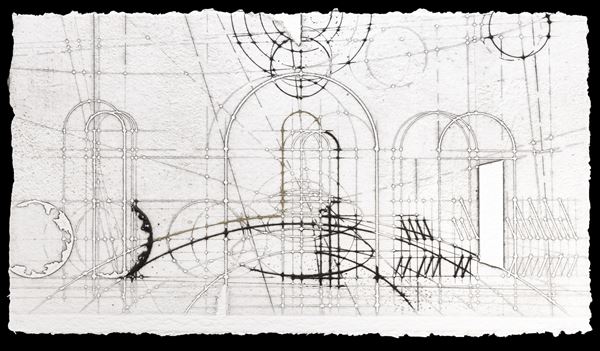
Lot N. 28
Walter Valentini©
(Pergola (PU), 1928 - Milano, 2022)
La città ideale
es. 4/50 firmato e datato in basso a destra, numerato in basso a sinistra carta Colombe Moulin de Larroque tiratura 50 + X + IV p.a. + V su foglio cm 63 x 91 stampatore [..]
Estimate
€ 250,00 / 350,00
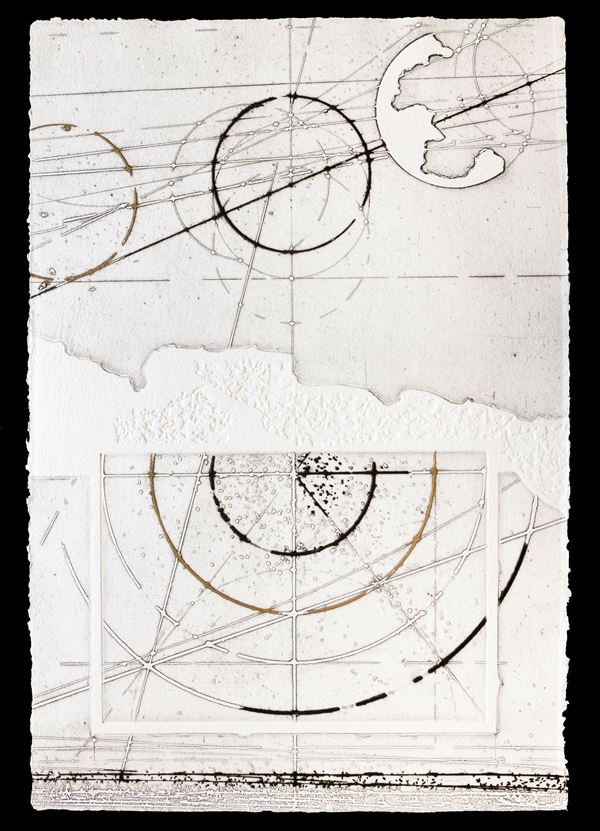
Lot N. 34
Walter Valentini©
(Pergola (PU), 1928 - Milano, 2022)
Le misure, il cielo III
es. III/XXV firmato e numerato in basso a destra carta Colombe, Mouline de Larroque tiratura 75 + XXV stampatore Sardella, Milano ed. TXT, Rimini acquaforte Largh. [..]
Estimate
€ 250,00 / 300,00
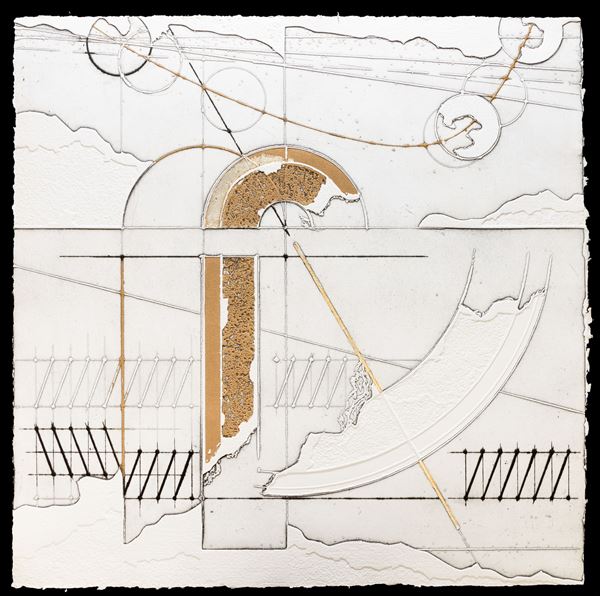
Lot N. 54
Walter Valentini©
(Pergola (PU), 1928 - Milano, 2022)
Lo spazio, il tempo
es. III/XVIII f firmato e numerato in basso al centro carta Colombe tiratura, 49 + XVIII stampatore Sardella, Milano ed. Colophon, Belluno acquaforte con retouche [..]
Estimate
€ 250,00 / 350,00
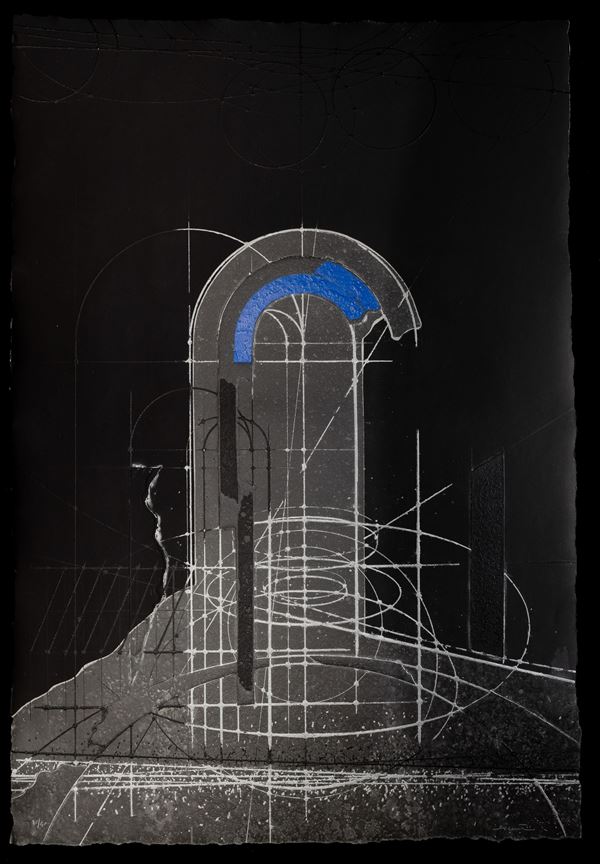
Lot N. 37
Walter Valentini©
(Pergola (PU), 1928 - Milano, 2022)
Città ideale
es. 30/50 firmato in basso a destra, numerato in basso a sinistra carta Magnani di Pescia tiratura 50 + XV + 5 p.a. stampatore Giulio Serafini, Pesaro ed Grafica [..]
Estimate
€ 200,00 / 300,00
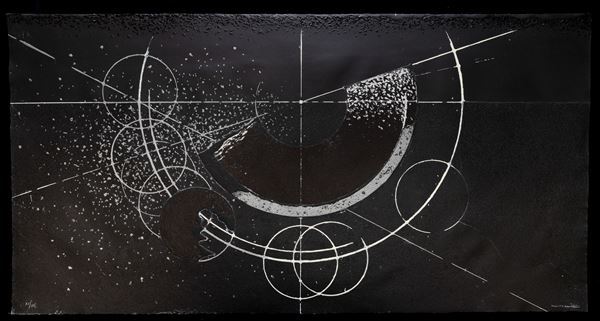
Lot N. 60
Walter Valentini©
(Pergola (PU), 1928 - Milano, 2022)
Le misure, il cielo
es. XI/XV firmato in basso a destra, numerato in basso a sinistra carta Duchene tiratura 50 + XV +3 p.a. stampatore Sardella, Milano ed. Colophon, Belluno acquatinta [..]
Estimate
€ 200,00 / 300,00
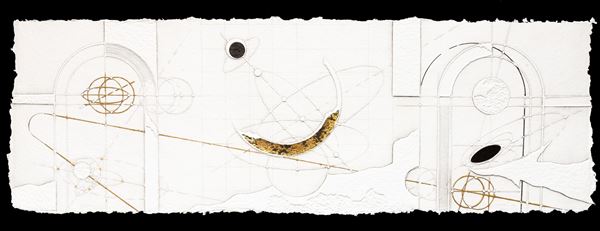
Lot N. 85
Walter Valentini©
(Pergola (PU), 1928 - Milano, 2022)
La porta del cielo
es. III/XXX firmato in basso a destra, numerato in basso a sinistra tiratura 100 + XXX + alcune p.a. carta Colombe stampatore Sardella, Milano ed. TXT, Rimini [..]
Estimate
€ 200,00 / 300,00
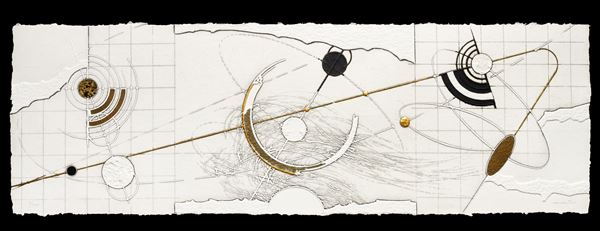
Lot N. 92
Walter Valentini©
(Pergola (PU), 1928 - Milano, 2022)
Cosmos 2
es. II/XXX firmato in basso a destra, numerato in basso a sinistra tiratura 100 + XXX carta Colombe stampatore Sardella, Milano ed. TXT, Rimini acquaforte con retouche [..]
Estimate
€ 200,00 / 300,00
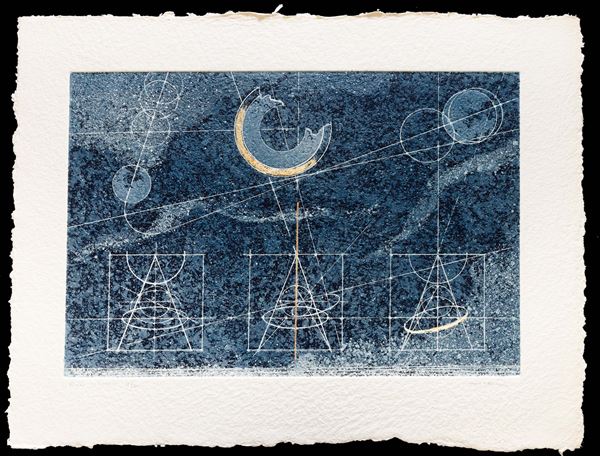
Lot N. 80
Walter Valentini©
(Pergola (PU), 1928 - Milano, 2022)
Muro del cielo
es. ante litteram, 4/7 dimensioni lastra: cm 39,5x58,8 firmato in basso a destra, numerato in basso sinistra carta Colombe de Duchene tiratura 65+ XV + 7 A.L stampatore [..]
Estimate
€ 150,00 / 250,00
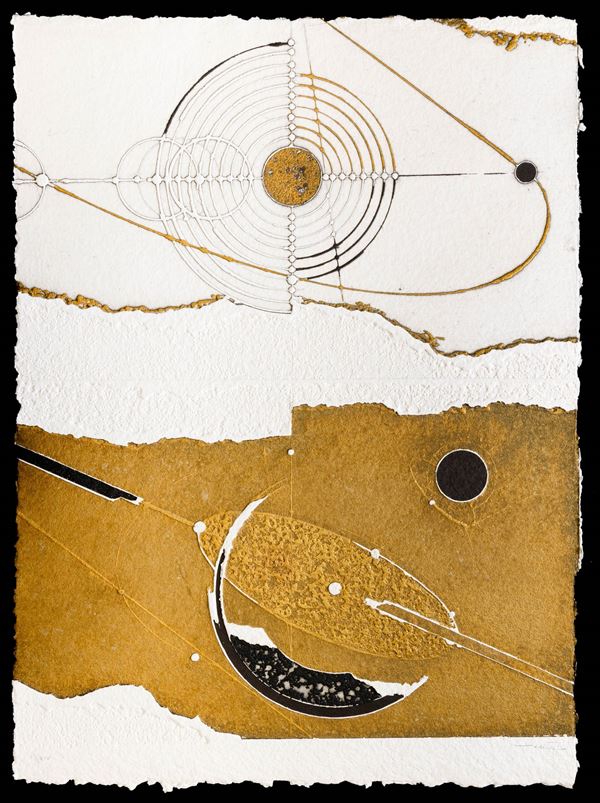
Lot N. 83
Walter Valentini©
(Pergola (PU), 1928 - Milano, 2022)
Cielo
es. I/XIV firmato in basso a destra, numerato in basso a sinistra carta Colombe di Duchene tiratura 50 + XIV stampatore Sardella, Milano ed. Galleria Di Summa, [..]
Estimate
€ 150,00 / 250,00
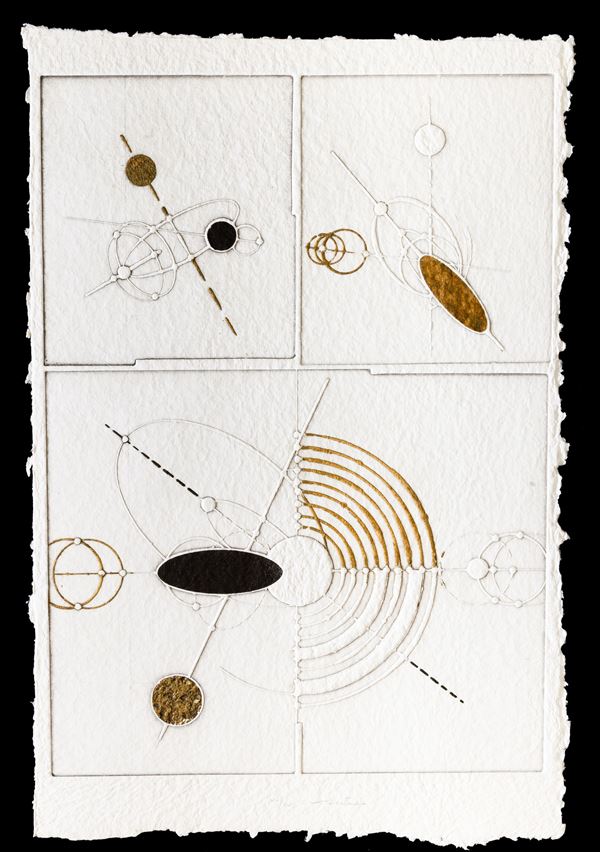
Lot N. 84
Walter Valentini©
(Pergola (PU), 1928 - Milano, 2022)
Carta del cielo II
es. VI/XV firmato e numerato in basso al centro carta Colombe tiratura 50 + XV stampatore Sardella, Milano ed. Colophon, Belluno acquaforte Largh. 37 - Alt. 55 [..]
Estimate
€ 150,00 / 250,00
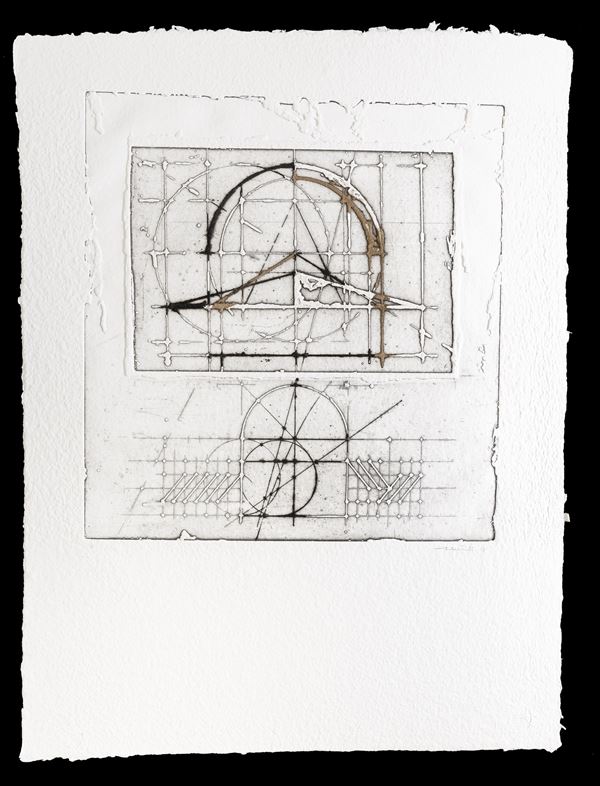
Lot N. 26
Walter Valentini©
(Pergola (PU), 1928 - Milano, 2022)
Progetto I
es. V/X dimensioni lastra: cm 41,4x39,2 firmato e datato in basso a destra, numerato in basso a sinistra carta Colombe, Moulin de Larroque tiratura 50 + X + Alcune [..]
Estimate
€ 150,00 / 250,00
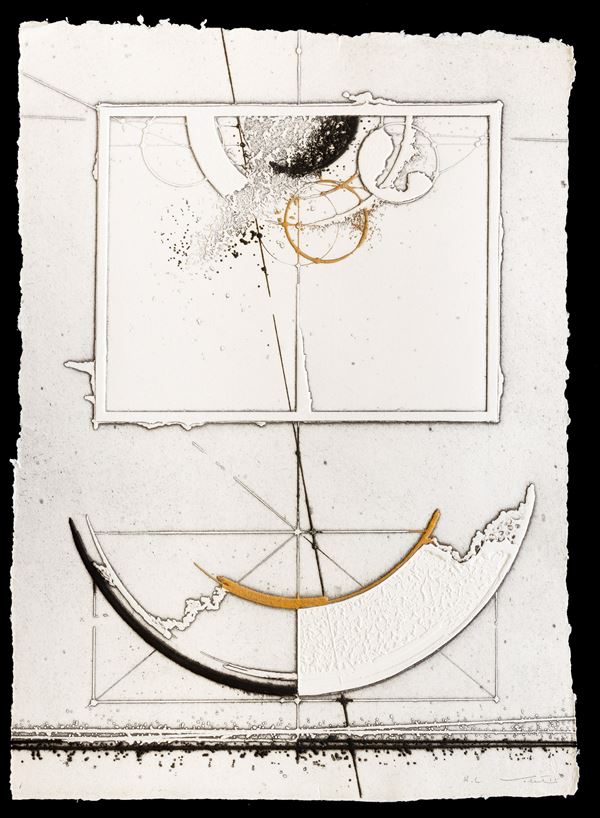
Lot N. 46
Walter Valentini©
(Pergola (PU), 1928 - Milano, 2022)
Le misure, il cielo
es. H.C. firmato e numerato in basso a destra carta Colombe tiratura 200 + XXV + A.L. stampatore Sardella, Milano acquaforte Largh. 47 - Alt. 64 Cm
Estimate
€ 150,00 / 250,00