191
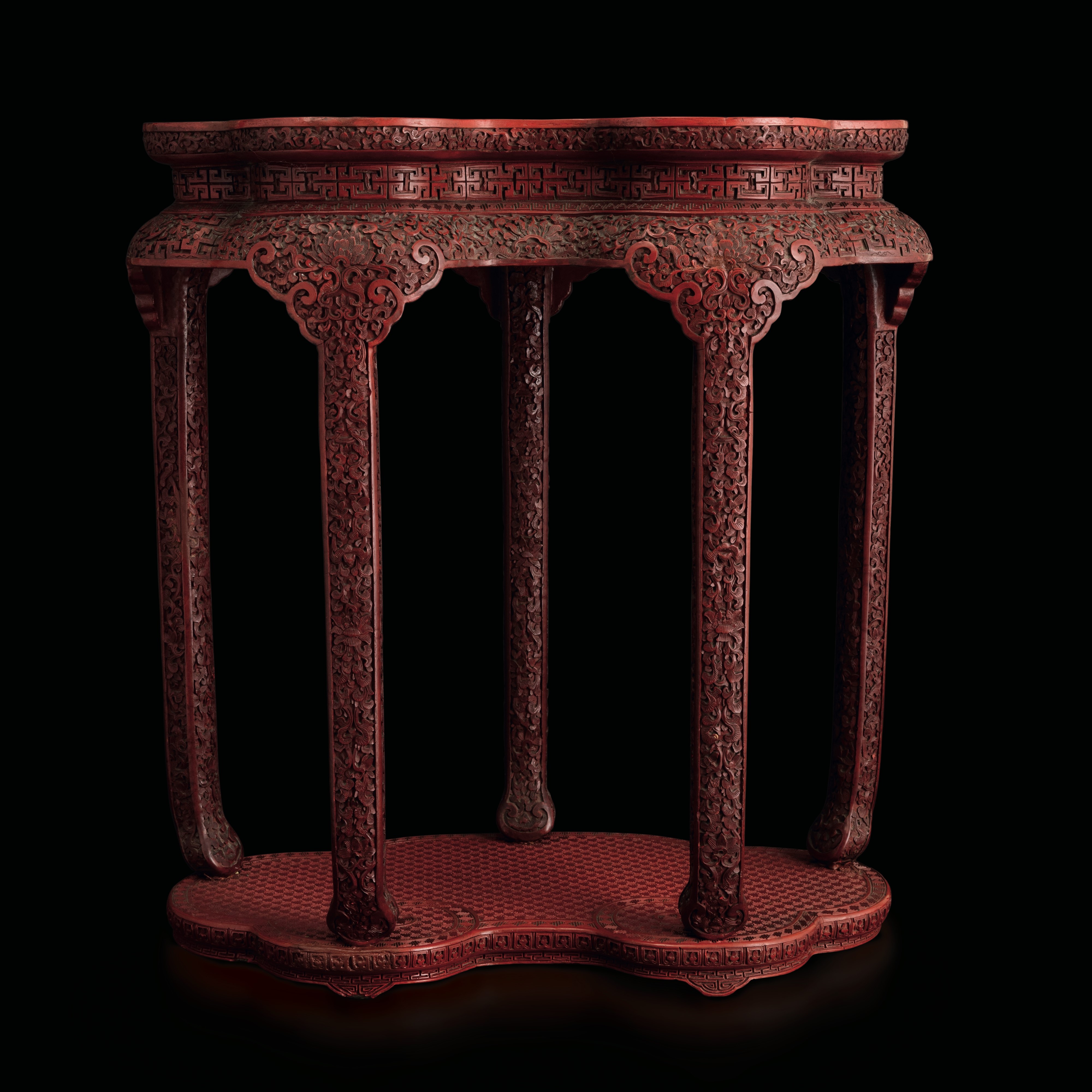
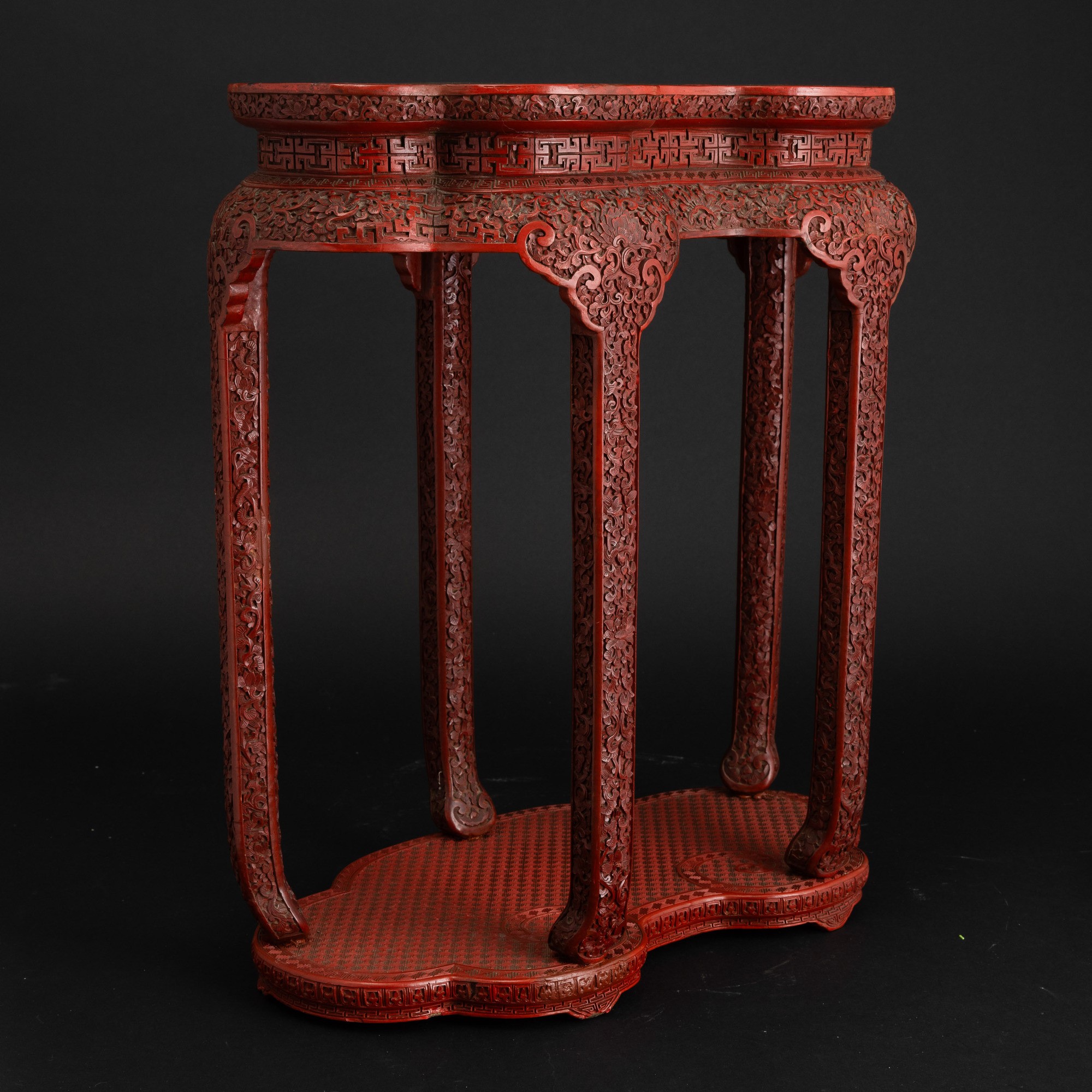
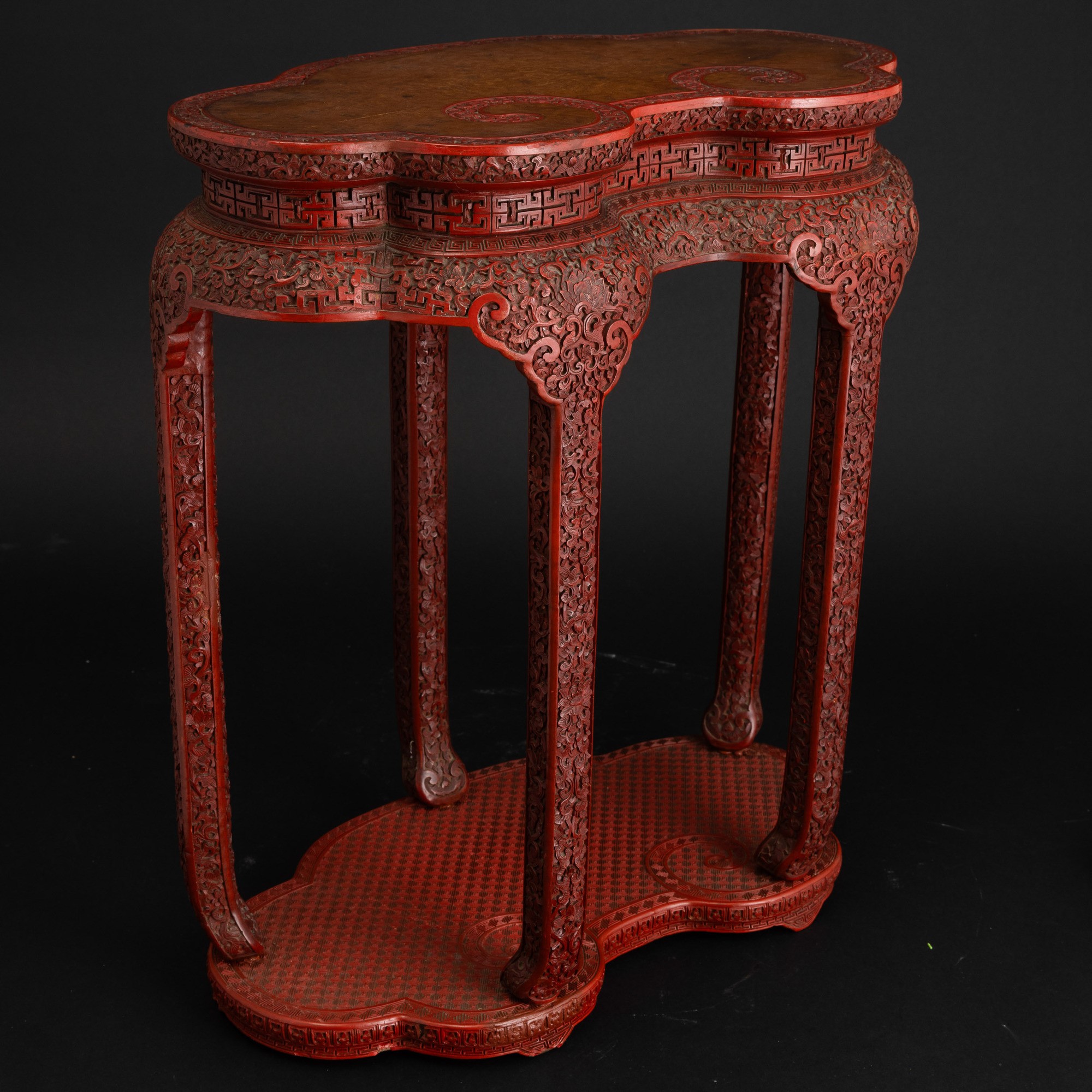
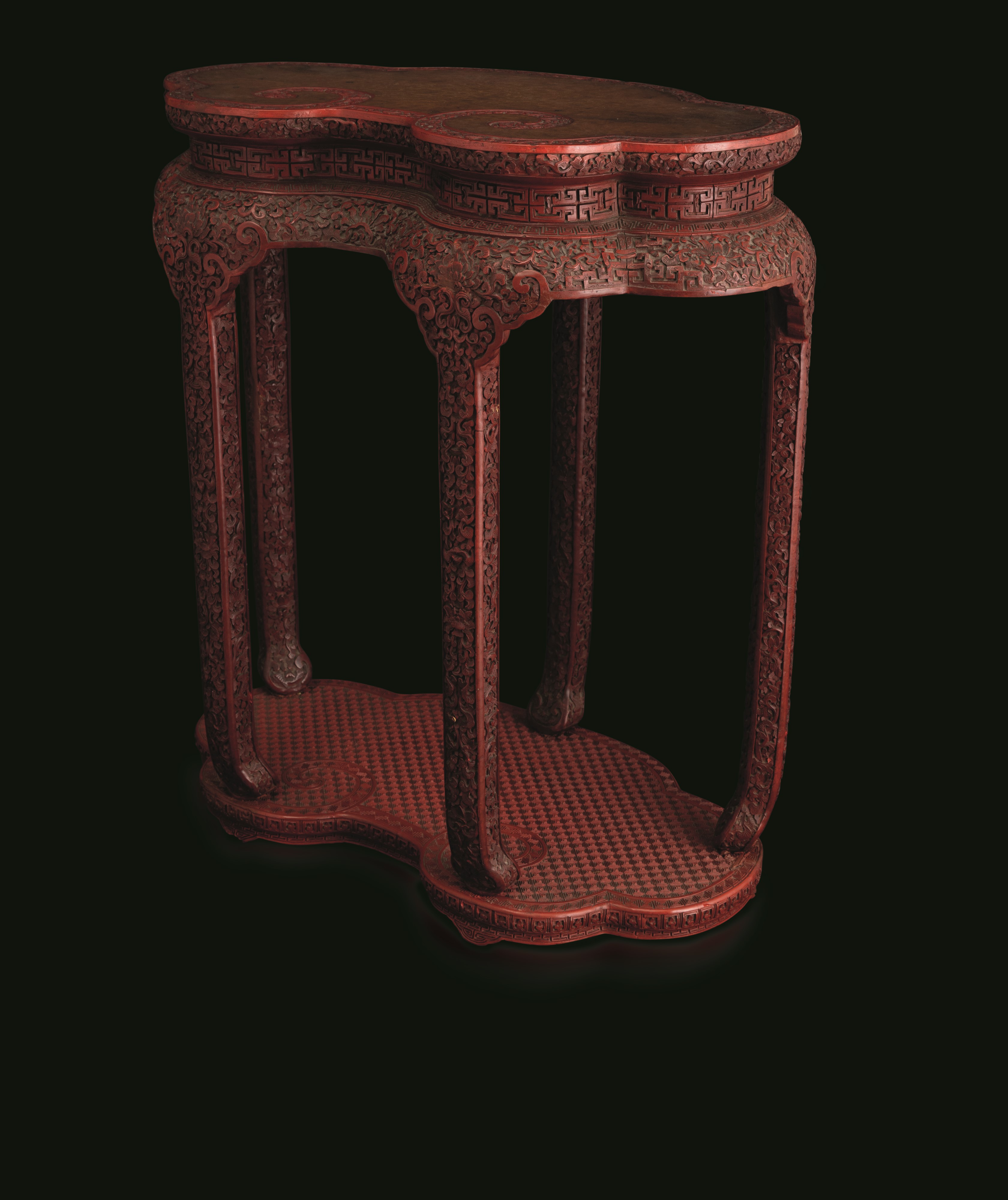
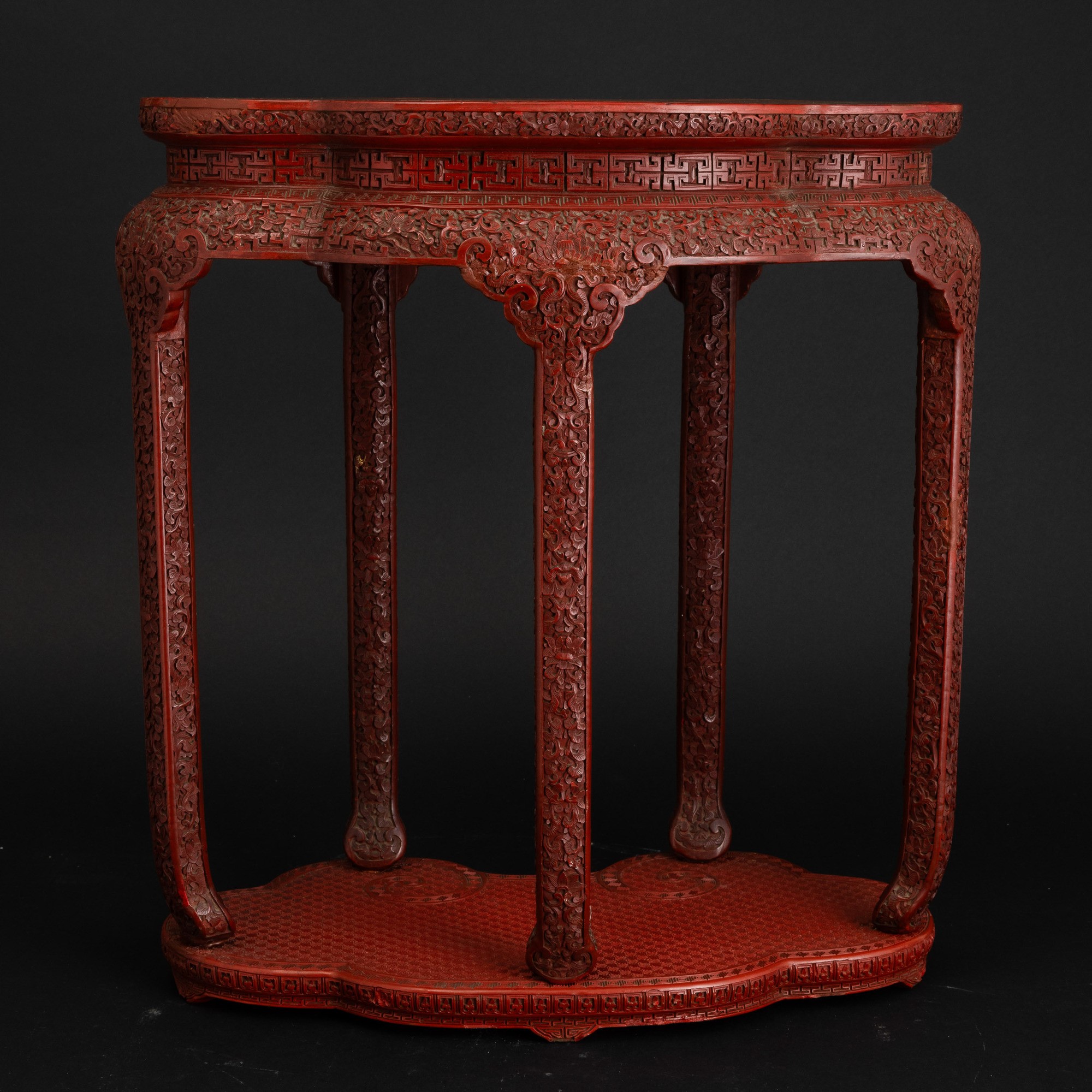
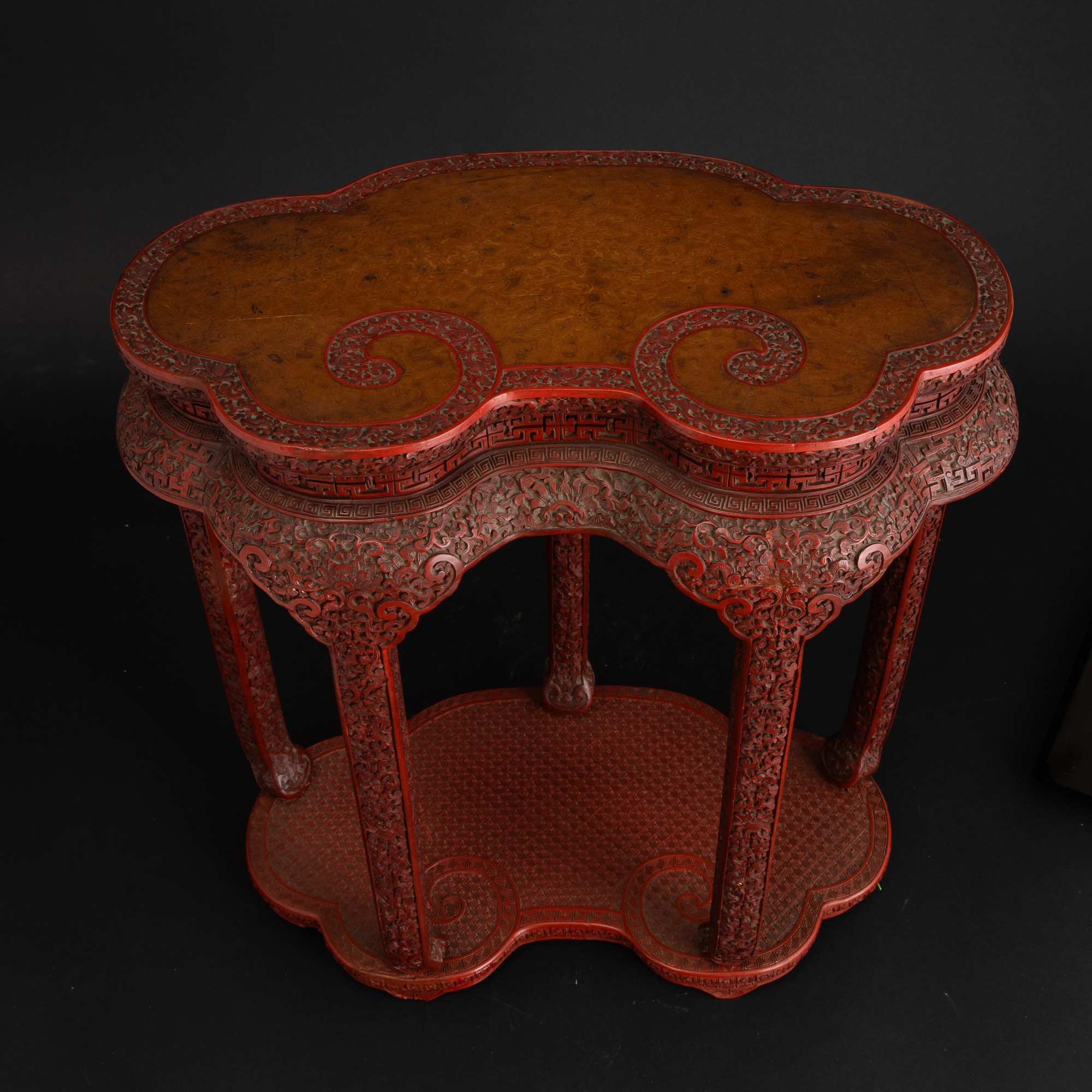
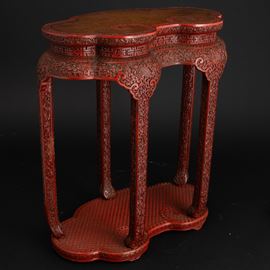
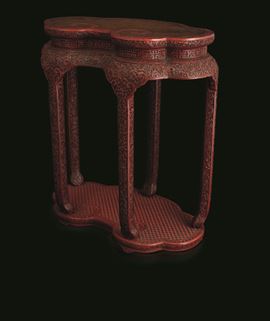
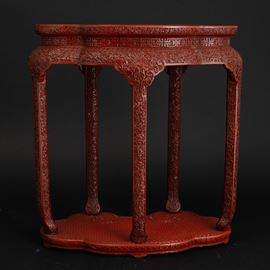
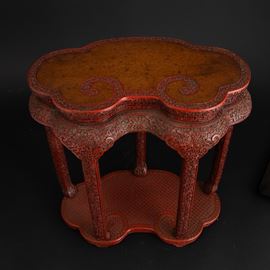
Very rare lacquered red lacquer stool carved with floral motifs with briar top, China, Qing Dynasty, Qianlong period (1736-1796)
Description
Very rare lacquered red lacquer stool carved with floral motifs with briar top, China, Qing Dynasty, Qianlong period (173 [..]
W. 40 - H. 45 Cm
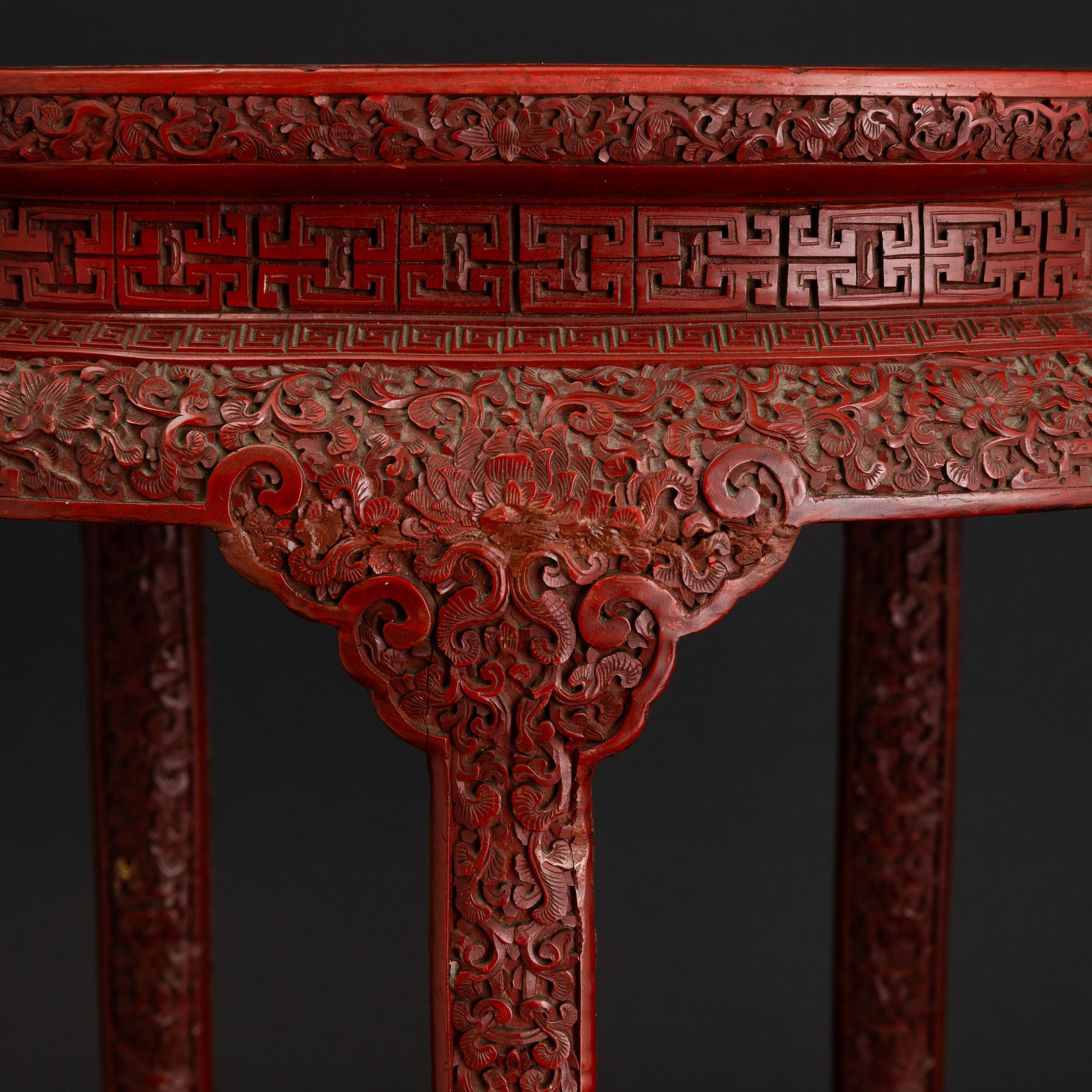
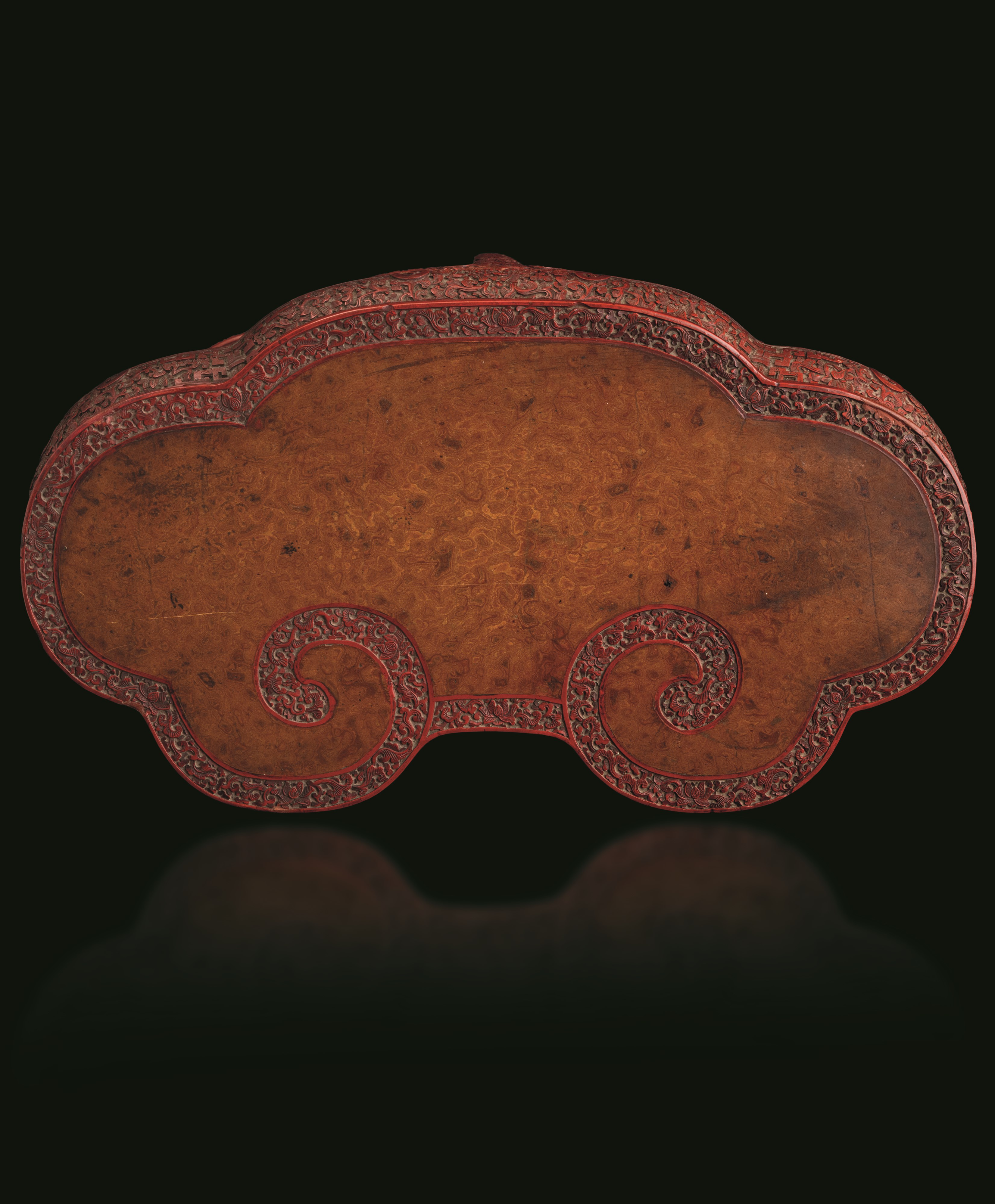
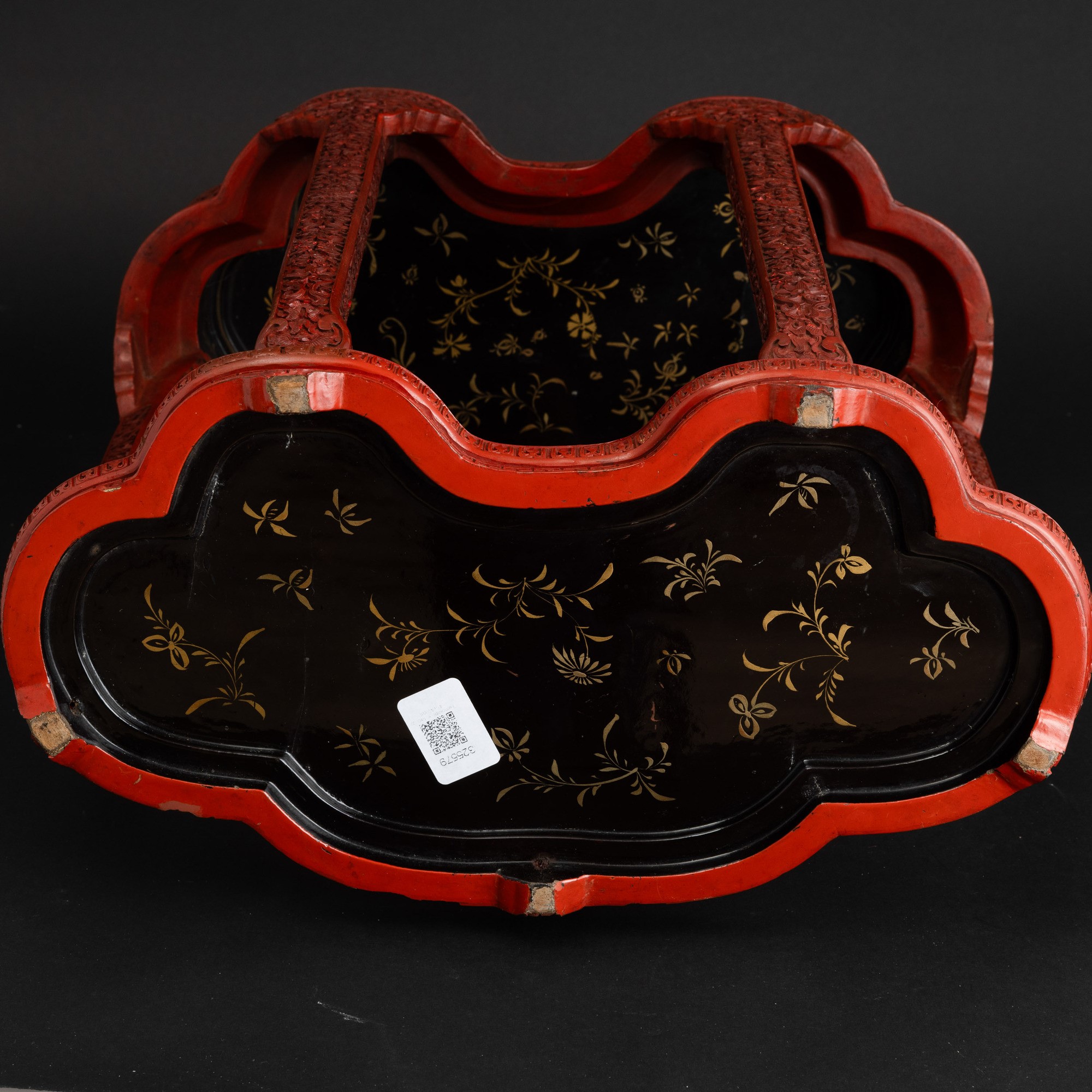
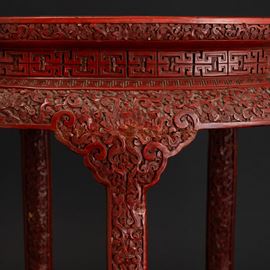
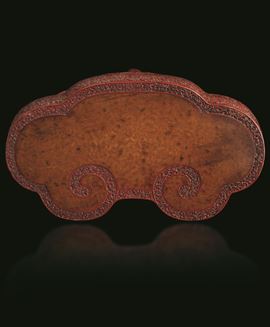
This stand is crafted with a wooden core, fully coated with lacquer, and adorned with exquisite carved red lacquer (tīhóng) patterns. The tabletop is shaped like an auspicious ruyi cloud, symbolizing good fortune. The edges are intricately carved with continuous key-fret patterns, representing endless blessings. Below the tabletop, the stand features a straight apron, sturdy and upright legs with inward-curving hoofed feet. The legs and apron are embellished with intricate intertwined floral and lotus petal ruyi motifs, demonstrating refined carving techniques with distinct layers.
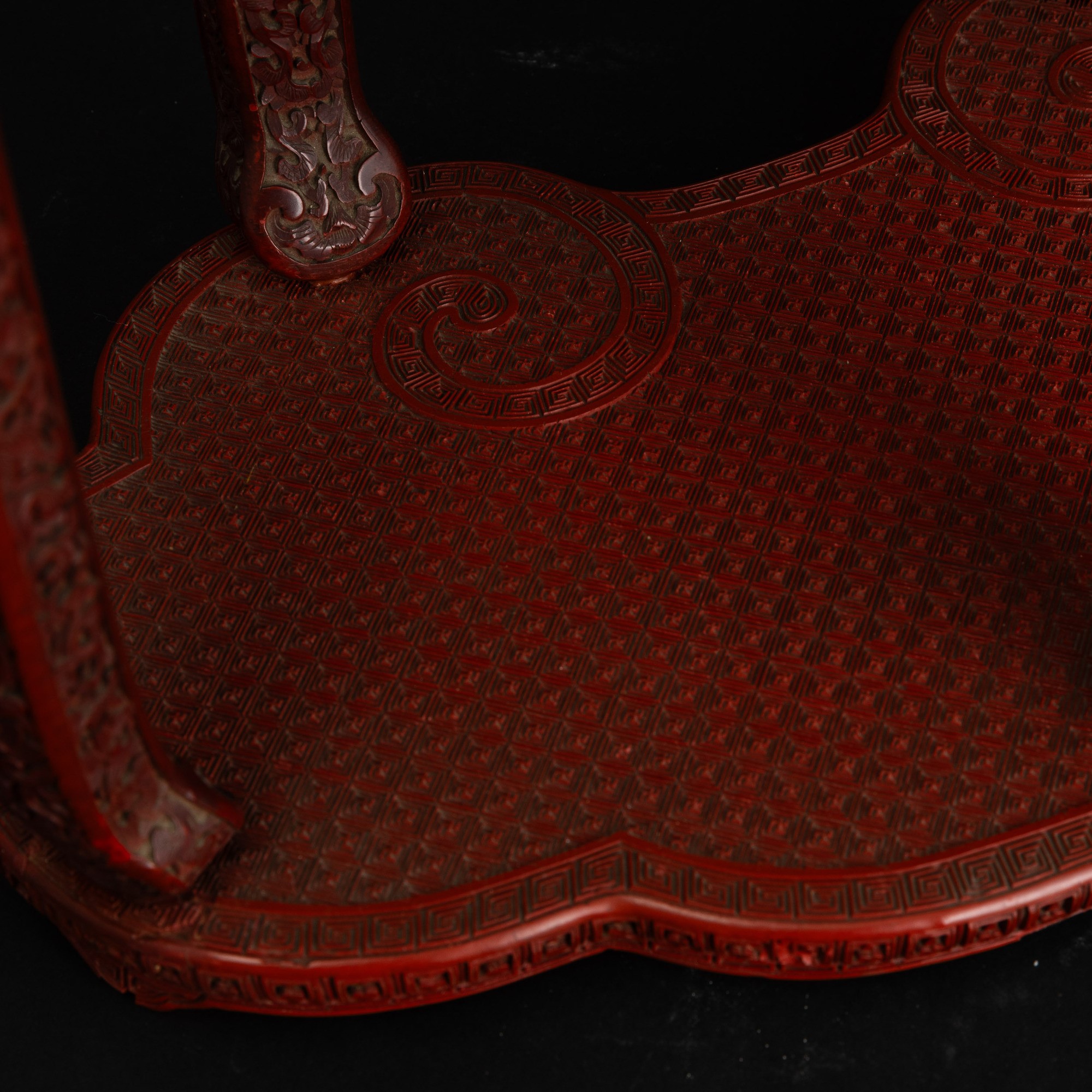
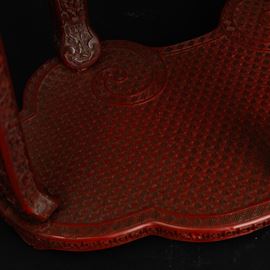
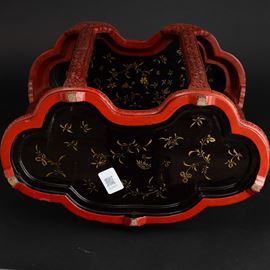
The lower base of the stand mirrors the ruyi cloud shape and is decorated with swastika patterns, a symbol of prosperity, complemented by continuous key-fret borders. The underside of the tabletop is coated with black lacquer and embellished with delicate gold floral patterns. The overall design of the stand is elegant and dignified, with finely detailed carvings that balance functionality with artistic value. It embodies the quintessential style of Qing Dynasty court and aristocratic furniture, serving as a prime example of the peak craftsmanship of carved red lacquer during the Qianlong period.
Carved red lacquer (Tīhóng) is a technique in which multiple layers of lacquer are applied to a wooden or lacquer base, creating a substantial thickness before intricate shallow or deep relief designs are meticulously carved. As red lacquer was the predominant color, this technique became known as "carved red lacquer" (tīhóng). Originating in the Tang and Song dynasties, this art form reached its zenith during the Ming and Qing periods. However, in the early Qing Dynasty, emperors Kangxi and Yongzheng did not prioritize carved lacquer craftsmanship, considering some lacquered bases insufficiently sturdy and prone to damage. It was not until the Qianlong era that the technique was actively revived and refined. In addition to wooden cores, new variations emerged, including metal, leather, copper, and even porcelain bases. This piece is a remarkable example of the advancements made during that period.
The lower base of the stand mirrors the ruyi cloud shape and is decorated with swastika patterns, a symbol of prosperity, complemented by continuous key-fret borders. The underside of the tabletop is coated with black lacquer and embellished with delicate gold floral patterns. The overall design of the stand is elegant and dignified, with finely detailed carvings that balance functionality with artistic value. It embodies the quintessential style of Qing Dynasty court and aristocratic furniture, serving as a prime example of the peak craftsmanship of carved red lacquer during the Qianlong period.
Carved red lacquer (Tīhóng) is a technique in which multiple layers of lacquer are applied to a wooden or lacquer base, creating a substantial thickness before intricate shallow or deep relief designs are meticulously carved. As red lacquer was the predominant color, this technique became known as "carved red lacquer" (tīhóng). Originating in the Tang and Song dynasties, this art form reached its zenith during the Ming and Qing periods. However, in the early Qing Dynasty, emperors Kangxi and Yongzheng did not prioritize carved lacquer craftsmanship, considering some lacquered bases insufficiently sturdy and prone to damage. It was not until the Qianlong era that the technique was actively revived and refined. In addition to wooden cores, new variations emerged, including metal, leather, copper, and even porcelain bases. This piece is a remarkable example of the advancements made during that period.
Live auction 982
Fine Asian Works of Art
thu 20 February 2025
Milan
FIRST SESSION
20/02/2025 Hours 09:30 am
Lots 1/227
SECOND SESSION
20/02/2025 Hours 02:30 pm
Lots 250/423