50
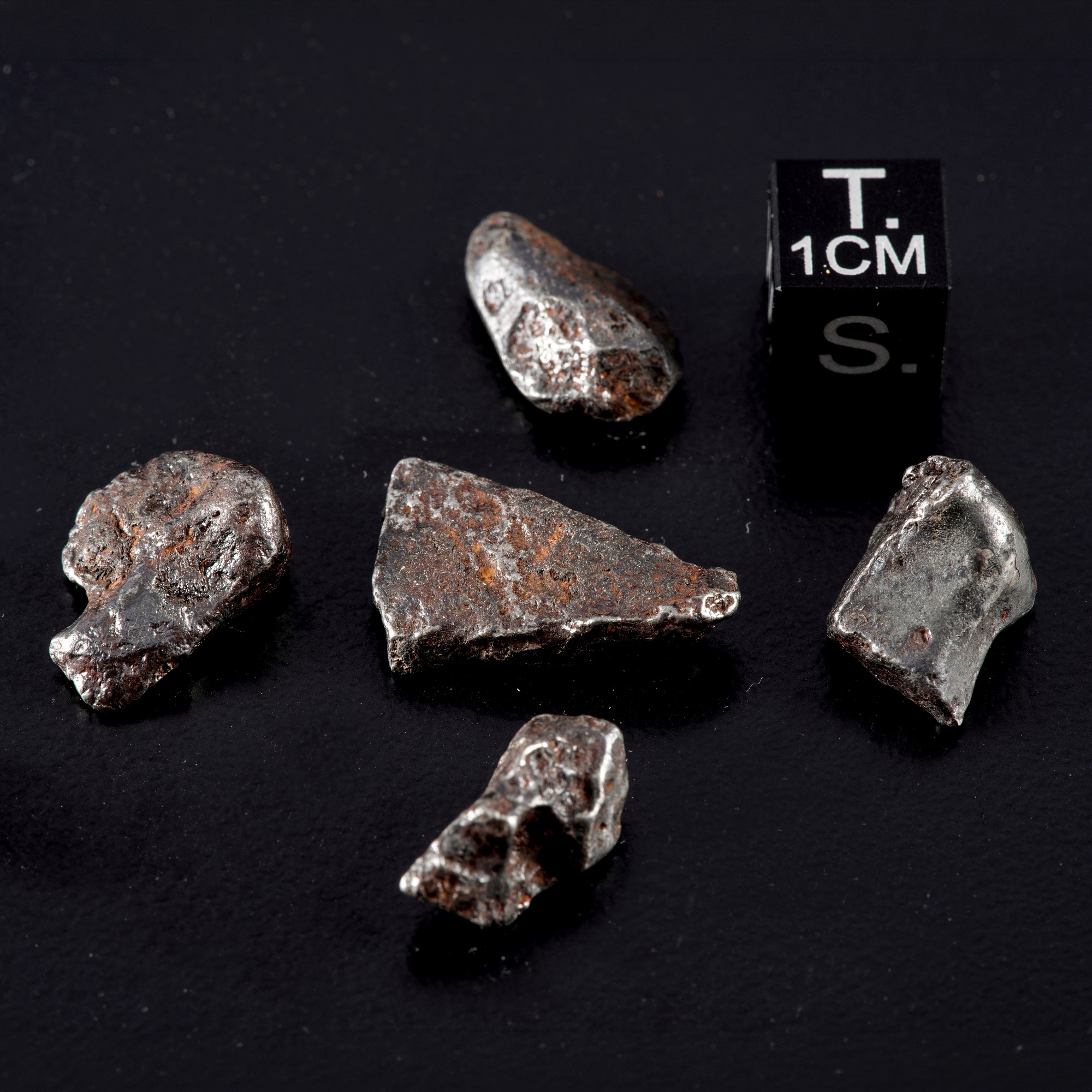
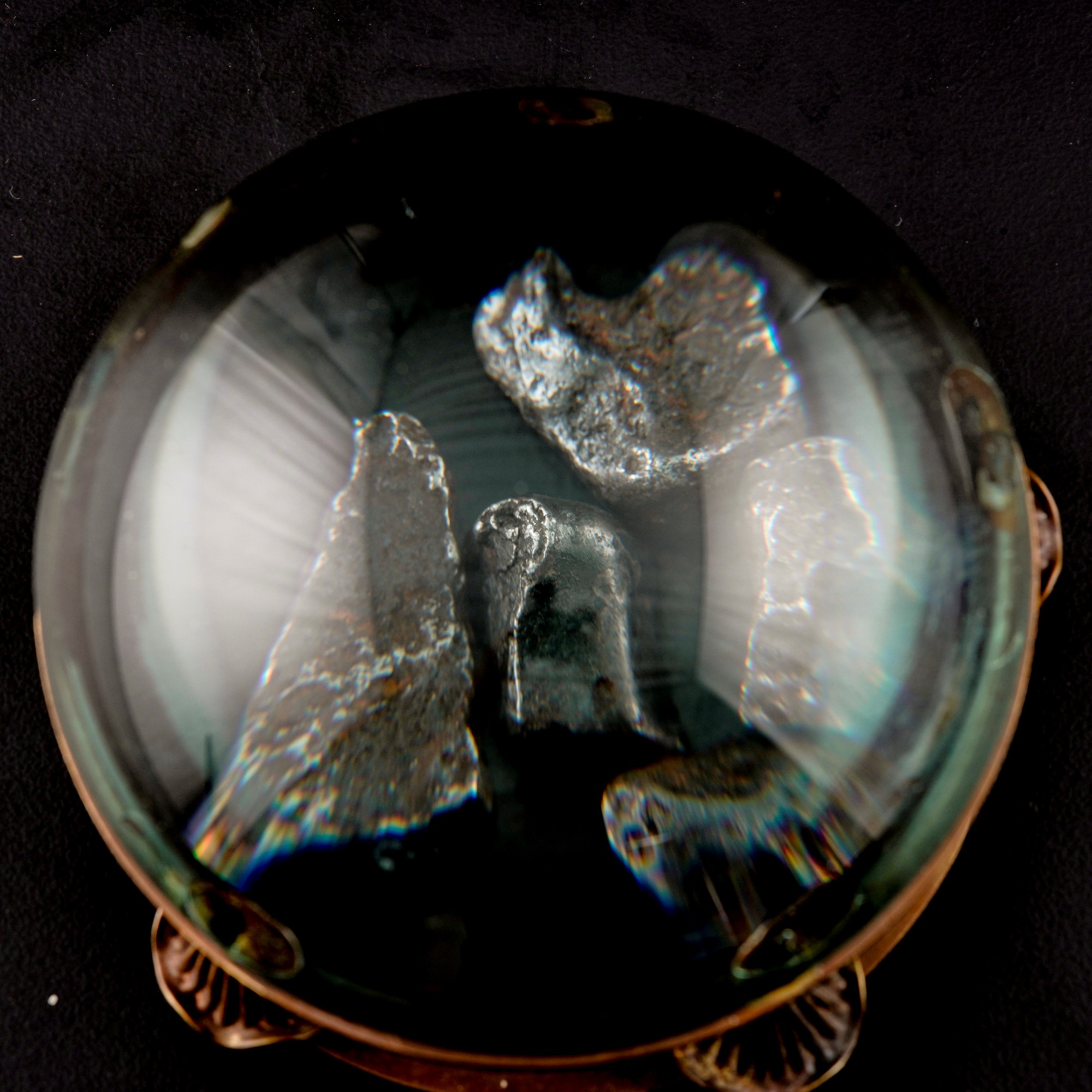
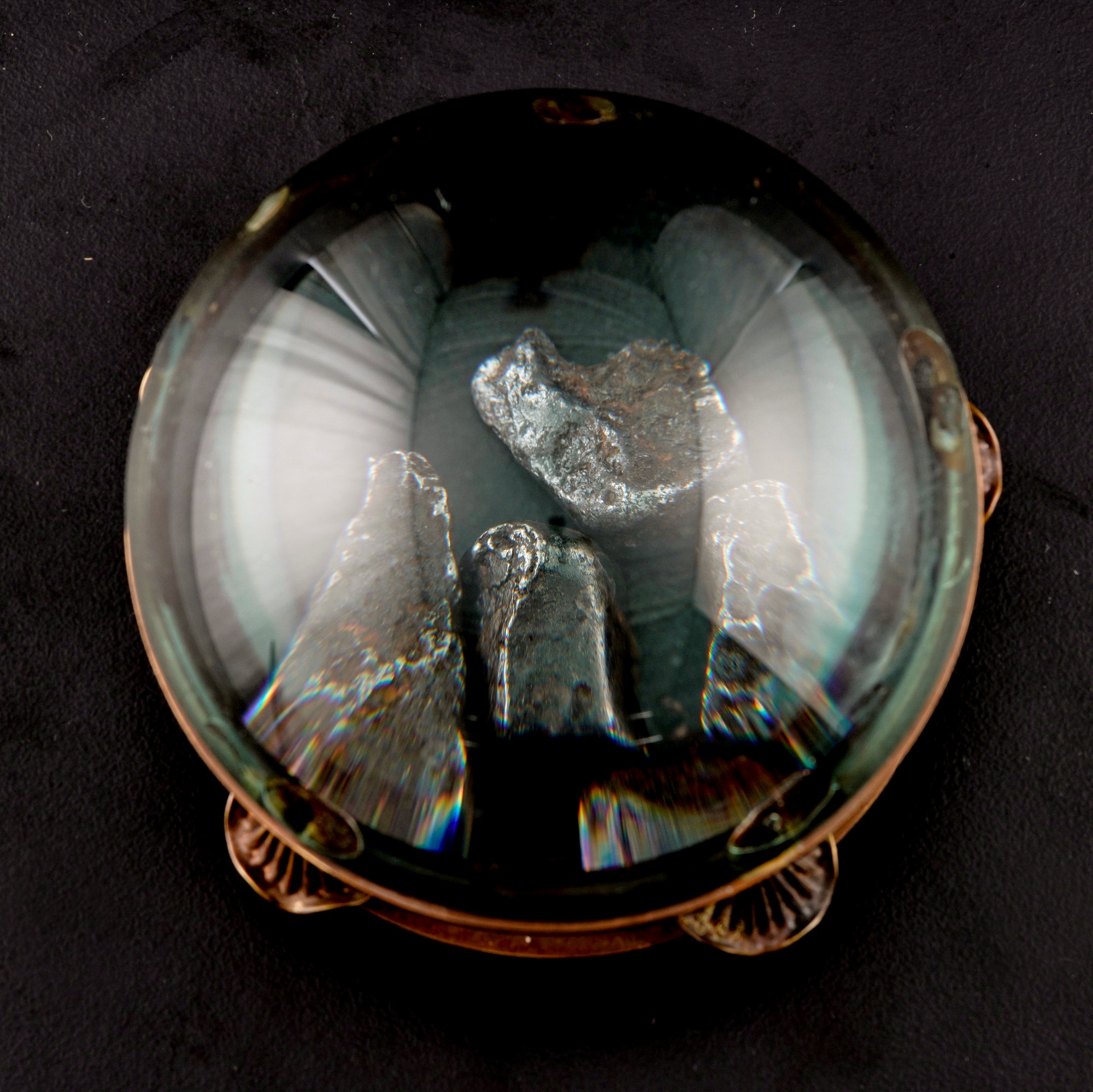
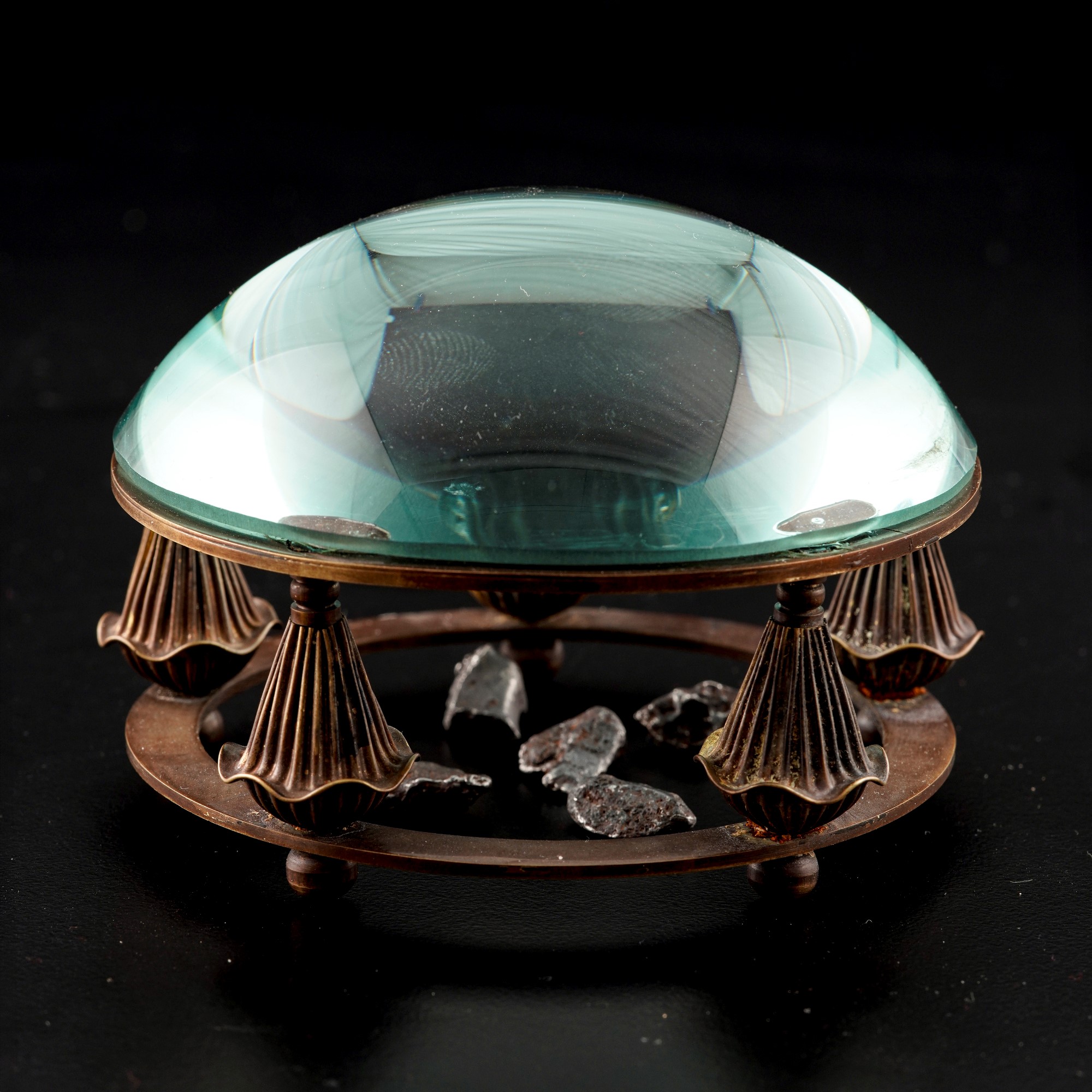
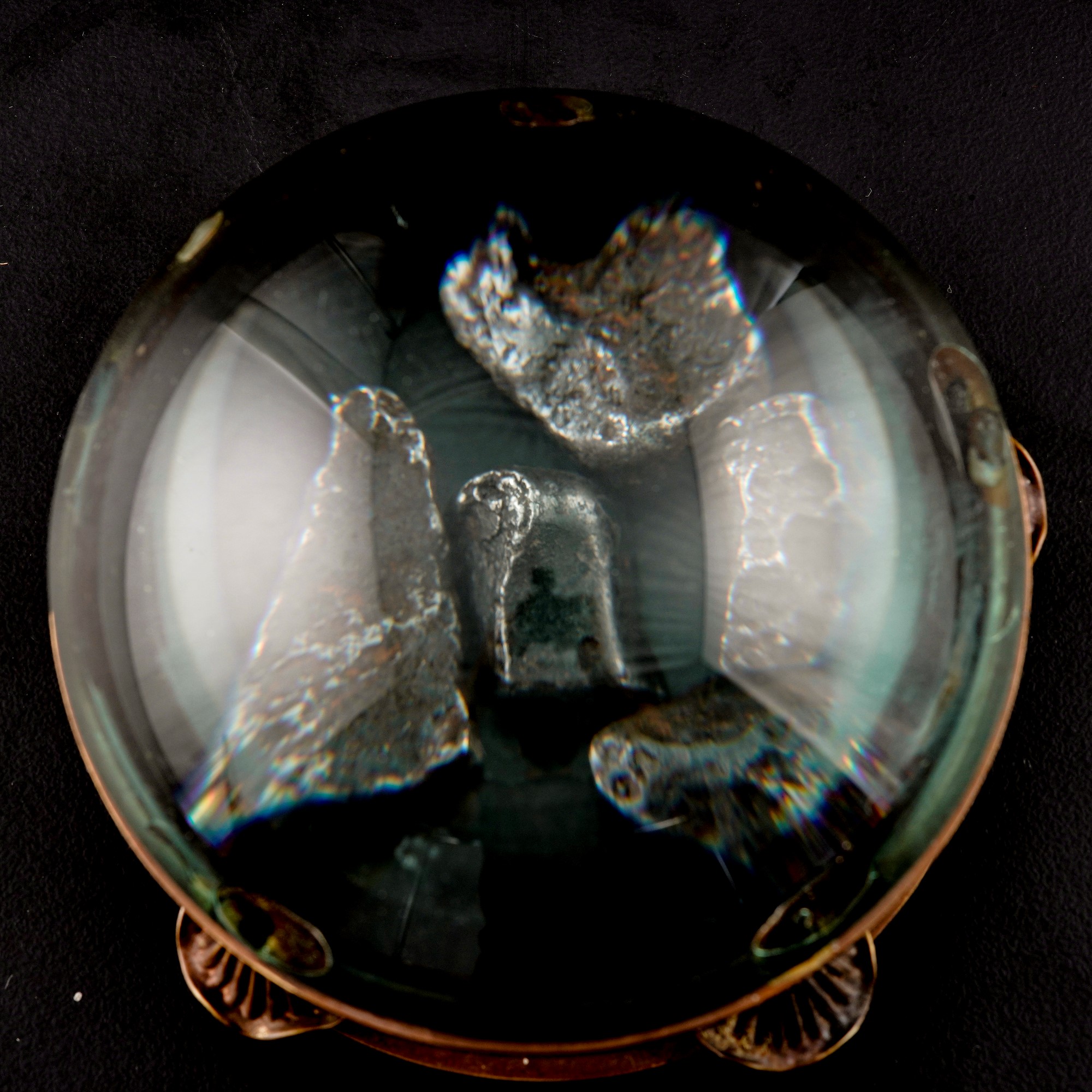
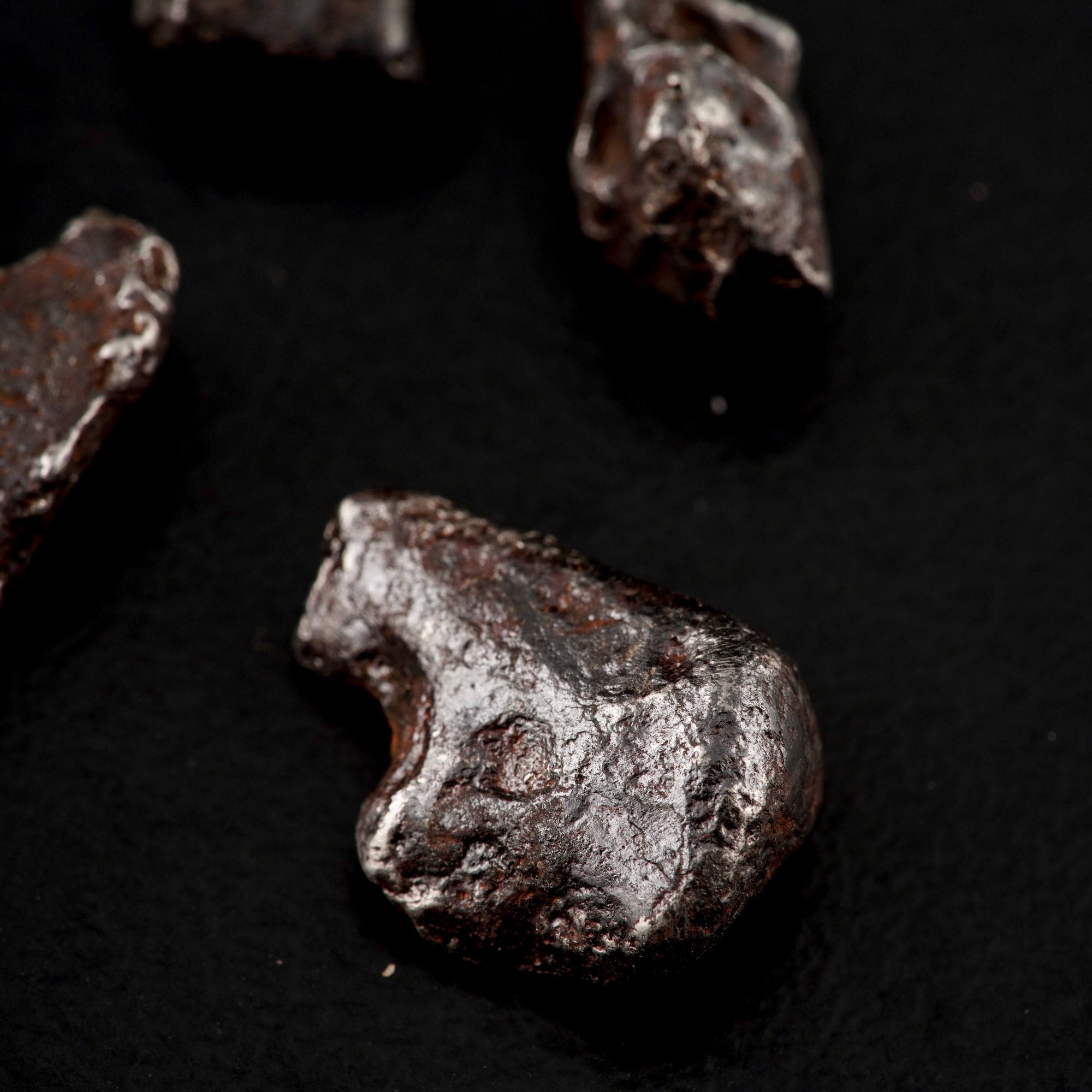
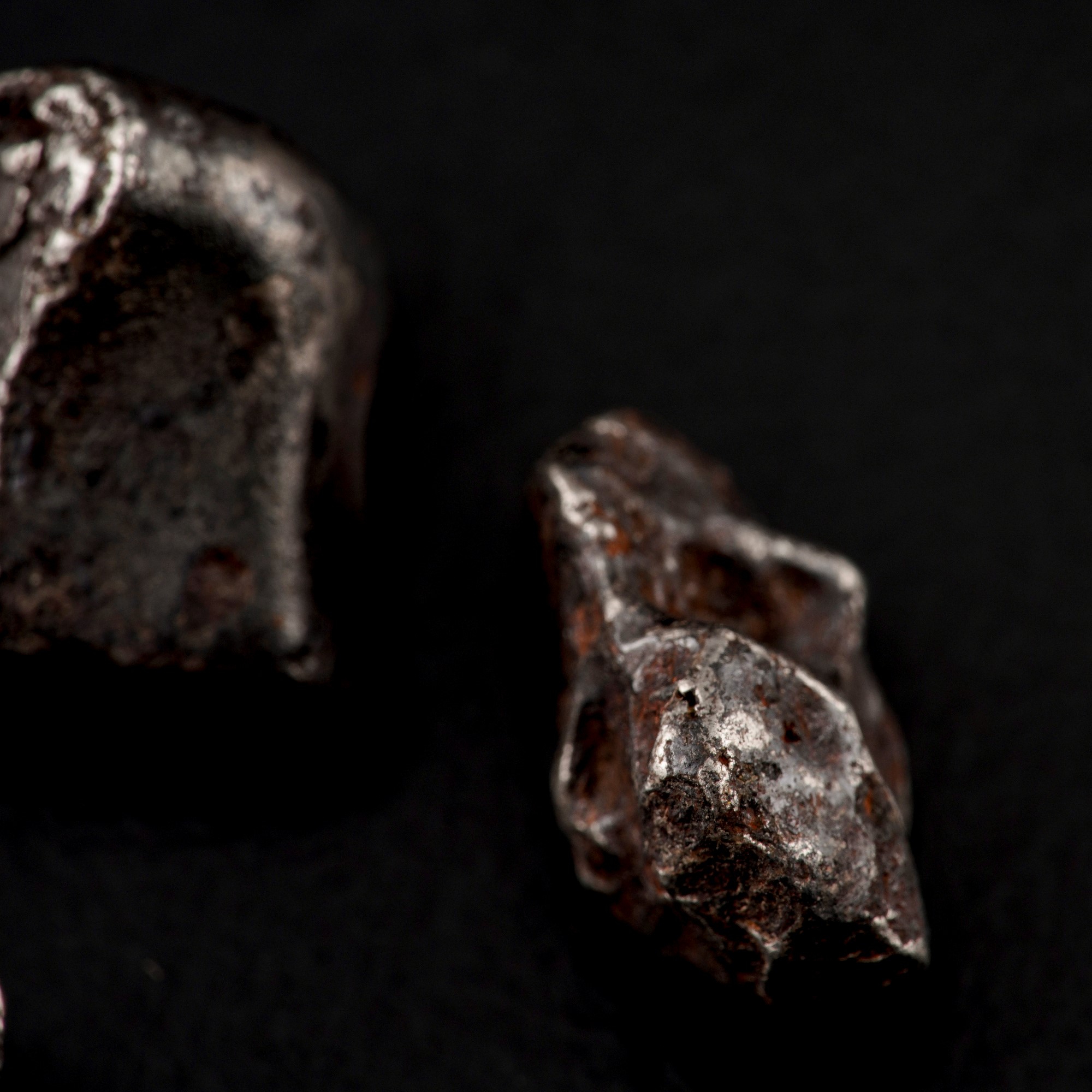
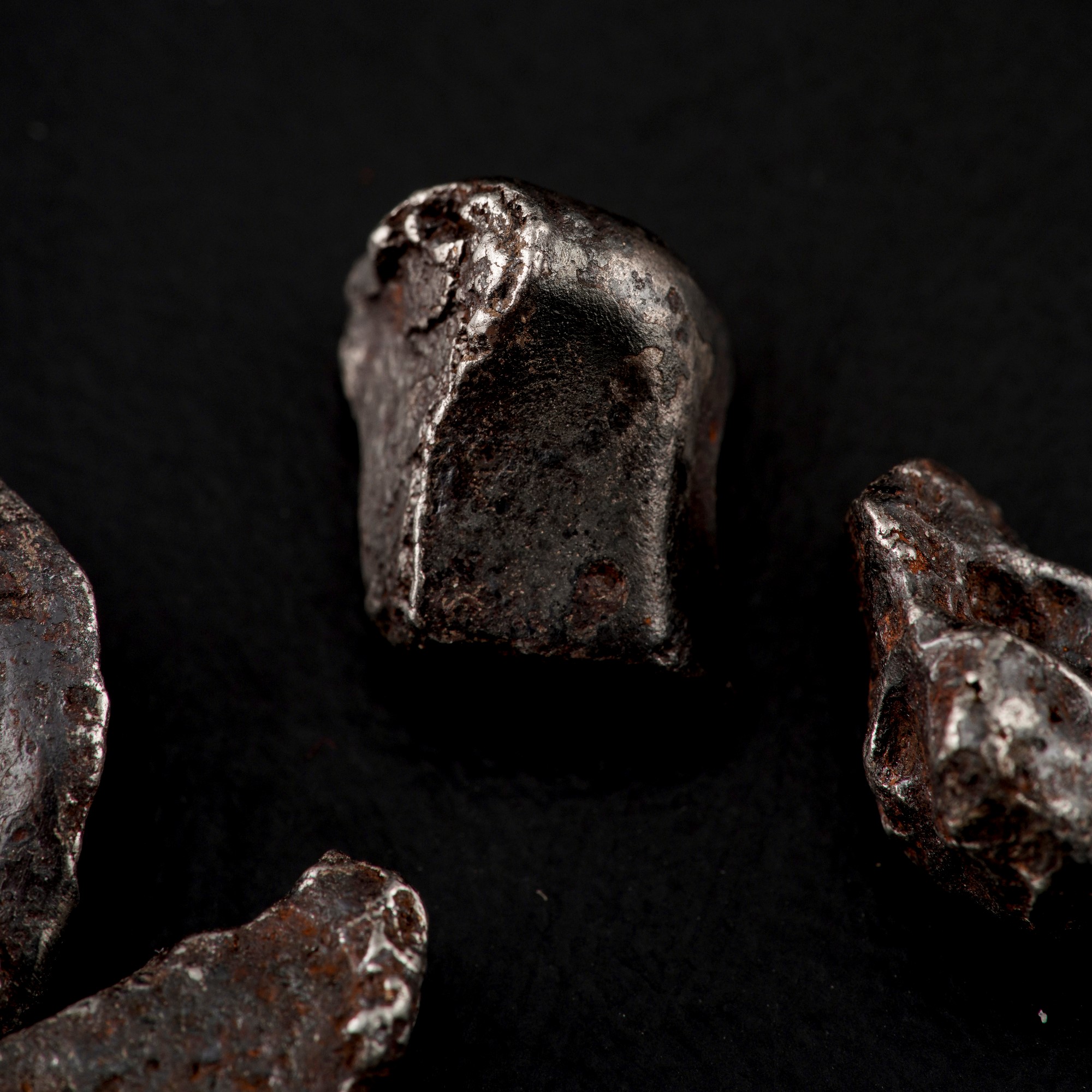
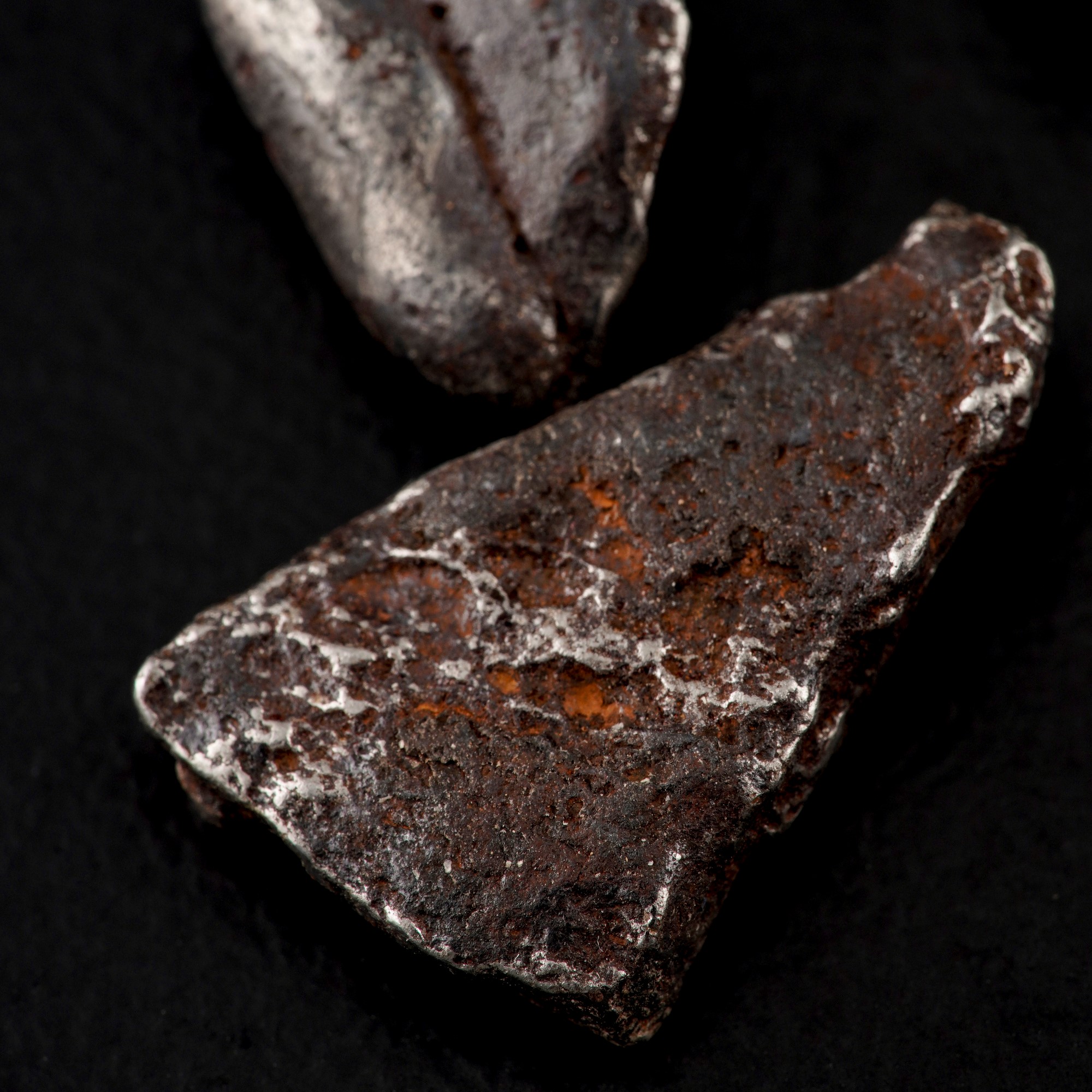
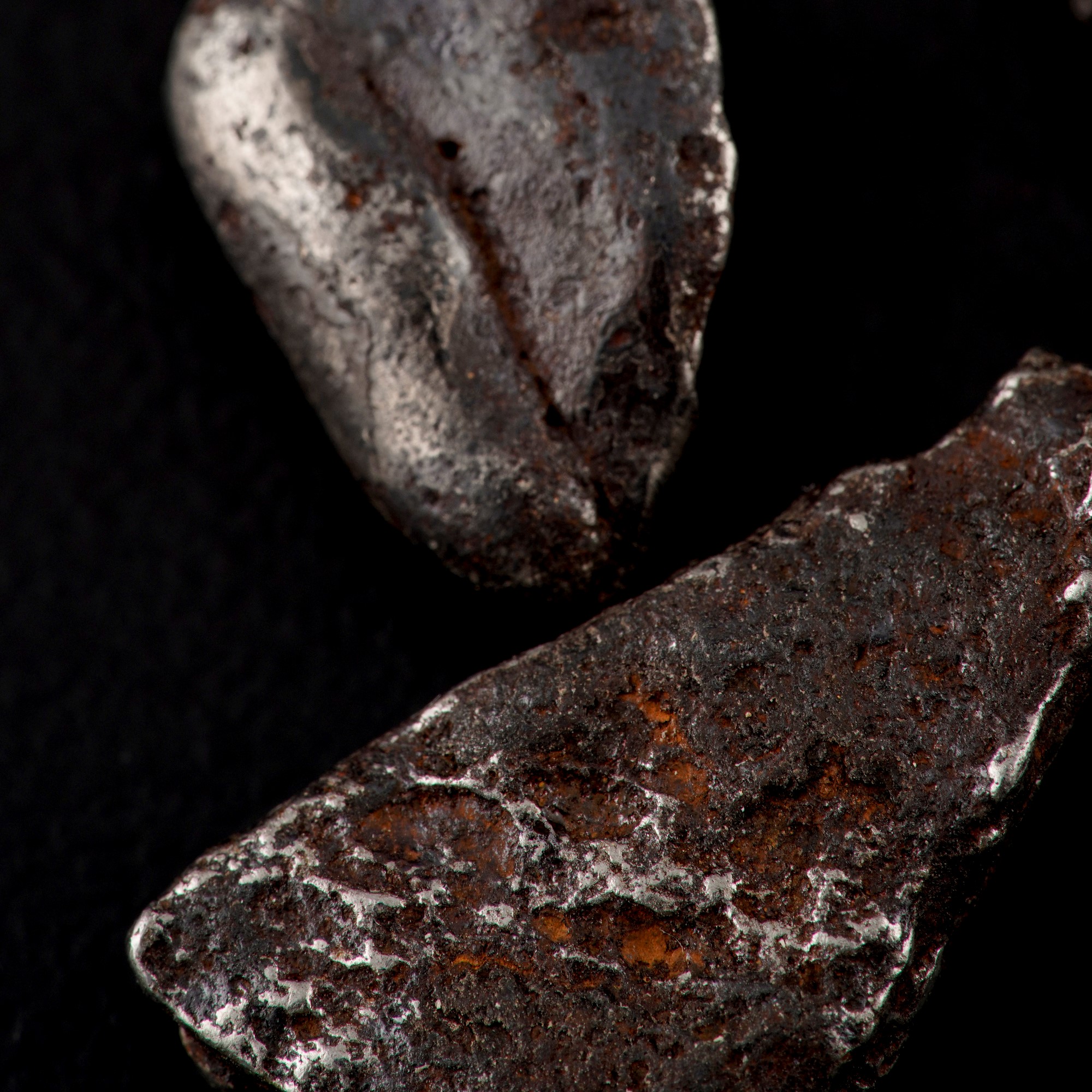
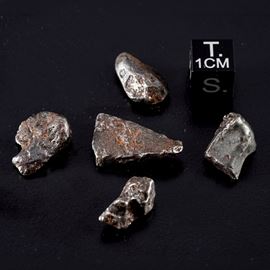
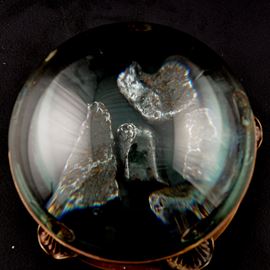
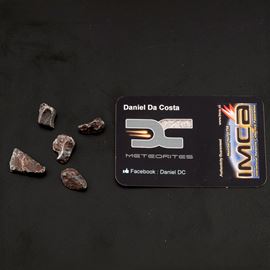
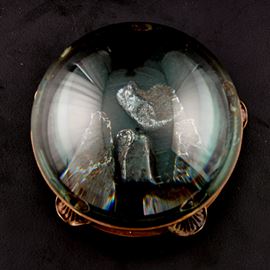
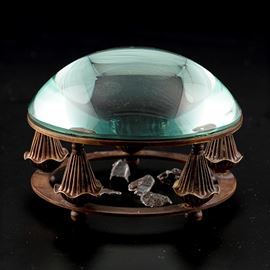
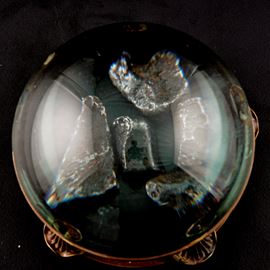
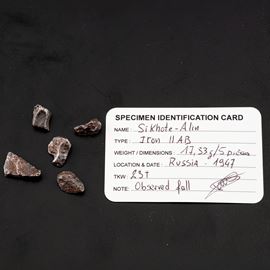
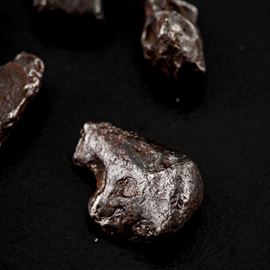
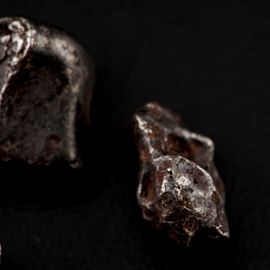
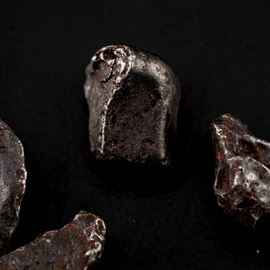
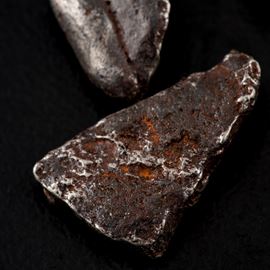
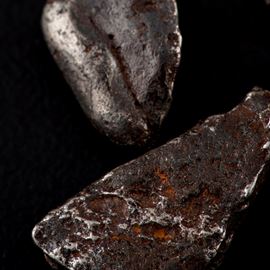
Five pieces of the Sikhote-Alin meteorite under a magnifying glass.
Description
Five pieces of the Sikhote-Alin meteorite under a magnifying glass.
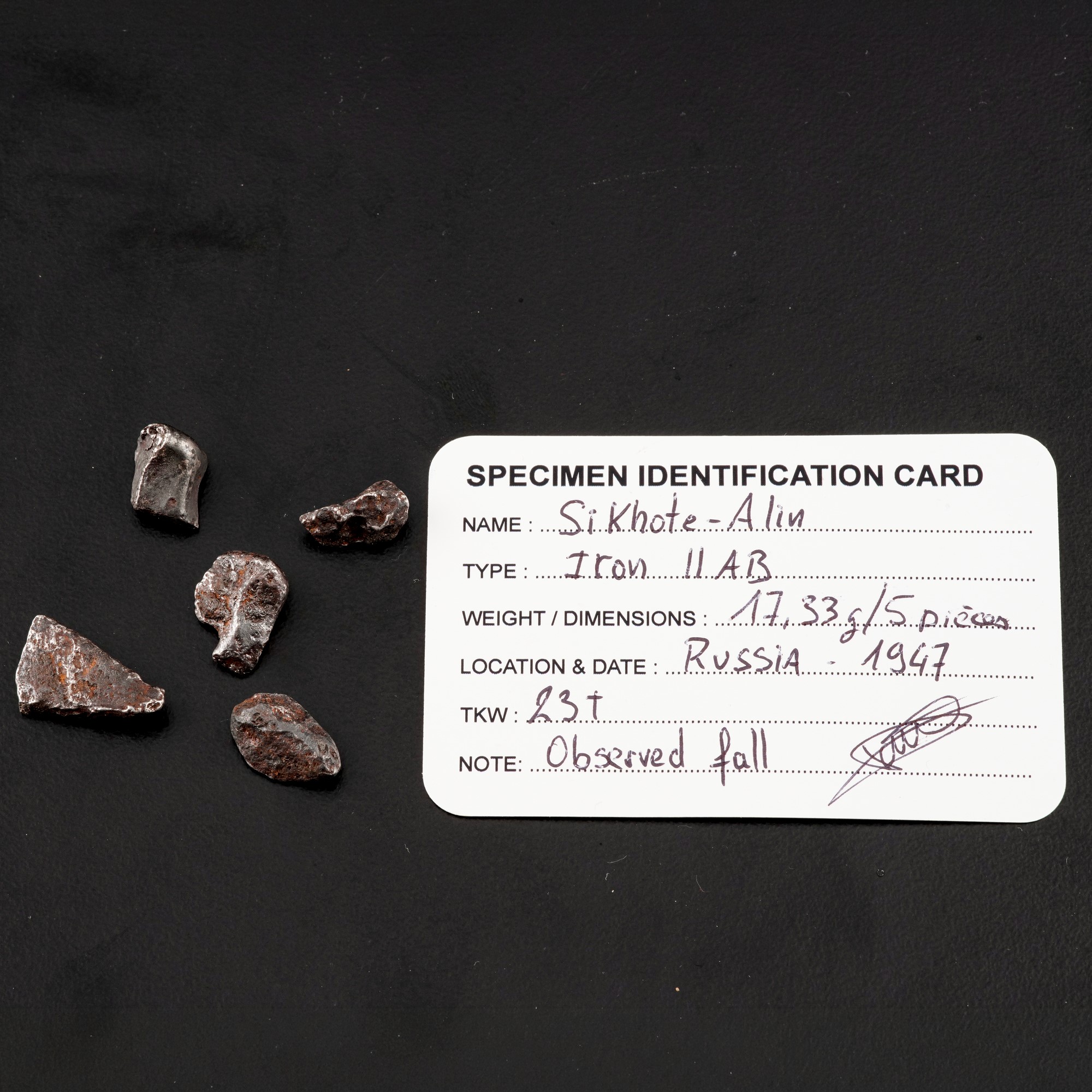
gr 17,33
Iron meteorite that fell in Russia in 1947
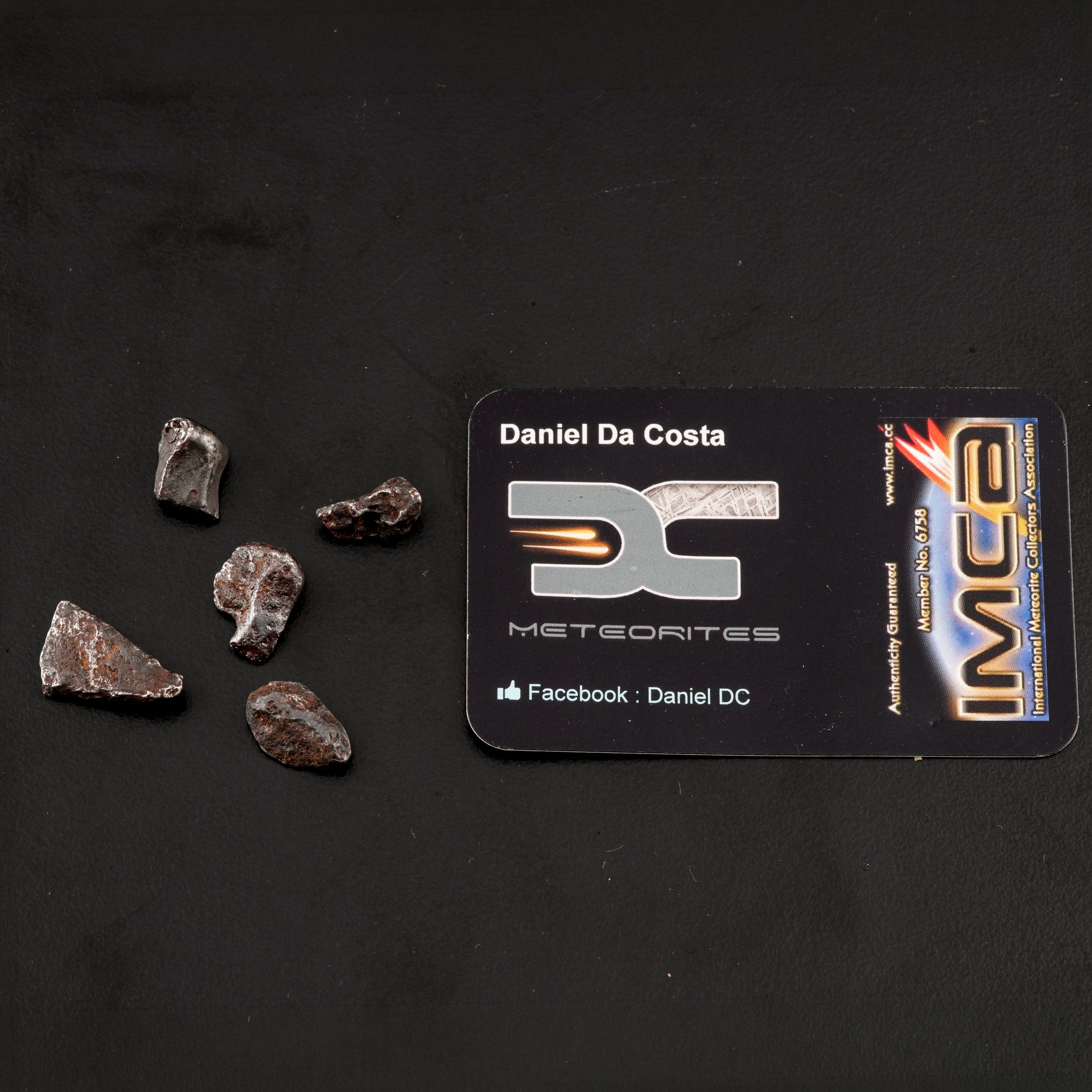
Certified by IMCA member No. 6758, Meteoriti DC
Origin
Russia, Sikhote-Alin Mountains, Primorye
More information
The Sikhote-Alin meteorite is one of the most famous iron meteorites ever observed.
It originates from the main asteroid belt located between Mars and Jupiter.
It is believed to have been part of the metallic core of an ancient asteroid destroyed by collisions.
Its cosmic history began billions of years ago during the formation of the Solar System.
Inside the parent body, iron and nickel separated from the lighter materials.
Subsequent collisions fragmented the asteroid and released the meteoroid into space.
For millions of years, the fragment orbited the Sun.
Eventually, its trajectory was altered until it crossed Earth’s path.
The fall occurred on February 12, 1947, in the mountainous region of Sikhote-Alin, in the Russian Far East.
The event was observed by thousands of people in broad daylight.
A gigantic fireball streaked across the sky, leaving a long luminous trail.
Upon entering the atmosphere at high speed, the object shattered violently.
The explosion produced a veritable shower of metallic fragments.
Numerous impact craters formed on the ground.
A total of over 23 metric tons of meteorite material was recovered.
The Sikhote-Alin belongs to the class of iron meteorites with the highest metal content.
Its composition consists mainly of iron (about 93%) and nickel (about 6%).
It also contains small amounts of cobalt, phosphorus, and other trace elements.
Its internal structure reveals metallic minerals such as kamacite and taenite, which are typical of iron meteorites.
Thanks to the exceptional observation of its fall and its composition, the Sikhote-Alin meteorite represents a valuable source of information on the origin and evolution of asteroids in the Solar System.
Time auction 1251
Historia Naturalis
mon 26 October - fri 13 November 2026
The description sheets do not always indicate the state of conservation of the goods, we invite you to always request the condition report before making your offers
New lots currently at auction
Furnishings, Paintings and Works of Art
Lot 193
Jean-Baptiste Camille Corot
Boschetto con alberi
Furnishings, Paintings and Works of Art
Lot 2
Nicholas Hilliard
Ritratti di dame della corte inglese
L'Art de la Table
Lot 462
Sei calici “Splendid” Repubblica Ceca, Karlsbad, Manifattura Moser, XX secolo
Furnishings, Paintings and Works of Art
Lot 294
Icona raffigurante Cristo Pantocratore. Russia, inizi XIX secolo
Furnishings, Paintings and Works of Art
Lot 301
Uovo apribile con supporto in metallo dorato e smalti guillochè. Atelier Fabergè, Russia XXI secolo.
Furnishings, Paintings and Works of Art
Lot 297
Icona raffigurante Annunciazione. Russia, prima metà XIX secolo
Furnishings, Paintings and Works of Art
Lot 303
Manifattura europea (Russia ?) del XX secolo. Apparentemente priva di punzonatura Lente d'ingrandimen [..]
Furnishings, Paintings and Works of Art
Lot 286
Icona raffigurante le Sedici Grandi Feste. Russia, XIX secolo
Modern and Contemporary Art
Lot 98
Jerzy Kujawski
Untitled
Modern and Contemporary Art
Lot 144