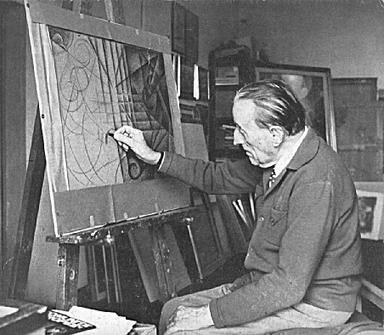
Evaluation Gerardo Dottori
Gerardo Dottori Valuations - Want to sell a Gerardo Dottori piece? Request a complimentary and confidential valuation!Cambi Casa d'Aste will review your submission and offer a free-of-charge estimate, if your item is suitable for our auctions.
biography
Gerardo Dottori was an Italian painter and one of the leading exponents of the Futurist movement in the 20th century. Born in Perugia on 11 November 1884 into a family of modest means, the eldest of four brothers, Dottori began his artistic training at evening classes at the Pietro Vannucci Academy of Fine Arts in Perugia. Between 1904 and 1907, he produced his first works with Divisionist accents, such as Fanciulla umbra (1904), seeking a language that would free him from academic teachings. In 1910, he began collaborating with the magazine La Difesa dell'Arte, marking an important first step in his artistic career. The decisive turning point came in 1911, when he met Giacomo Balla in Rome and joined Futurism, a movement that would characterise his entire artistic production. In 1912, he brought together the first Umbrian Futurist group and in 1915 he enlisted as a volunteer for the Great War, continuing to paint and write stories. After the war, in 1920, he founded the Futurist magazine “Griffa!” in Perugia together with Presenzini Mattoli, with the aim of spreading the ideas of the movement and promoting the rebirth of Umbrian artistic life.
That same year, he held his first solo exhibition in Rome at the Bragaglia Gallery, inaugurated by Marinetti. In 1924, he became the first Futurist to exhibit at the Venice Biennale, despite Marinetti's initial disapproval, with his work Primavera umbra (Umbrian Spring).
His greatest contribution to Futurism was in Aeropainting, of which he became one of the leading exponents. In 1929, he signed the Aeropainting Manifesto together with Marinetti, Balla, Depero, Prampolini, Luigi Colombo (Fillia), Guglielmo Sansoni (Tato) and Mino Somenzi. During the 1930s, Dottori lived and worked in Rome, where he supported himself by writing art reviews for newspapers and magazines, contributing to the development of Futurist political ideology. The most important work of this period was the “Triptych of Speed”, praised several times by Marinetti, and the mural decoration of the Ostia Seaplane Harbour in 1928, which marked the affirmation of Aeropainting. In 1932, he participated in the Venice Biennale with the work “Anno X”, which won the Ministry of Corporations Award. In 1939, he returned permanently to Perugia, where he was appointed professor of painting at the Pietro Vannucci Academy of Fine Arts, becoming its director from 1940 to 1947. In the same year, he decorated the apse of the Church of Santa Maria Maggiore in Bettona.
In 1941, he wrote the ‘Umbrian Manifesto of Aeropainting’, reaffirming his artistic vision and clarifying that the true essence of his futurism lay in representing mystical settings and landscapes. In 1942, he was given a solo exhibition at the Venice Biennale, where he exhibited 36 works. From the late 1940s, he intensified his activity in sacred and secular decoration in the Lake Trasimeno area. In 1957, he donated five of his masterpieces to the Municipality of Perugia to form the core of the future Gallery of Modern Art, and the city organised his first retrospective. In 1974, on the occasion of his 90th birthday, a major retrospective was held in Trieste. A multifaceted artist, Dottori also devoted himself to ceramics and the design of futurist furniture and clothing, participating in numerous group exhibitions, especially in Umbria. During his lifetime, he participated in ten editions of the Venice Biennale. He died in Perugia on 13 June 1977, leaving a significant artistic legacy in the panorama of Italian futurism and 20th-century modern art.
That same year, he held his first solo exhibition in Rome at the Bragaglia Gallery, inaugurated by Marinetti. In 1924, he became the first Futurist to exhibit at the Venice Biennale, despite Marinetti's initial disapproval, with his work Primavera umbra (Umbrian Spring).
His greatest contribution to Futurism was in Aeropainting, of which he became one of the leading exponents. In 1929, he signed the Aeropainting Manifesto together with Marinetti, Balla, Depero, Prampolini, Luigi Colombo (Fillia), Guglielmo Sansoni (Tato) and Mino Somenzi. During the 1930s, Dottori lived and worked in Rome, where he supported himself by writing art reviews for newspapers and magazines, contributing to the development of Futurist political ideology. The most important work of this period was the “Triptych of Speed”, praised several times by Marinetti, and the mural decoration of the Ostia Seaplane Harbour in 1928, which marked the affirmation of Aeropainting. In 1932, he participated in the Venice Biennale with the work “Anno X”, which won the Ministry of Corporations Award. In 1939, he returned permanently to Perugia, where he was appointed professor of painting at the Pietro Vannucci Academy of Fine Arts, becoming its director from 1940 to 1947. In the same year, he decorated the apse of the Church of Santa Maria Maggiore in Bettona.
In 1941, he wrote the ‘Umbrian Manifesto of Aeropainting’, reaffirming his artistic vision and clarifying that the true essence of his futurism lay in representing mystical settings and landscapes. In 1942, he was given a solo exhibition at the Venice Biennale, where he exhibited 36 works. From the late 1940s, he intensified his activity in sacred and secular decoration in the Lake Trasimeno area. In 1957, he donated five of his masterpieces to the Municipality of Perugia to form the core of the future Gallery of Modern Art, and the city organised his first retrospective. In 1974, on the occasion of his 90th birthday, a major retrospective was held in Trieste. A multifaceted artist, Dottori also devoted himself to ceramics and the design of futurist furniture and clothing, participating in numerous group exhibitions, especially in Umbria. During his lifetime, he participated in ten editions of the Venice Biennale. He died in Perugia on 13 June 1977, leaving a significant artistic legacy in the panorama of Italian futurism and 20th-century modern art.
Past lots of Gerardo Dottori
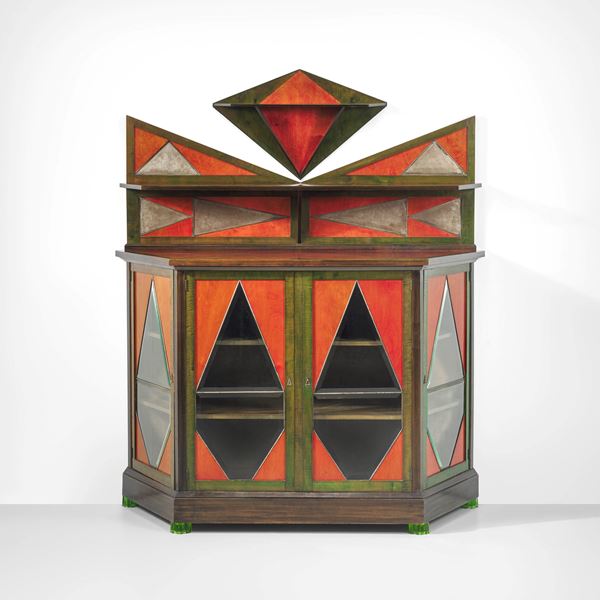
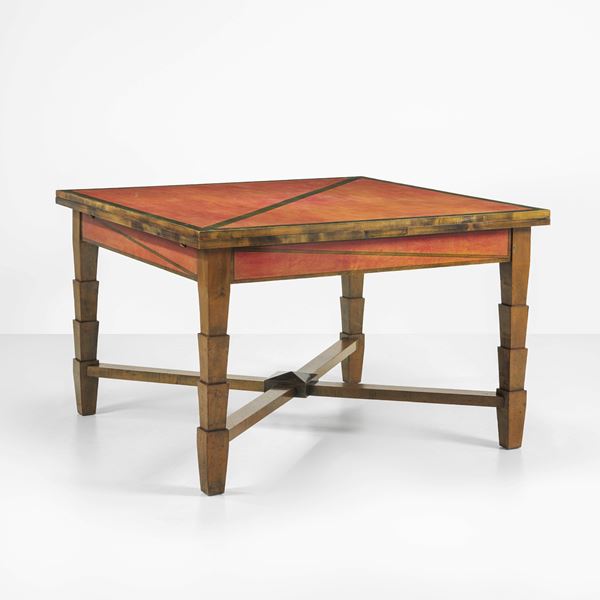
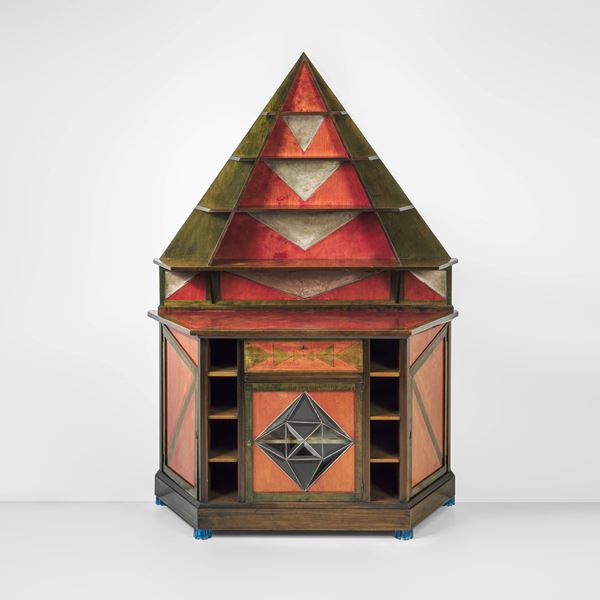
Gerardo Dottori
Storage cabinet
Wooden structure and wood painted with aniline. Glass and metal details. Coloured glass supports. From the furnishings of [..]
Sold
Gerardo Dottori
Extendable table
Structure and top in wood and aniline- painted wood. Carved wooden supports. From the furnishings of Casa Cimino. Italy, [..]
Sold
Gerardo Dottori
Storage cabinet
Wooden structure and wood painted with aniline. Glass and metal details. Coloured glass supports. From the furnishings of [..]
Sold
Gerardo Dottori
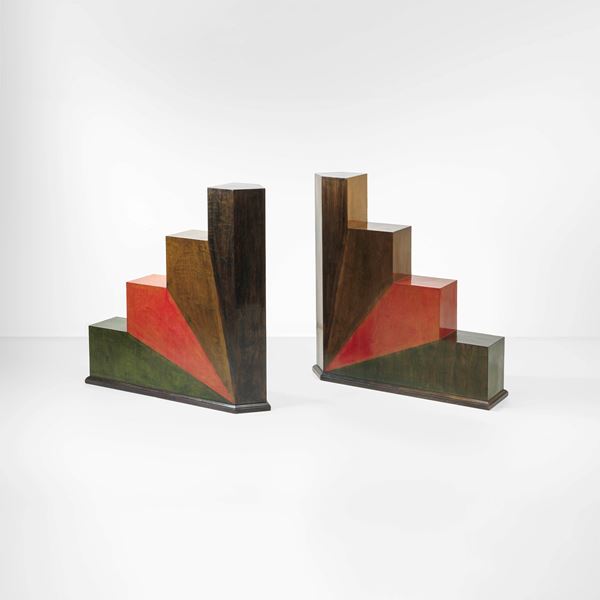
Two étagères
Wooden structure and wood painted with aniline. From the furnishings of Casa Cimino. Italy, c. 1930.
Sold
Gerardo Dottori
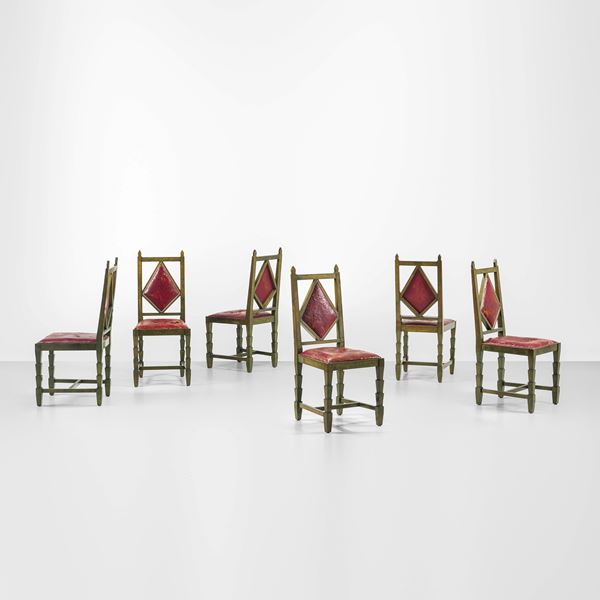
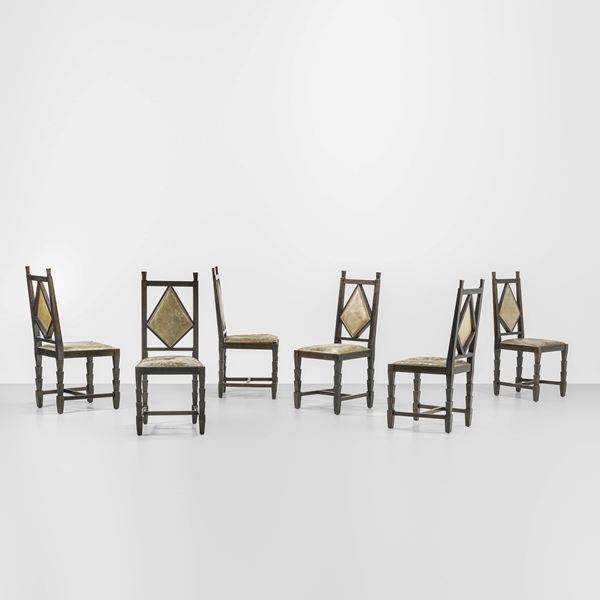
Six chairs
Wooden structure, leather upholstery. Carved wooden supports. From the furnishings of Casa Cimino. Italy, c. 1930.
Sold
Gerardo Dottori
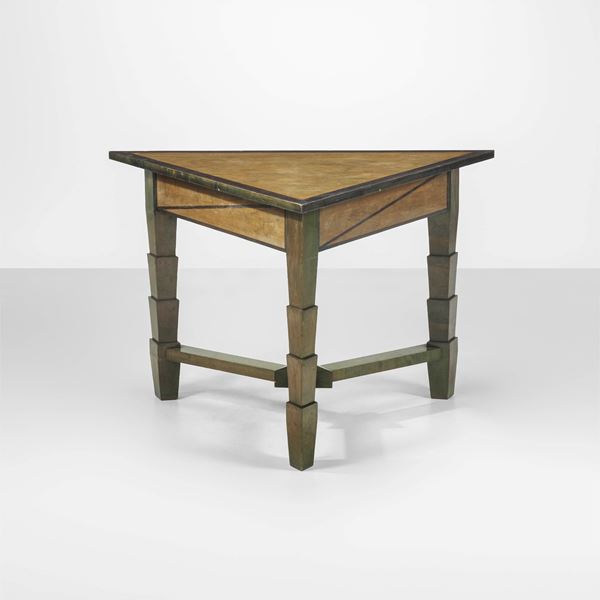
Console
Wooden structure and wood painted with aniline. Carved wooden supports. From the furnishings of Casa Cimino. Italy, c. [..]
Sold
Gerardo Dottori
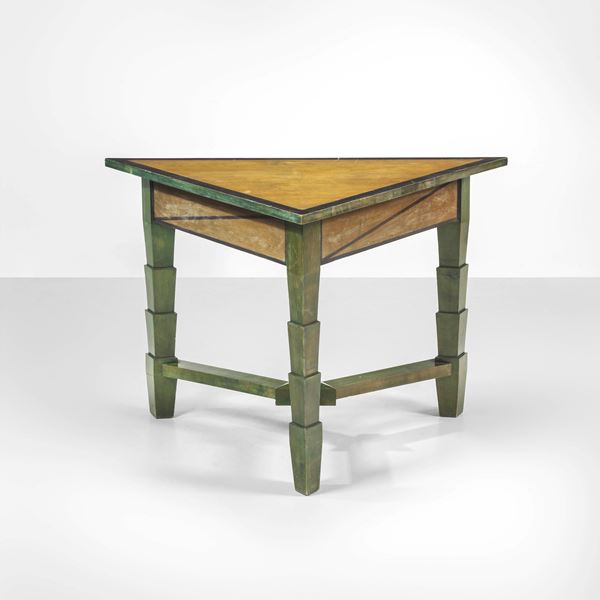
Console
Wooden structure and wood painted with aniline. Carved wooden supports. From the furnishings of Casa Cimino. Italy, c. [..]
Sold
Gerardo Dottori
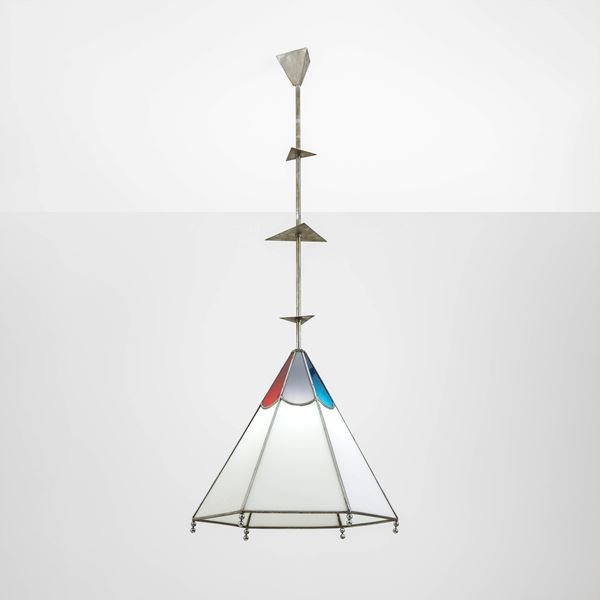
Suspension lamp
Chrome-plated brass structure, opal glass diffuser and colored glass. From the furnishings of Casa Cimino. Italy, c. 1930 [..]
Sold
Gerardo Dottori
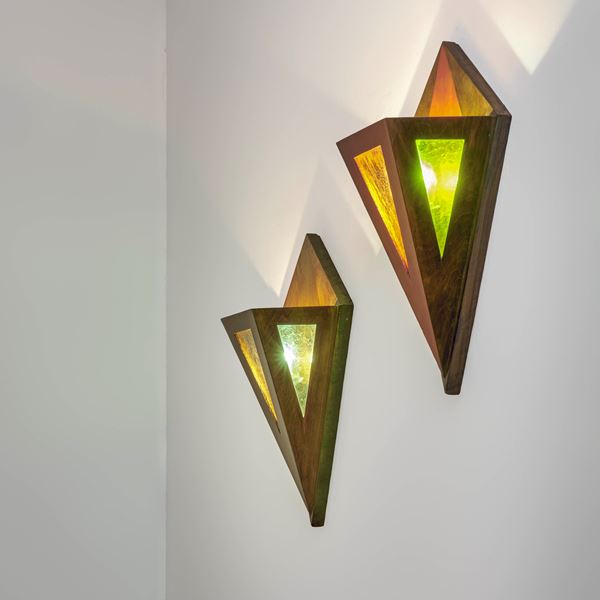
Two wall lamps
Wooden structure and wood painted with aniline. Crafted and coloured glass diffusers. From the furnishings of Casa Cimino. [..]
Sold
Gerardo Dottori
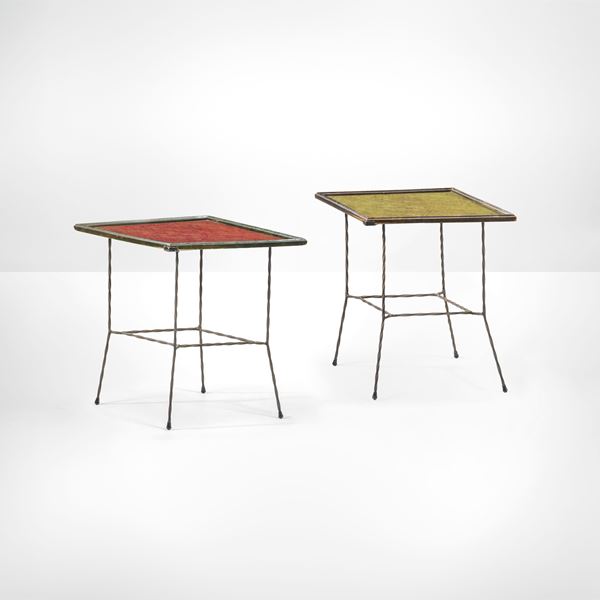
Two low tables
Wrought iron structure, painted wooden top. From the furnishings of Casa Cimino. Italy, c. 1930
Sold
Gerardo Dottori
Six chairs
Wooden structure, leather upholstery. Carved wooden supports. From the furnishings of Casa Cimino. Italy, c. 1930.
Sold