
Evaluation Giuseppe Caselli
Giuseppe Caselli Valuations - Want to sell a Giuseppe Caselli piece? Request a complimentary and confidential valuation!Cambi Casa d'Aste will review your submission and offer a free-of-charge estimate, if your item is suitable for our auctions.
biography
Giuseppe Guglielmo Umberto Caselli, known as Pino, was an Italian painter born on July 5, 1893 in Villarotta, in the municipality of Luzzara in the province of Reggio Emilia. From childhood, he moved to La Spezia, where he lived for his entire life until his death on December 19, 1976. His artistic training began under the guidance of masters such as Felice Del Santo and Antonio Discovolo, and continued with the decisive influence of Lorenzo Viani, with whom he maintained a profound friendship that deeply marked his stylistic evolution.
Caselli's painting underwent significant evolution throughout his long career. Initially linked to divisionism of the early twentieth century, his work evolved toward a personal expressionism characterized by expressive harshness and particular sensitivity to themes of human drama. A crucial event in the artist's life was his capture during World War I: interned in the Mauthausen concentration camp in Austria from 1915 to 1918, this traumatic experience profoundly marked his artistic vision and pictorial production, influencing works dedicated to imprisonment and characterized by an oneiric and anguished atmosphere, such as the cycle of The Erinyes, which recalls the nightmares of Goya and shows affinities with Austrian and German expressionist movements of the period.
Throughout his long career, Caselli painted thousands of works, extensively depicting the territory of the province of La Spezia, its Gulf, and the Lunigiana region. He became particularly renowned for his beautiful marine views, especially the panoramas of Cinque Terre, and for his representations of old La Spezia with its squares, streets, and neighborhoods. He also portrayed numerous figures from La Spezia's history and created countless scenes dedicated to the sea. Among his participations in prizes and exhibitions were the Società Promotrice di Genova, the Second Exhibition of the Fascist Provincial Syndicate in 1931, and the National Painting Prize of the Gulf of La Spezia in 1933, organized by Filippo Tommaso Marinetti, to which he also participated with aeropaintings. He continued to participate in this event in many subsequent editions, from 1949 to 1955 and then from 1959 to 1961. His personal exhibitions were organized in La Spezia at the Croce di Malta hotel in 1930, the Adel gallery in 1959, the Minotauro gallery in 1971, and the Allende Center in 1981. His work is documented in the Illustrated Dictionary of Italian Painters, Draftsmen and Engravers Comanducci, representing a significant contribution to twentieth-century Italian painting.
Caselli's painting underwent significant evolution throughout his long career. Initially linked to divisionism of the early twentieth century, his work evolved toward a personal expressionism characterized by expressive harshness and particular sensitivity to themes of human drama. A crucial event in the artist's life was his capture during World War I: interned in the Mauthausen concentration camp in Austria from 1915 to 1918, this traumatic experience profoundly marked his artistic vision and pictorial production, influencing works dedicated to imprisonment and characterized by an oneiric and anguished atmosphere, such as the cycle of The Erinyes, which recalls the nightmares of Goya and shows affinities with Austrian and German expressionist movements of the period.
Throughout his long career, Caselli painted thousands of works, extensively depicting the territory of the province of La Spezia, its Gulf, and the Lunigiana region. He became particularly renowned for his beautiful marine views, especially the panoramas of Cinque Terre, and for his representations of old La Spezia with its squares, streets, and neighborhoods. He also portrayed numerous figures from La Spezia's history and created countless scenes dedicated to the sea. Among his participations in prizes and exhibitions were the Società Promotrice di Genova, the Second Exhibition of the Fascist Provincial Syndicate in 1931, and the National Painting Prize of the Gulf of La Spezia in 1933, organized by Filippo Tommaso Marinetti, to which he also participated with aeropaintings. He continued to participate in this event in many subsequent editions, from 1949 to 1955 and then from 1959 to 1961. His personal exhibitions were organized in La Spezia at the Croce di Malta hotel in 1930, the Adel gallery in 1959, the Minotauro gallery in 1971, and the Allende Center in 1981. His work is documented in the Illustrated Dictionary of Italian Painters, Draftsmen and Engravers Comanducci, representing a significant contribution to twentieth-century Italian painting.
Past lots of Giuseppe Caselli
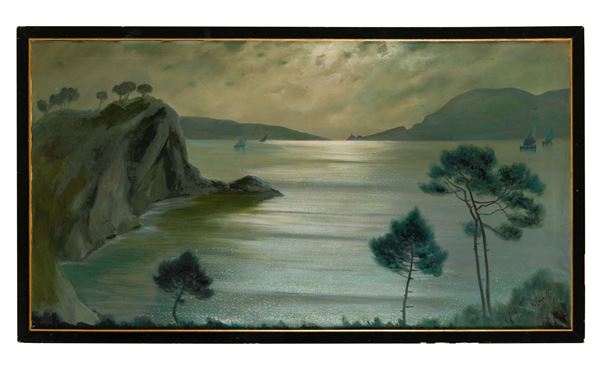
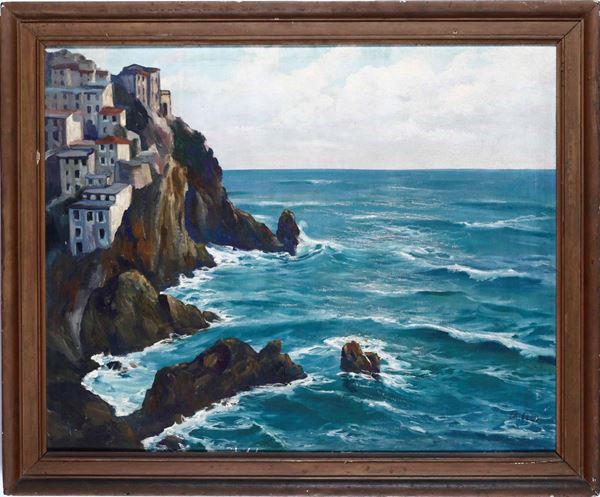
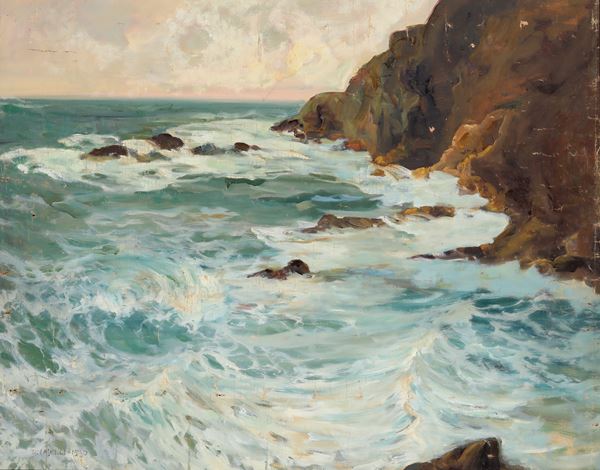
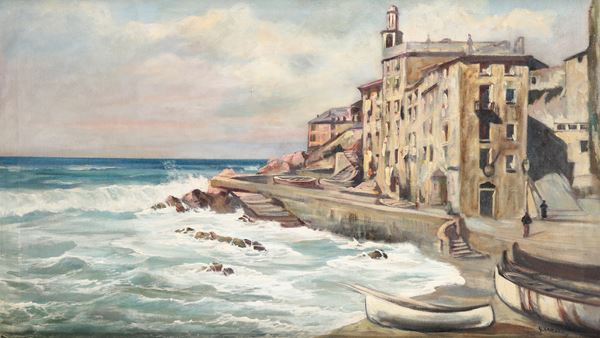
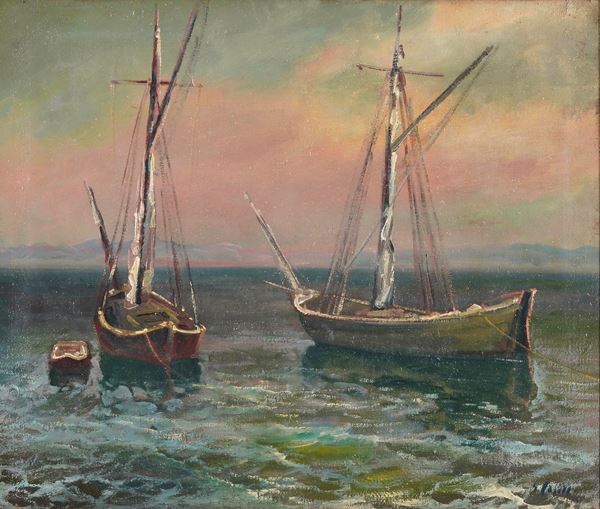
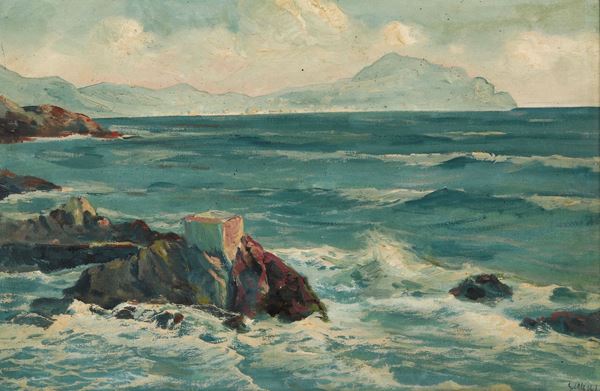
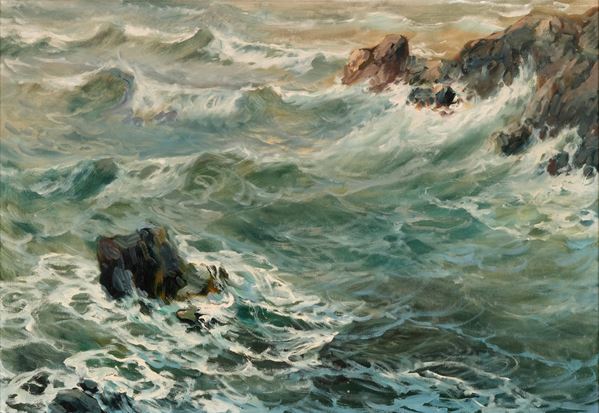
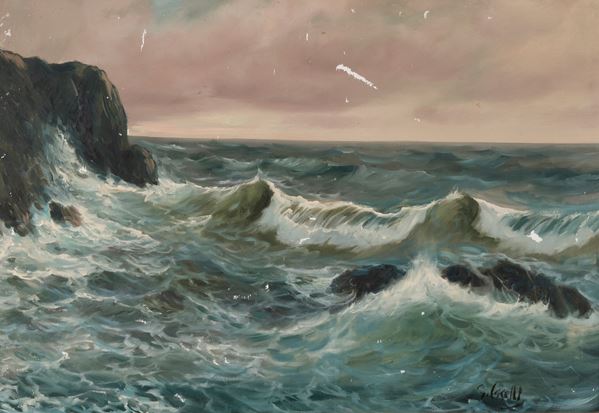
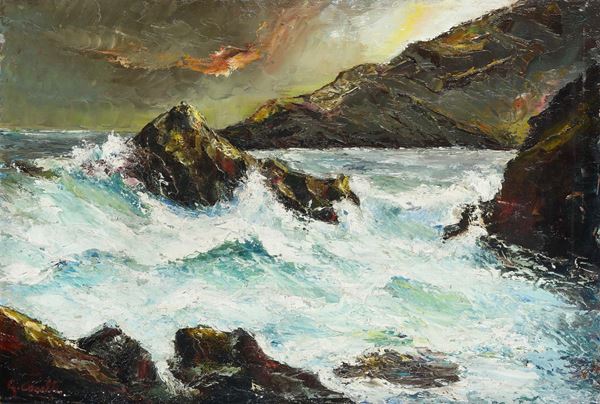
Giuseppe Caselli
(1893 - 1976)
Vista su Lerici di notte
firmato in basso a destra olio su tela Cm 148X80
Sold
Giuseppe Caselli
(1893 - 1976)
Paesaggio costiero
firmato in basso a destra olio su tela Largh. 100 - Alt. 80 cm
Sold
Giuseppe Caselli
(1893 - 1976)
Marina
firmato in basso a sinistra olio su tela Cm 77X96
Sold
Giuseppe Caselli
(1893 - 1976)
Boccadasse
firmato in basso a destra olio su tela Largh. 129 - Alt. 75 Cm
Sold
Giuseppe Caselli
(1893 - 1976)
Barche
firmato in basso a destra olio su tela Largh. 69,5 - Alt. 60 cm
Sold
Giuseppe Caselli
(1893 - 1976)
Marina
firmato in basso a destra olio su tela Cm 40X60,3
Sold
Giuseppe Caselli
(1893 - 1976)
Attributed to
Marina
olio su tela cm 71X100
Sold
Giuseppe Caselli
(1893 - 1976)
Marina
firmato in basso a destra (difetti) olio su tela cm 68X98
Sold
Giuseppe Caselli
(1893 - 1976)
Marina
firmato in basso a sinistra olio Cm 35X50
Sold
Giuseppe Caselli
(1893 - 1976)
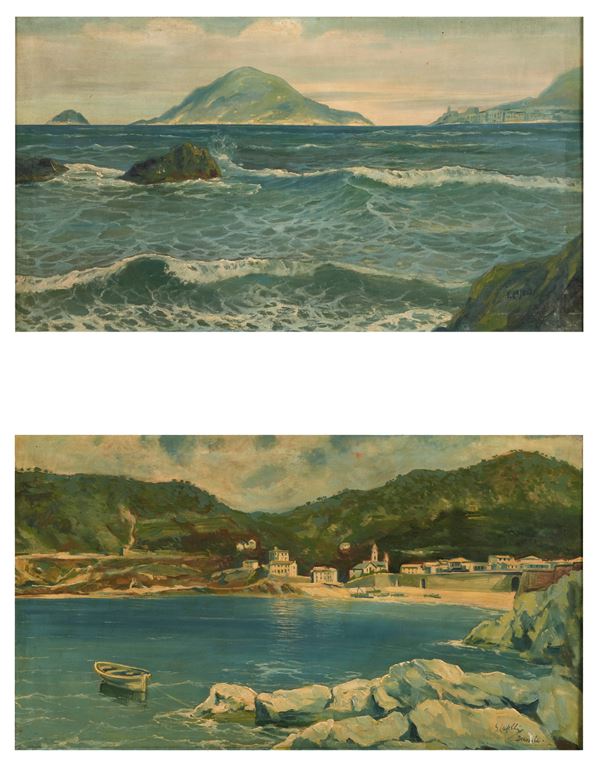
Veduta di Portovenere e veduta di Bonassola
coppia di dipinti, firmati
Giuseppe Caselli
(1893 - 1976)
Attributed to
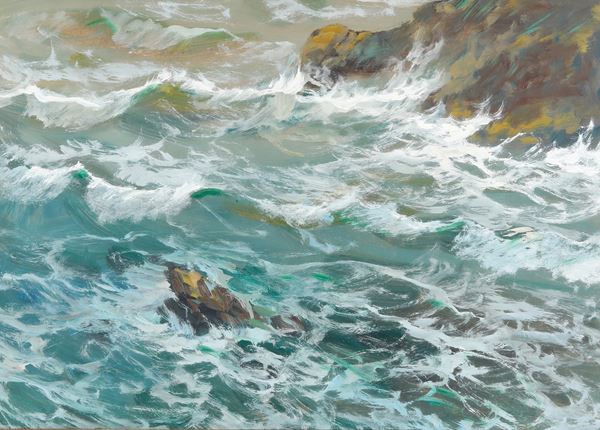
Marina
olio su tavoletta Largh. 70 - Alt. 50 Cm