
61
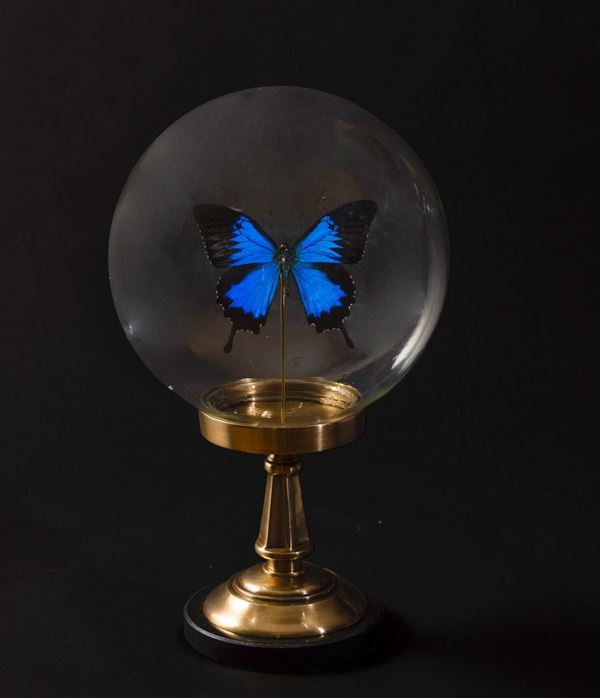
A large blue emperor butterfly within a glass bubble.
W. 20 - D. 20 - H. 34 Cm
W. 20 - D. 20 - H. 34 Cm
62
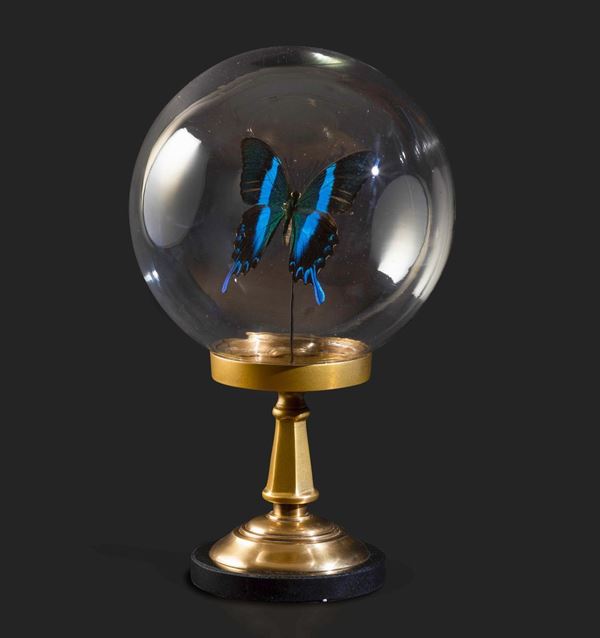
Papilio Blumei is a diurnal butterfly with green wings shifting into blue on the tips. On a brass and marble base.
W. 20 - D. 20 - H. 34 Cm
W. 20 - D. 20 - H. 34 Cm
63
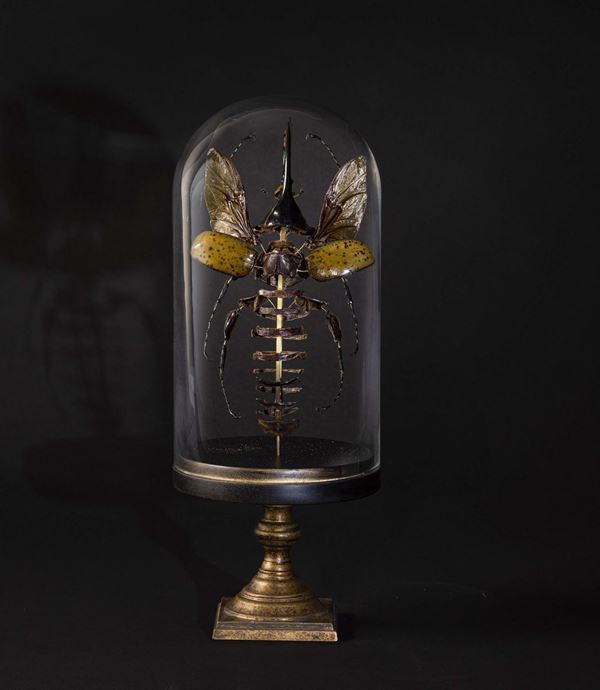
Known for its massive thoracic and posterior horns. This display shows the insect's body separated into individual parts using pieces of brass.
W. 14 - D. 14 - H. 37 Cm
W. 14 - D. 14 - H. 37 Cm
64
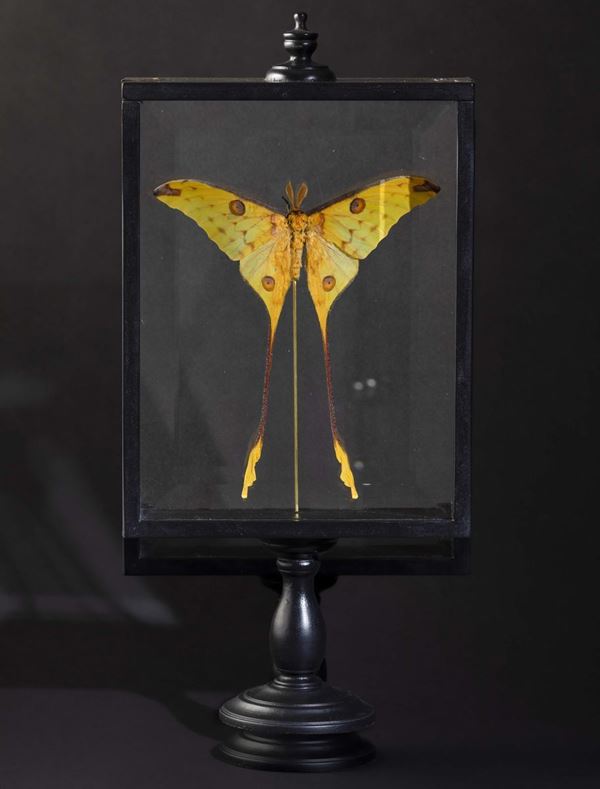
W. 22 - D. 8 - H. 46,5 Cm
65
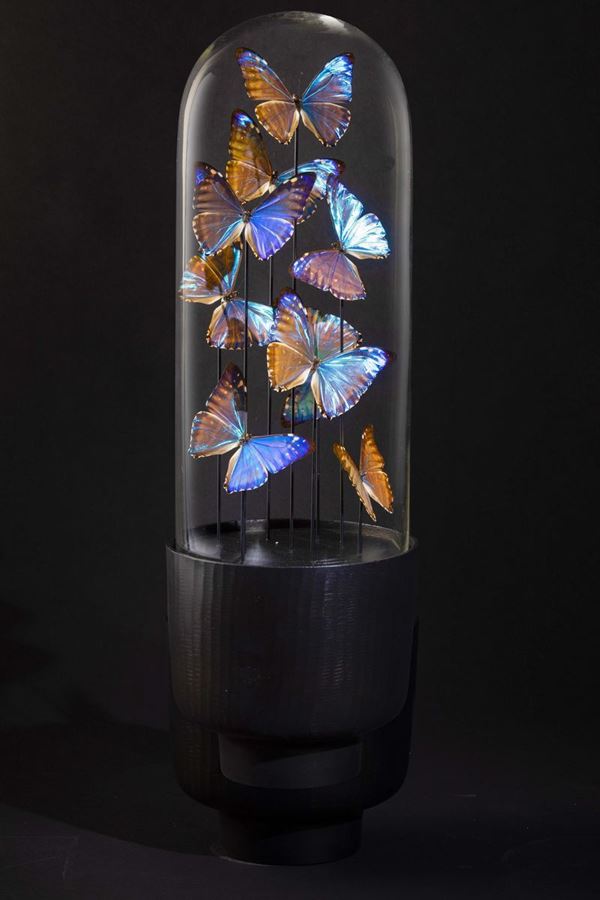
Nine Morpho Zephiris butterflies within a globe. This lepidopter belongs to the Nymphalidae family. The dorsal area of the Menelaus butterfly is a bright metallic blue edged with black while the ventral area is brown with round eyespots.
W. 17 - D. 17 - H. 49 Cm
W. 17 - D. 17 - H. 49 Cm
66
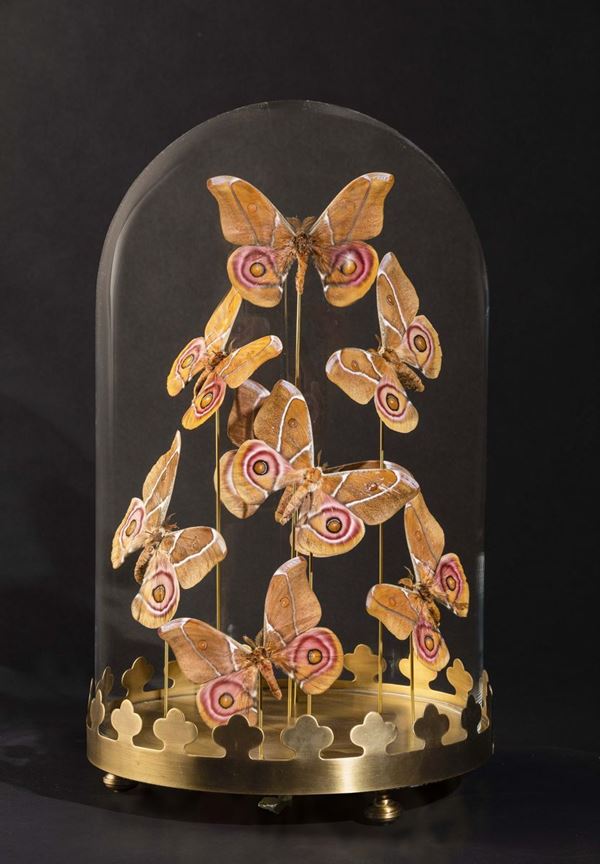
A glass case with eight butterflies known as "big-eyed butterfly" due to the shapes on its wings.
W. 24 - D. 24 - H. 41,5 Cm
W. 24 - D. 24 - H. 41,5 Cm
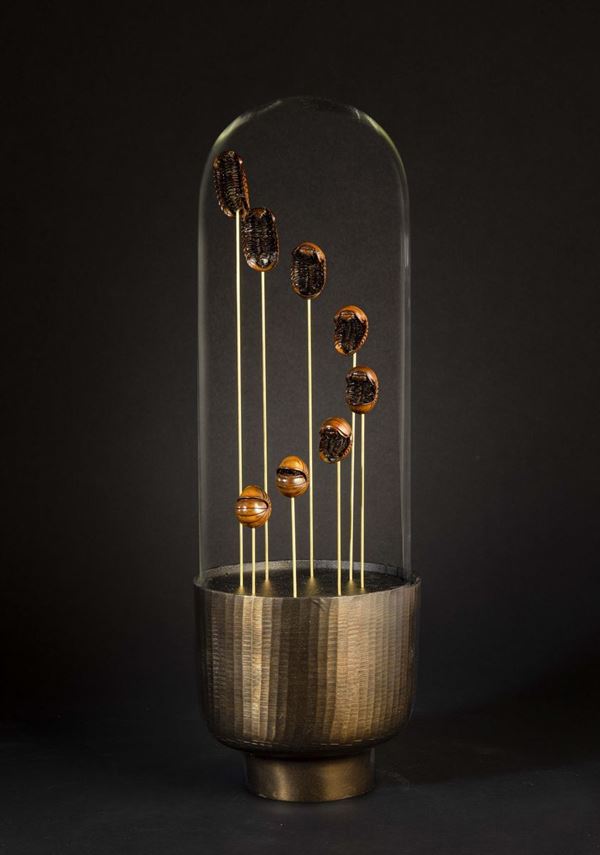
67
Sphaerotheriida is a species of millipedes that rolls up into a perfect ball in order to protect itself. This display shows the seven phases in which its movement unfolds.
W. 21,5 - D. 14 - H. 16 Cm
W. 21,5 - D. 14 - H. 16 Cm
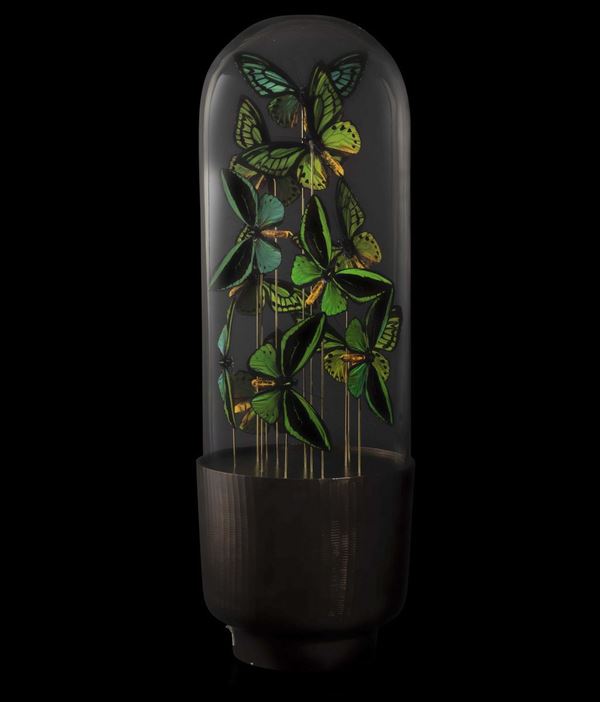
68
Twelve Ornithoptera butterflies in a globe. Ornithoptera is the largest diurnal butterfly in the world. It is only found on some minor islands in the Pacific Ocean, it is a protected species and subject to CITES.
W. 23 - D. 23 - H. 56 Cm
W. 23 - D. 23 - H. 56 Cm
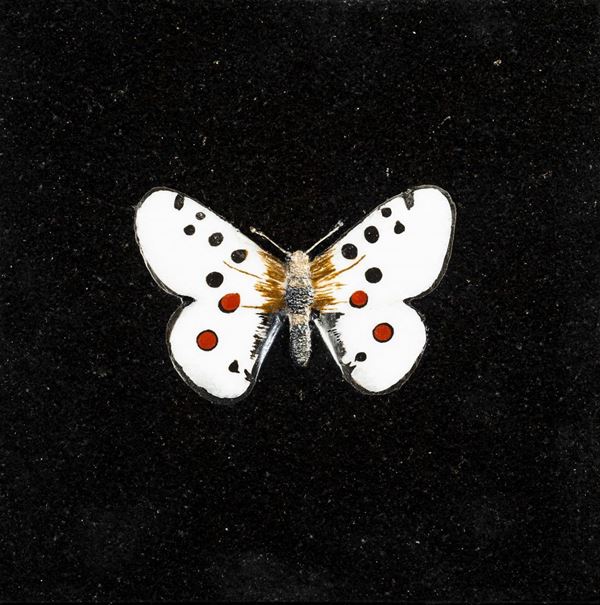
69
A Parnassius butterfly in Lasa marble on black granite.
W. 15,5 - D. 0,5 - H. 15,5 Cm
W. 15,5 - D. 0,5 - H. 15,5 Cm
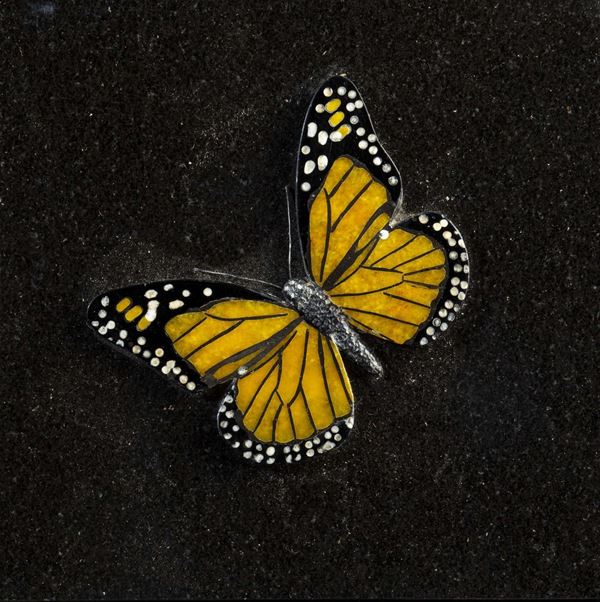
70
A monarch butterfly in obsidian from Sardinia, yellow jade, dolomite, on black granite
W. 16 - D. 1 - H. 16 Cm
W. 16 - D. 1 - H. 16 Cm
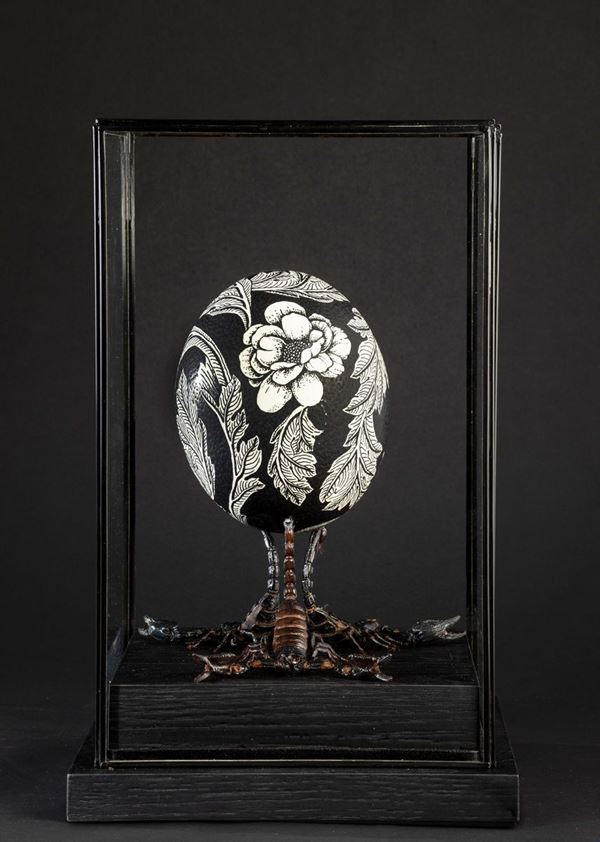
71
The decor is made up of Acanthus leaves and peony flowers and it is sitting on three Thai scorpions. Glass case on a black durmast base.
W. 25 - D. 25 - H. 39 Cm
W. 25 - D. 25 - H. 39 Cm
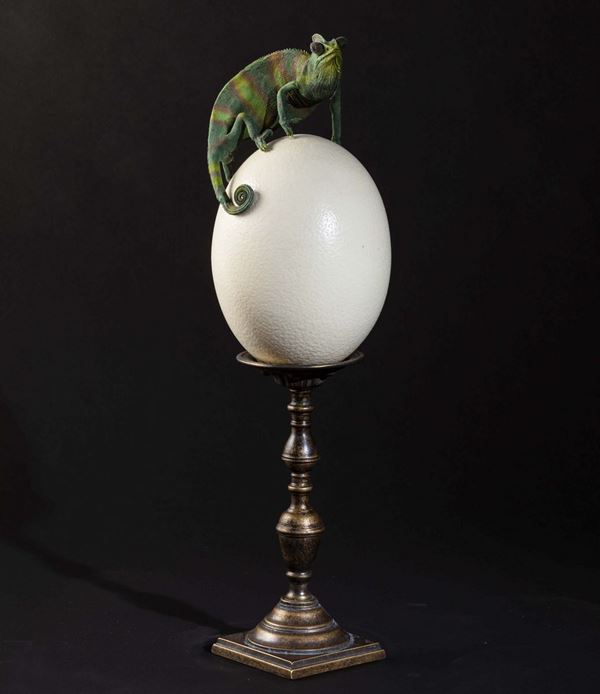
72
Chamaeleo calyptratus, the veiled chameleon's colours can change, but the males are mostly green. Accompanied by CITES certificate.
W. 12 - D. 12 - H. 42 Cm
W. 12 - D. 12 - H. 42 Cm
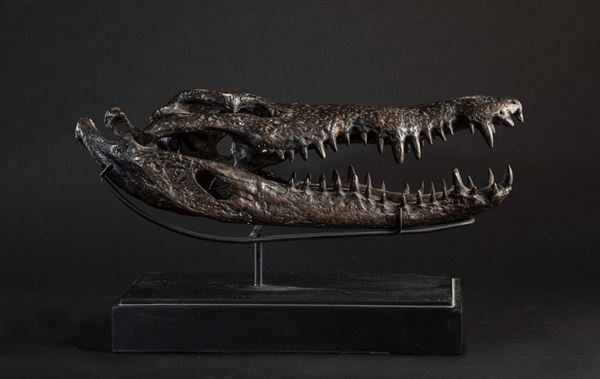
73
A sculpture of a crocodile skull, burnished bronze on a base
W. 52 - D. 19 - H. 25 Cm
W. 52 - D. 19 - H. 25 Cm
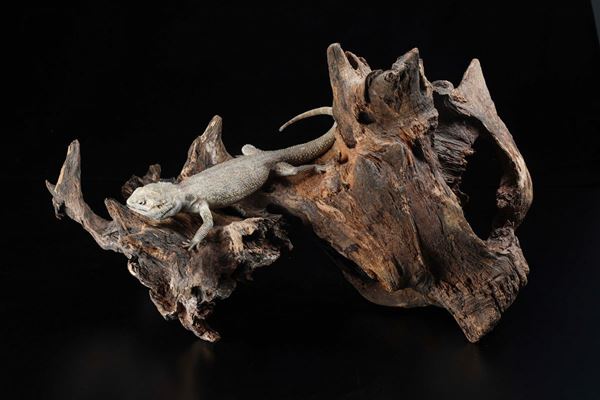
74
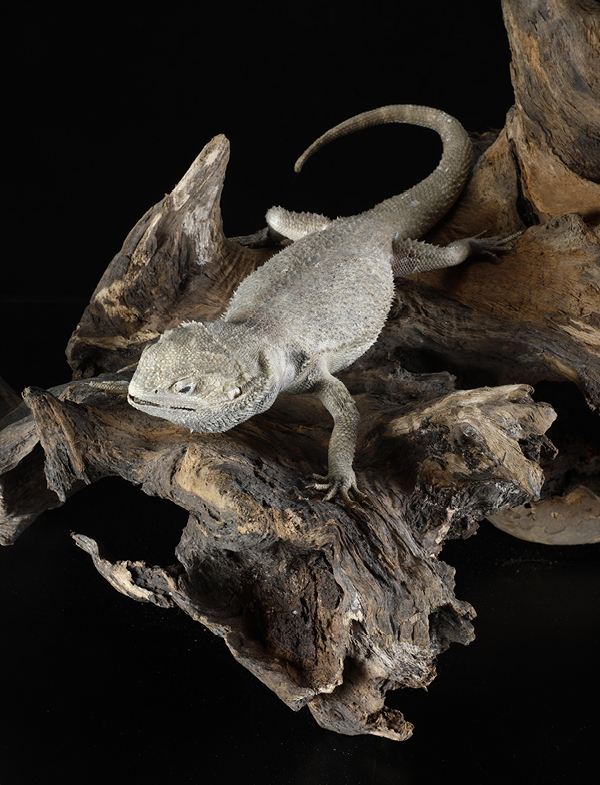
Pogona vitticeps, a bearded dragon from the Agamide family that inhabits the arid regions of Australia, on a wood branch.
W. 66 - D. 43 - H. 41 Cm
W. 66 - D. 43 - H. 41 Cm
75
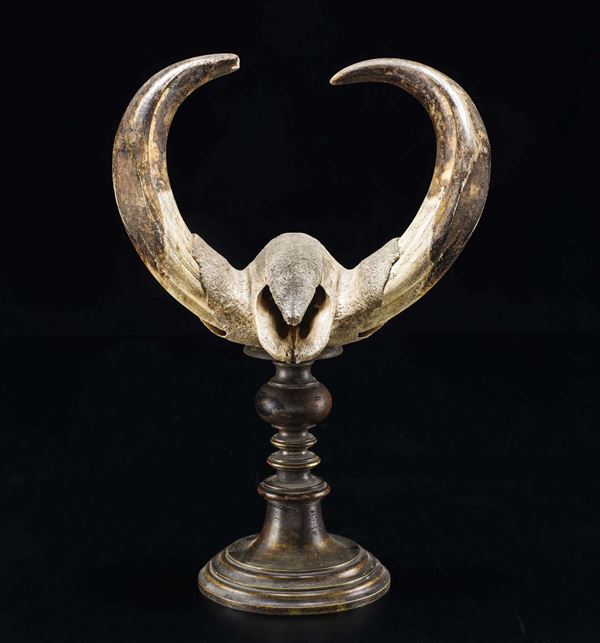
Nasal bone and teeth from a common warthog (Phacochoerus africanus) on a bronze base.
W. 23 - D. 15 - H. 37,5 Cm
W. 23 - D. 15 - H. 37,5 Cm
76
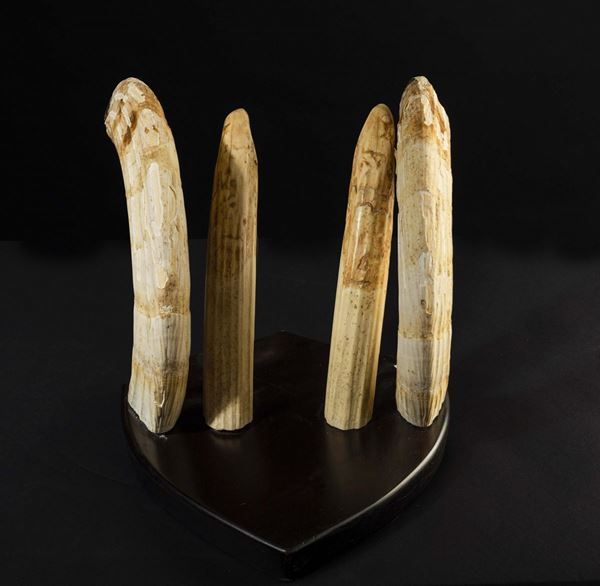
Hippopotamus amphibiuscites Hippopotamus teeth on a wooden base Cites II/B, CITES permit 8/01/2016
W. 20 - H. 32 cm
W. 20 - H. 32 cm
78
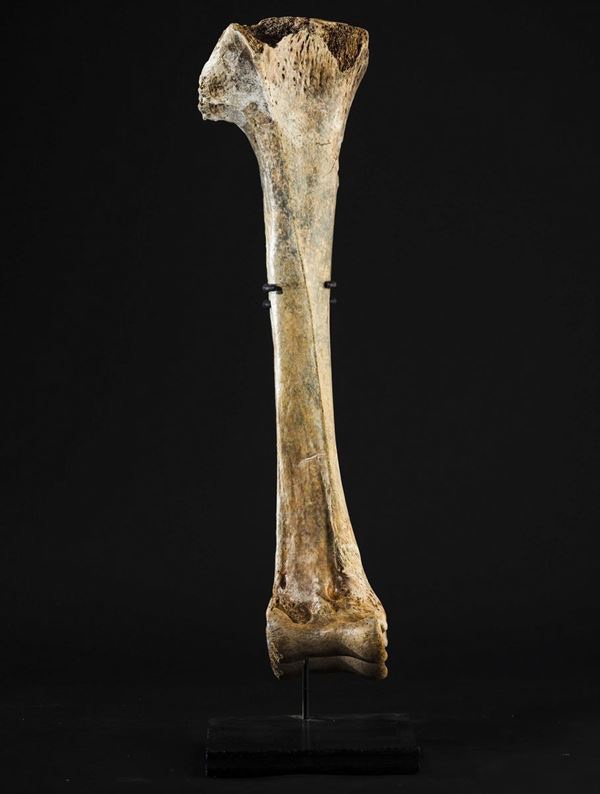
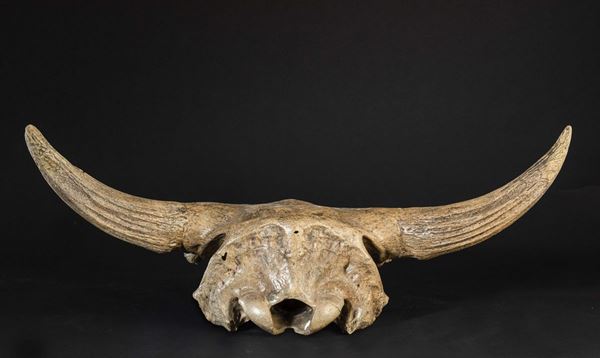
Bovine horns from the late Pleistocene, found on the deposits of the river Dnieper.
W. 64 - D. 30 - H. 24 Cm
W. 64 - D. 30 - H. 24 Cm
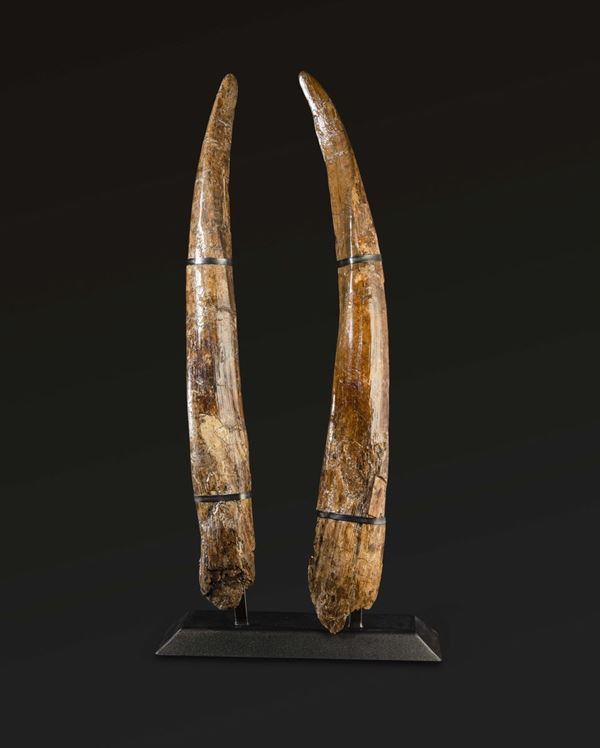
79
A rare prehistoric elephant from the Miocene (around 15 MA). H 90 cm and 92 cm
W. 32 - D. 14 - H. 92 Cm
W. 32 - D. 14 - H. 92 Cm
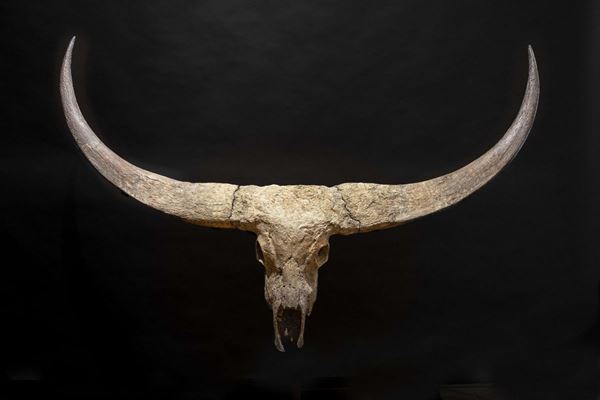
80
Bubalus paleokarabau, a herbivore mammal from the bovine sub-family. Late Pleistocene.
W. 172 - H. 110 Cm
W. 172 - H. 110 Cm
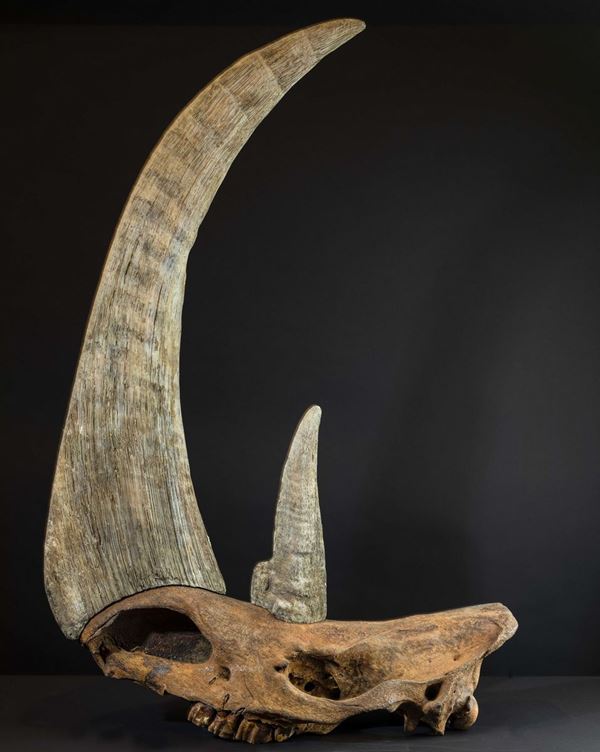
81
Coleodonta antiquitatis. A fossile skull with resin horns (the corneous material does not fossilise in these deposits).
W. 70 - D. 31 - H. 123 Cm
W. 70 - D. 31 - H. 123 Cm
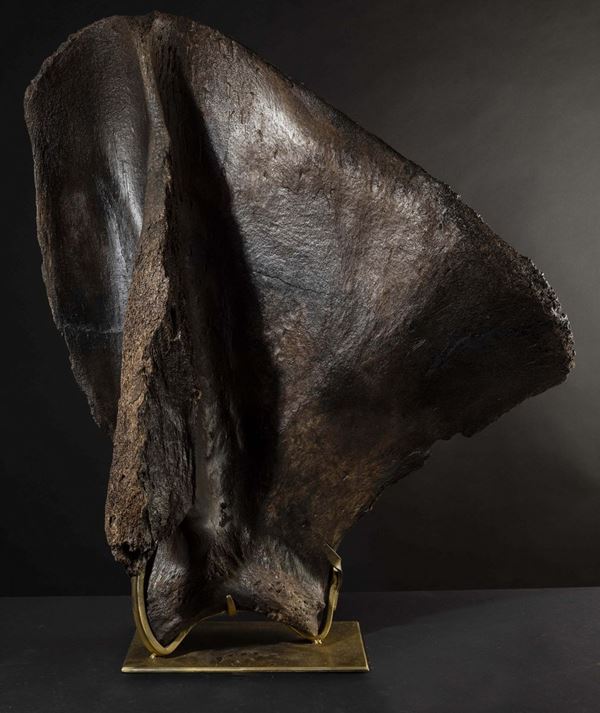
82
A scapula from a Mammuthus Primigenius (Pleistocene).
W. 68 - D. 30 - H. 83 Cm
W. 68 - D. 30 - H. 83 Cm
83
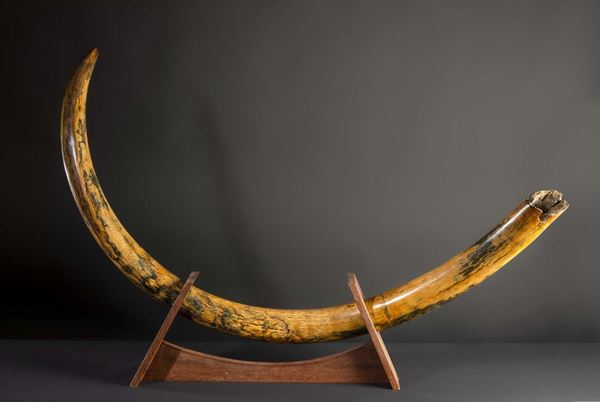
A fossile of a Syberian wooly mammoth ivory tusk, high quality, on a wooden base
W. 120 - D. 44 - H. 84 Cm
W. 120 - D. 44 - H. 84 Cm
84
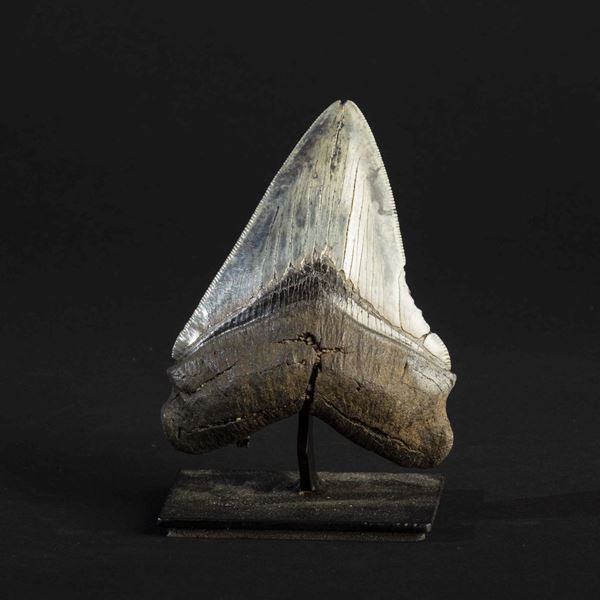
Carcharocles Megalodon, big-toothed shark. Miocene, on a metal base
W. 9 - H. 14 Cm
W. 9 - H. 14 Cm
85
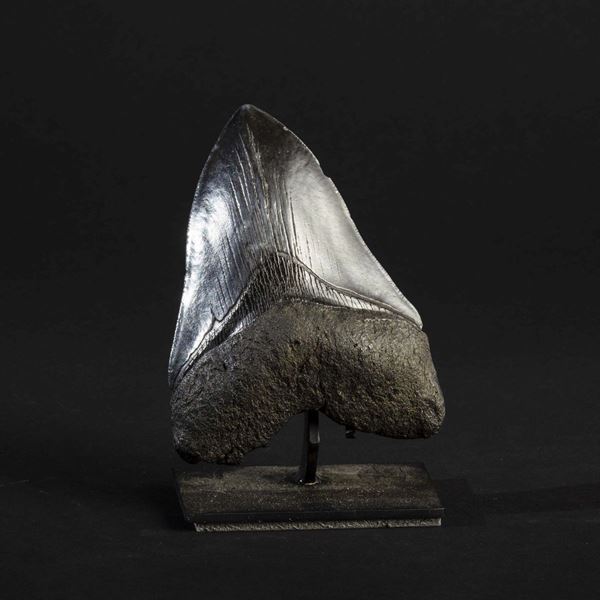
Carcharocles megalodon, a large shark whose scientific name means "big tooth" in ancient Greek. Miocene, on a metal base.
W. 8 - H. 14 Cm
W. 8 - H. 14 Cm
86
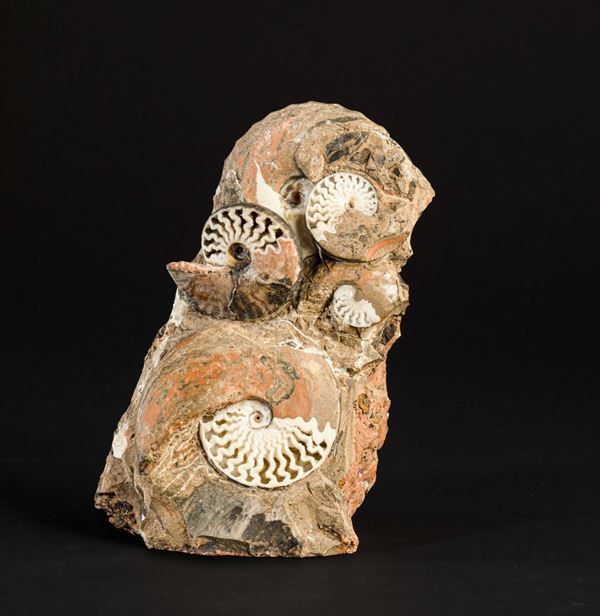
Rare Indonesian ammonites, an extint genus of ammonite cephalopods. Triassic period
87
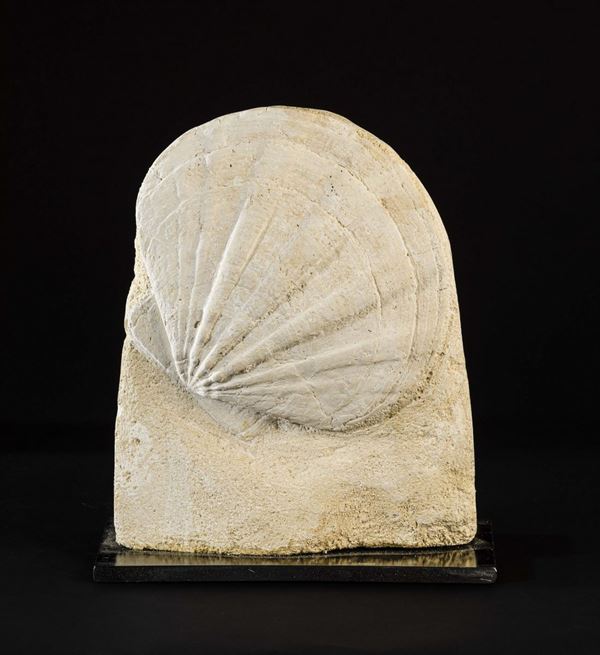
Gigantopecten is a genus of fossil scallops, marine bivalve molluscs in the family Pectinidae, the scallops. From the Oligocene period.
W. 23 - D. 19 - H. 12 Cm
W. 23 - D. 19 - H. 12 Cm
88
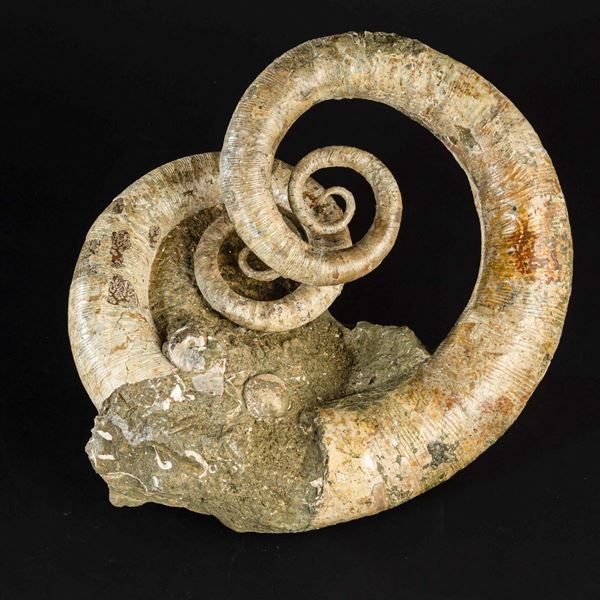
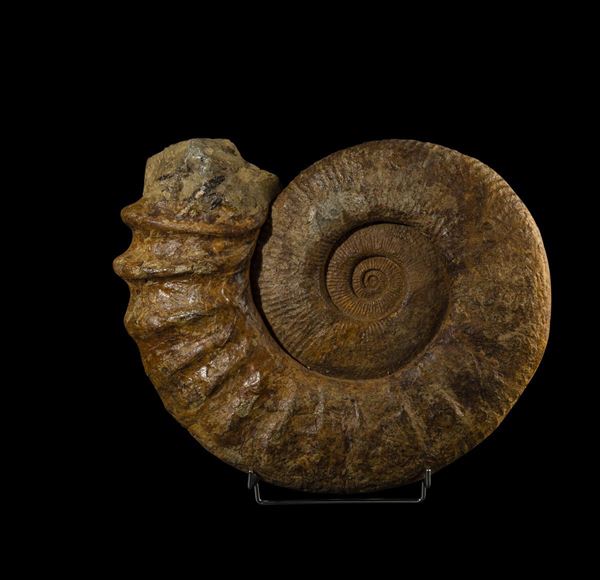
Emericiceras is an ammonite genus from the Early Cretaceous belonging to the Ancyloceratoidea. Albian, Cretacic
W. 28 - D. 21 - H. 21 Cm
W. 28 - D. 21 - H. 21 Cm
89
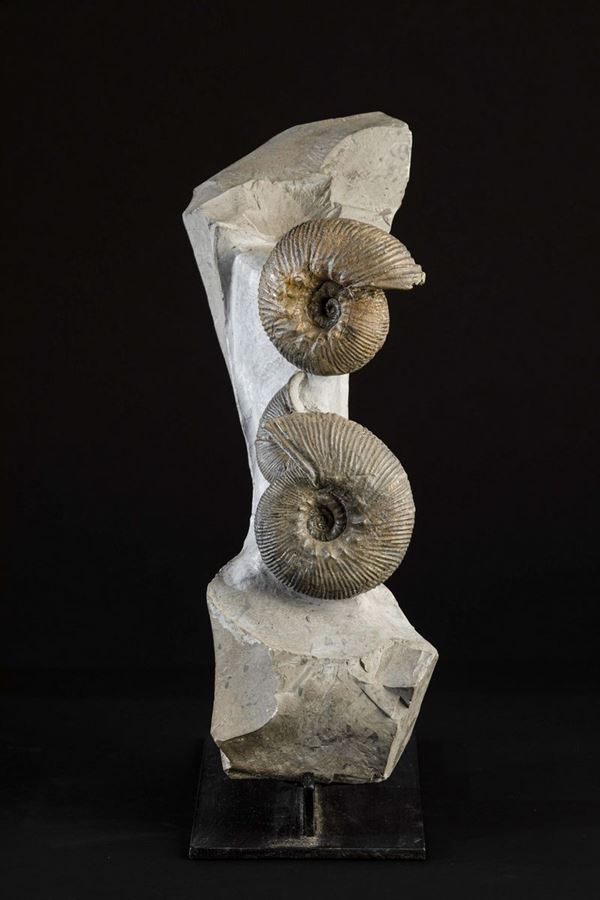
Plesiospitidiscus ligatus (centre) and Olcostephanus sayni Hauterivian (around 120 Ma)
W. 12 - D. 24 - H. 36 Cm
W. 12 - D. 24 - H. 36 Cm
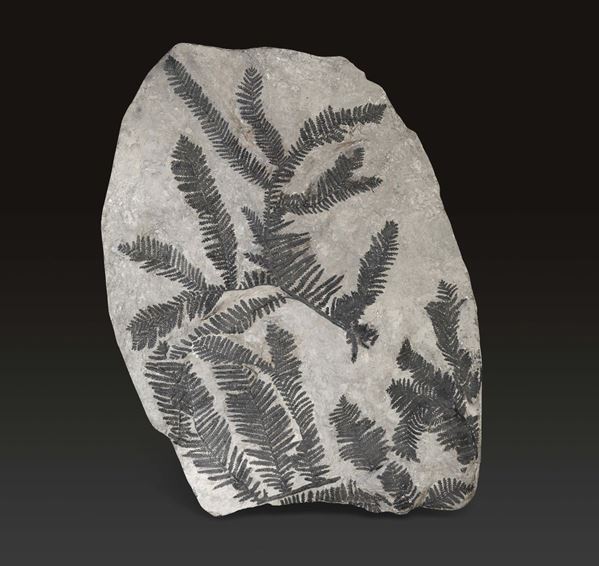
90
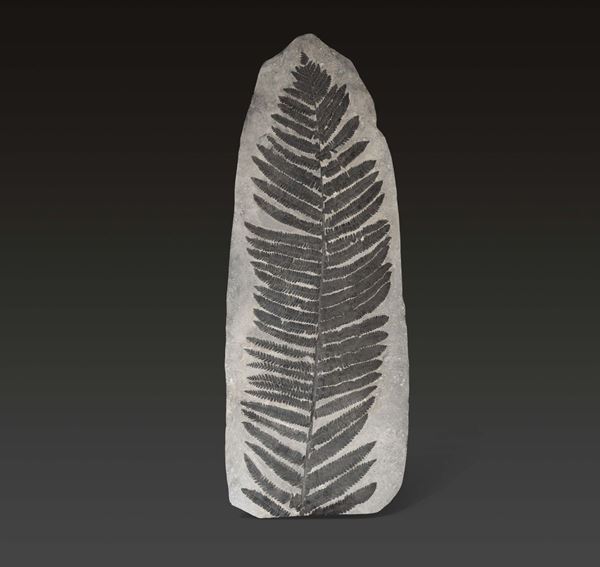
Fossile fern of the Callipteridium Mansfieldi genus, very rare, especially in this size and quality. Late Carboniferous (305-299 Ma)
W. 40 - D. 4 - H. 110 Cm
W. 40 - D. 4 - H. 110 Cm
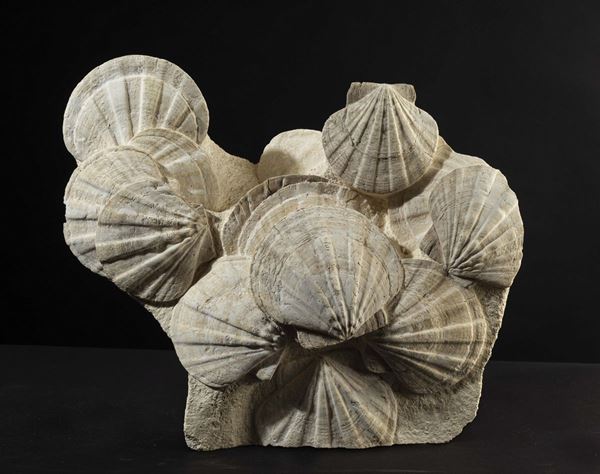
91
Gigantopecten is a genus of fossil scallops, marine bivalve molluscs in the family Pectinidae, the scallops. Oligocene period.
W. 40 - D. 12 - H. 44 Cm
W. 40 - D. 12 - H. 44 Cm
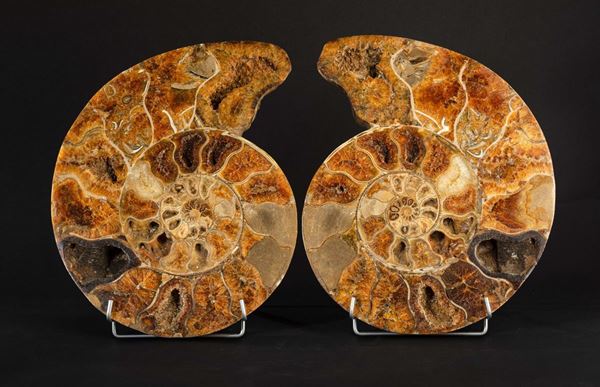
92
A large sectioned ammonite, excellent-quality mineralisation.
W. 30 - H. 38 Cm
W. 30 - H. 38 Cm
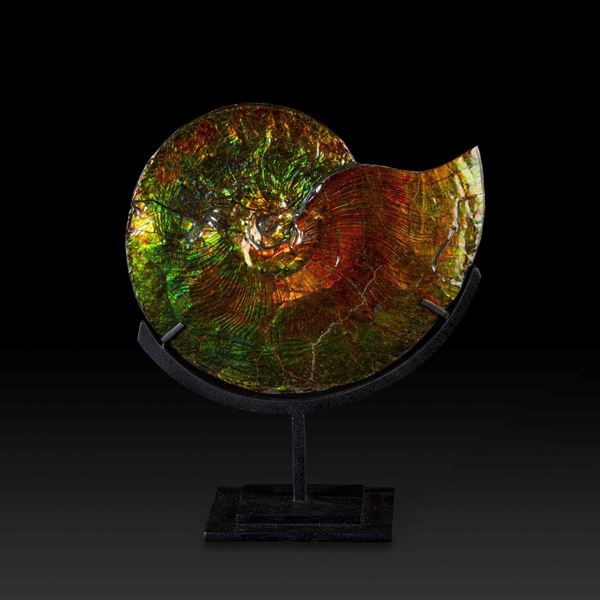
93
Placenticeras sp. from the Bearpaw Formation, Campanian, Late Cretaceous (83.5-72 MA) The fossils of Placenticeras ammonites that were found in the fossiliferous sands of Canadian Alberta are considered to be among the most precious in the world due [..]
W. 30 - H. 24 Cm
W. 30 - H. 24 Cm
95
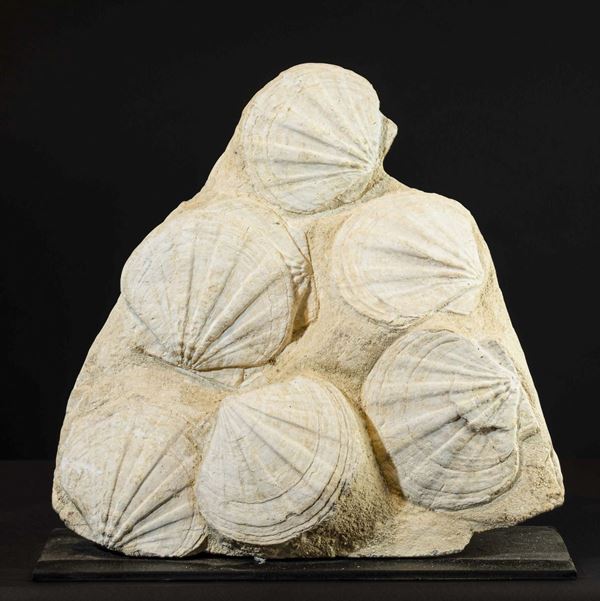
Gigantopecten is a genus of fossil scallops, marine bivalve molluscs in the family Pectinidae, the scallops. Oligocene period.
W. 50 - H. 47 Cm
W. 50 - H. 47 Cm
96
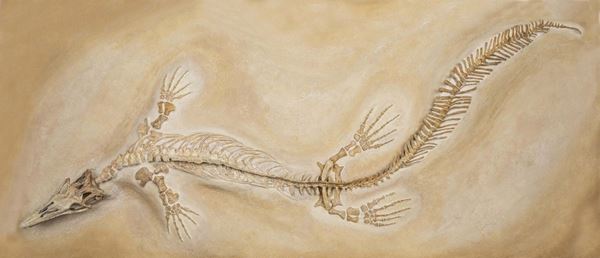
Halisaurus sp. Late Cretaceous, Maastrichtian (around 70 MA) A specimen of Mosasaur, a marine predator from the golden age of dinosaurs
W. 264 - D. 112 - H. 30 Cm
W. 264 - D. 112 - H. 30 Cm
97
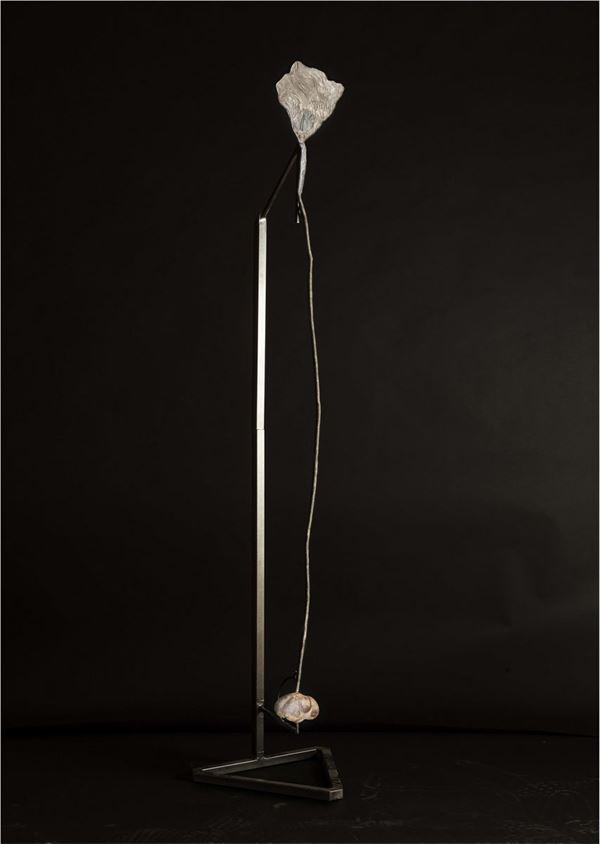
Scyphocrinites sp. An extinct echinoderm belonging to the crinoids. Mounted in three dimensions on a metal stand. Early Devonian (416-397 MA)
H. 1811 Cm
H. 1811 Cm
98
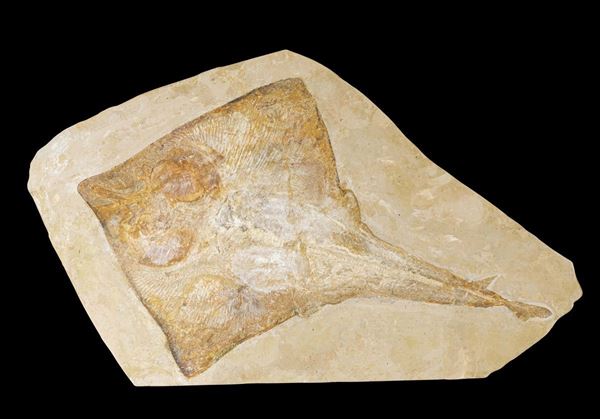
Rhinobatos, a species of rayfish that belongs to the group of myliobatiformes cartilaginous fish. Late Cretaceous (around 94 MA)
W. 86 - D. 3 - H. 53 Cm
W. 86 - D. 3 - H. 53 Cm
99
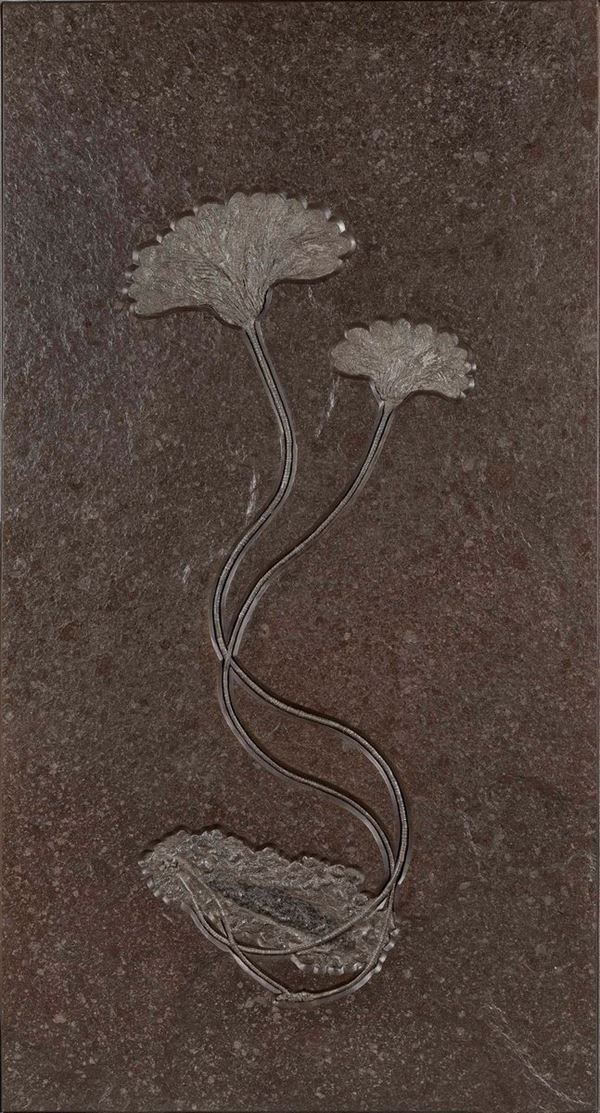
Seirocrinus subangularis Pliensbachiano-Toarciano (182.7-174 Ma), Early Jurassic (182.7– 199.3 ma) – Posidonia Shale Formation. Private collection from Germany. Metal frame, rear structure ready for wall mounting.
W. 80 - H. 150 Cm
W. 80 - H. 150 Cm
100
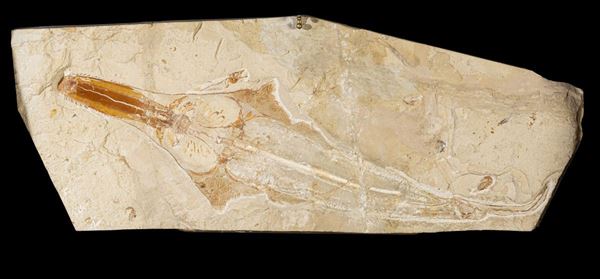
Libanopristis Late Cretaceous (around 94 MA) Metal case with LED lighting. One of the most complete species of Sclerorhynchoidei.
W. 24 - D. 15 - H. 55 Cm
W. 24 - D. 15 - H. 55 Cm
101
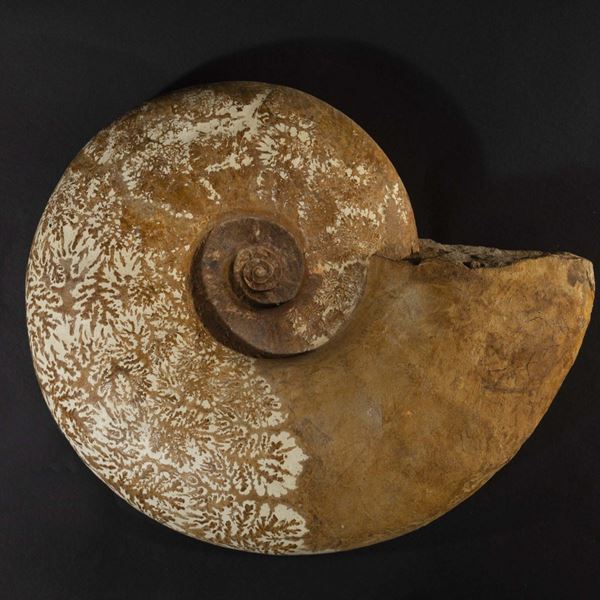
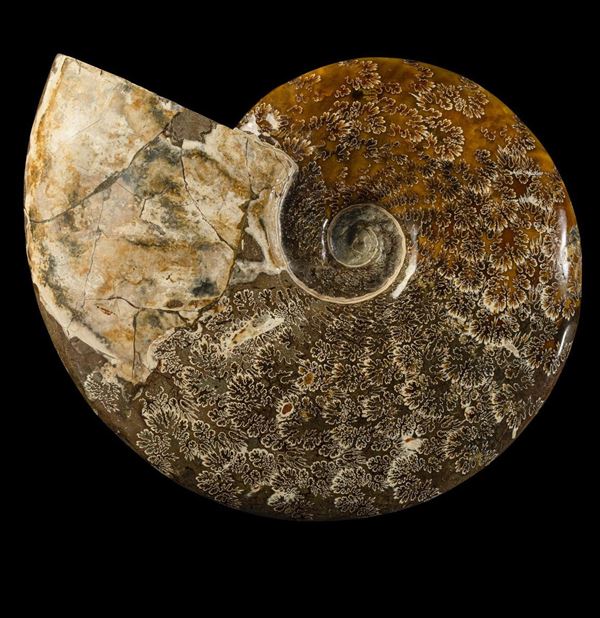
Puziosa sp. Late Cretaceous, extinct cephalopod mollusks of the ammonite genus.
W. 46 - D. 40 - H. 8 Cm
W. 46 - D. 40 - H. 8 Cm
104
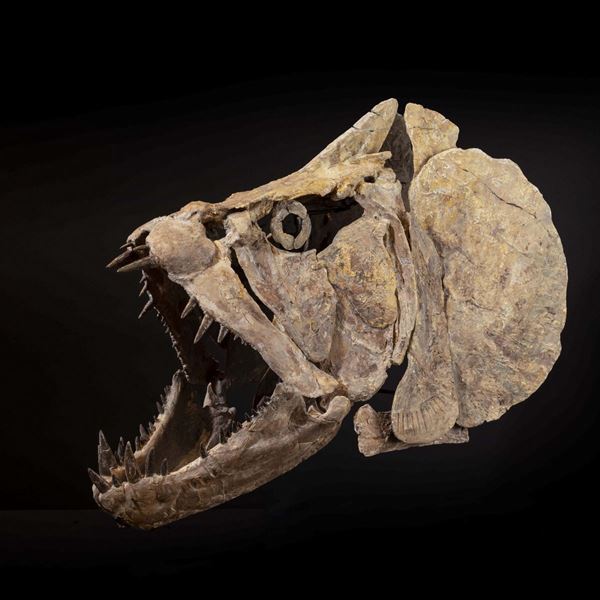
Enormous predator fish that used to live in the Interior Seaway that covered most of the United States during the Cretaceous period. Interesting preparation in three dimensions
W. 70 - D. 52 - H. 37 Cm
W. 70 - D. 52 - H. 37 Cm
105
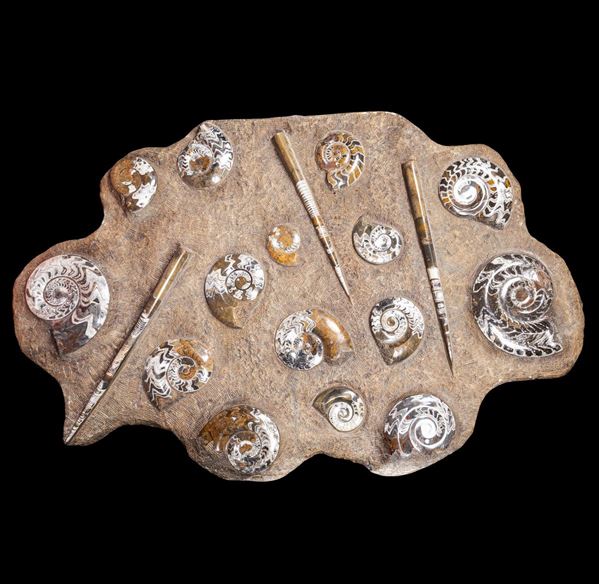
Goniatites and Orthoceras Silurian-Devonian (440-360 MA) Erfoud, Morocco
W. 156 - D. 102 - H. 30 cm
W. 156 - D. 102 - H. 30 cm
106
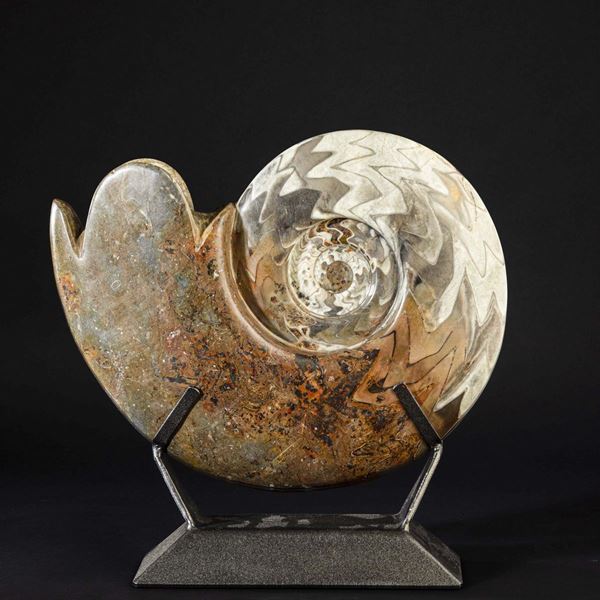
A beautiful ammonite from the Late Devonian (385-359 MA). Metal base
W. 33 - D. 30 - H. 7 Cm
W. 33 - D. 30 - H. 7 Cm
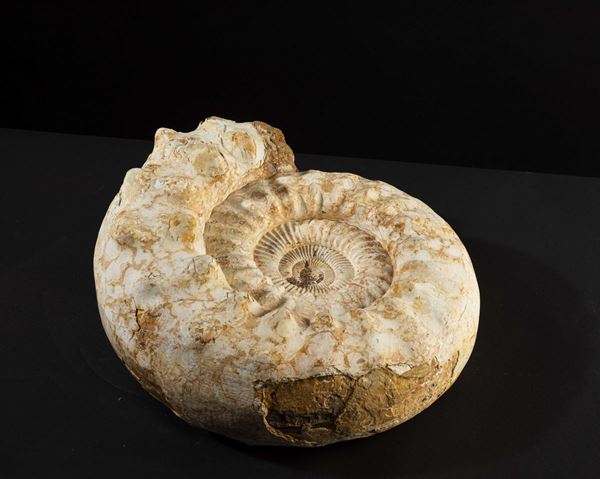
107
Perisphinctes (Kranosphinctes) sp. Late Jurassic, Oxfordian (161-156 ma)
W. 34 - D. 34 - H. 18 Cm
W. 34 - D. 34 - H. 18 Cm
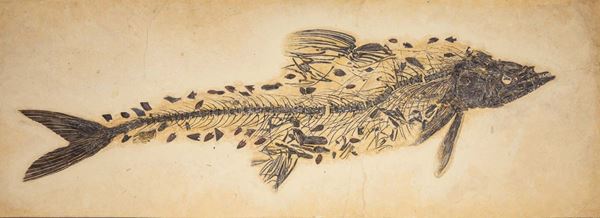
108
Fossil of a predator from the late Cretaceous (Santonian-Campanian)
W. 199 - D. 70 - H. 5 Cm
W. 199 - D. 70 - H. 5 Cm
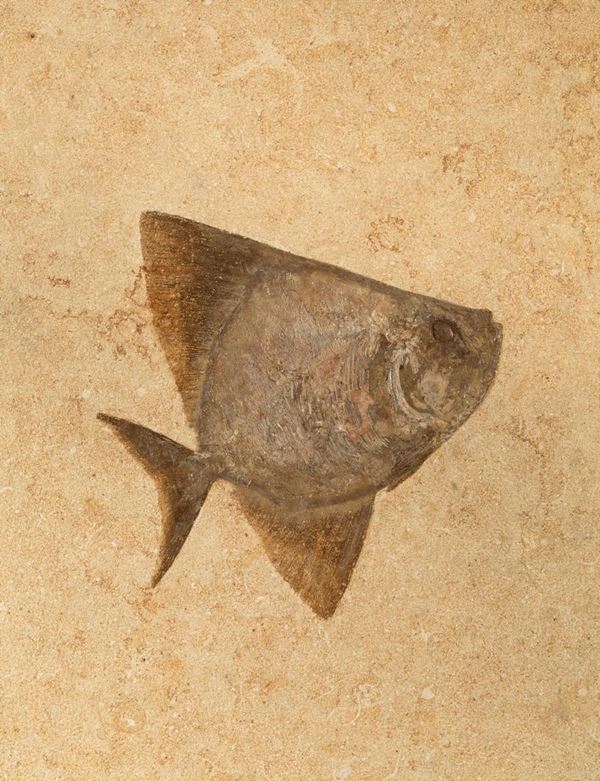
109
Araripichthys, an extinct bony fish, from the Teleostei infraclass, in a metal frame.
W. 66 - D. 4 - H. 83 Cm
W. 66 - D. 4 - H. 83 Cm
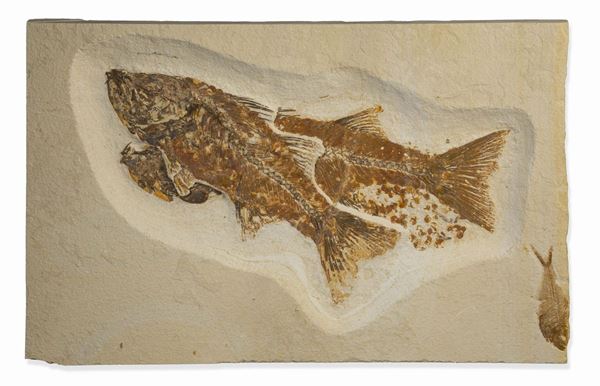
110
Mioplosus, an extinct percid bony fish that lived in the middle Eocene
W. 48,5 - D. 2,5 - H. 32 Cm
W. 48,5 - D. 2,5 - H. 32 Cm
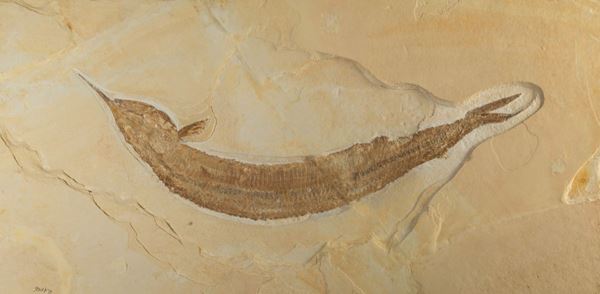
111
An extinct aspidorhynchus, a fast predator from the Titonian, Jurassic.
W. 75 - D. 38 - H. 7 Cm
W. 75 - D. 38 - H. 7 Cm
114
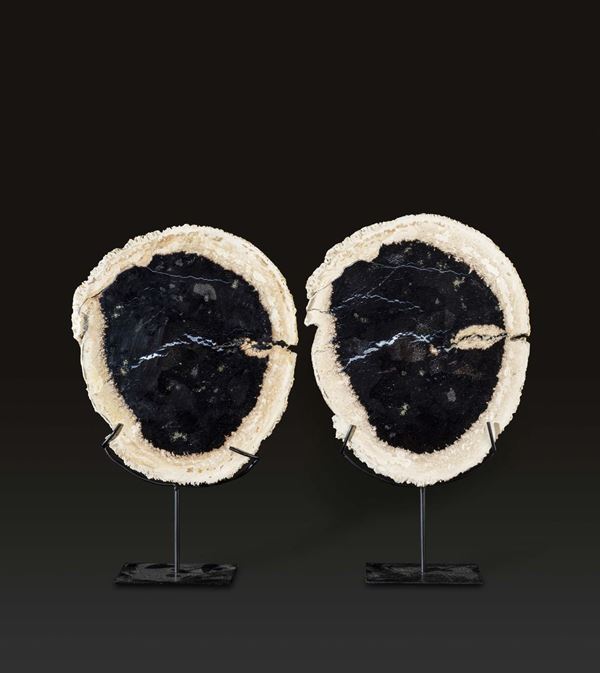
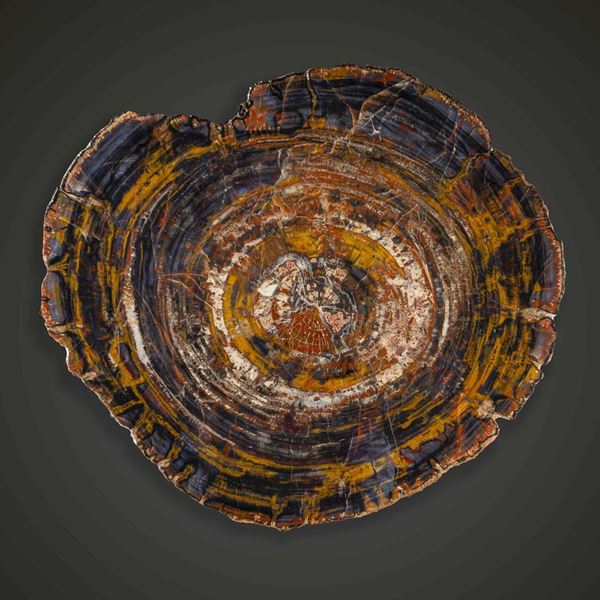
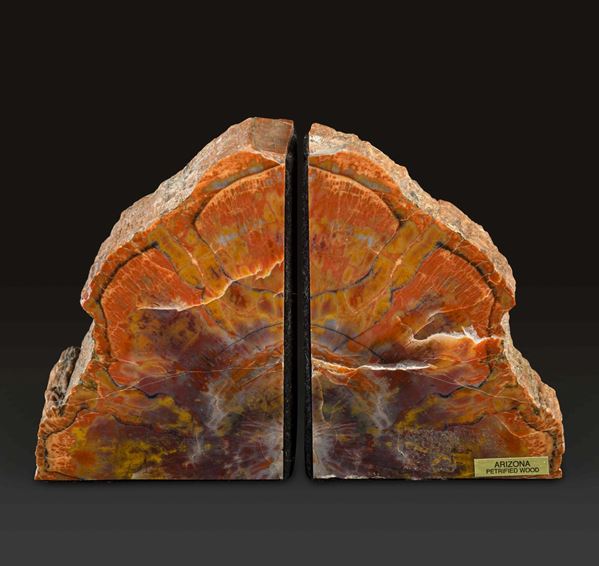
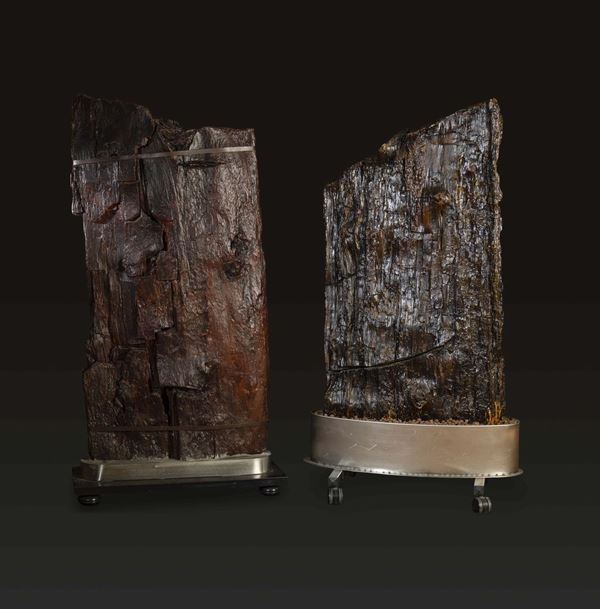
Fossilised bark from a Glyptostrobus Europeus of the Oligocene period.
kg 94
kg 94
116
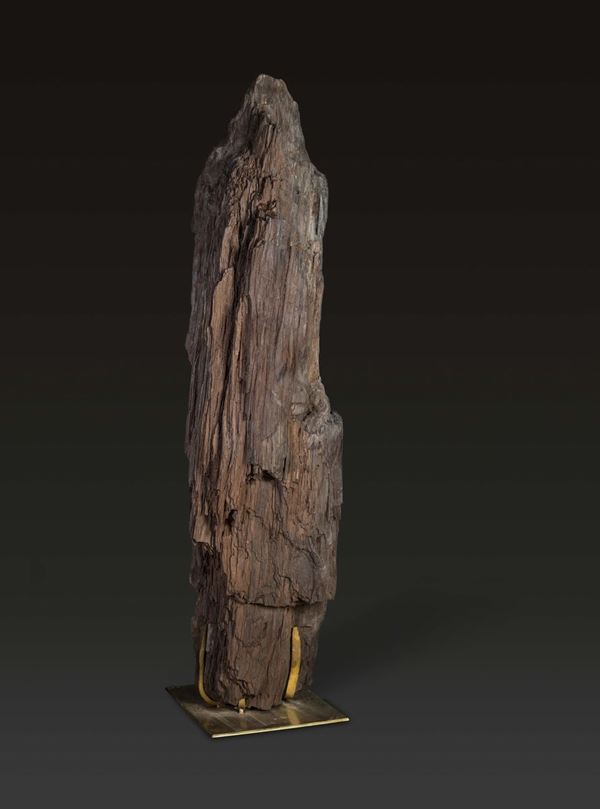
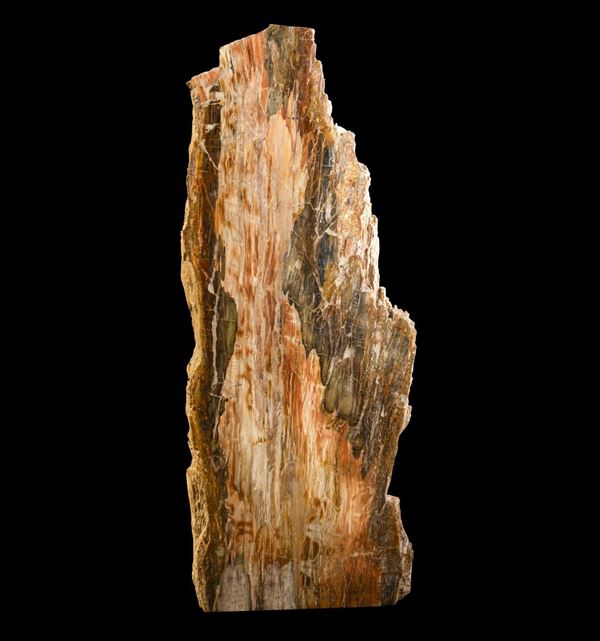
Araucaria, genus in the Araucariaceae family that includes several species of evergreen gymnosperm trees of the Southern hemisphere. This specimen is a vertical fossil from the Triassic period (around 220 MA)
kg 35 W. 38 - D. 7 - H. 103 Cm
kg 35 W. 38 - D. 7 - H. 103 Cm
118
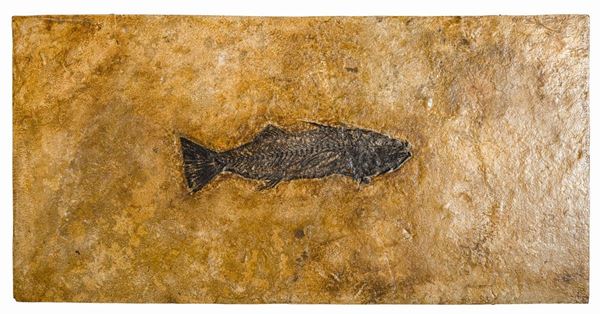
The tabletop is made in limestone from the Green River Formation, Wyoming, with a real fossilised fish. Varnished metal base.
W. 92 - D. 45 - H. 46 Cm
W. 92 - D. 45 - H. 46 Cm
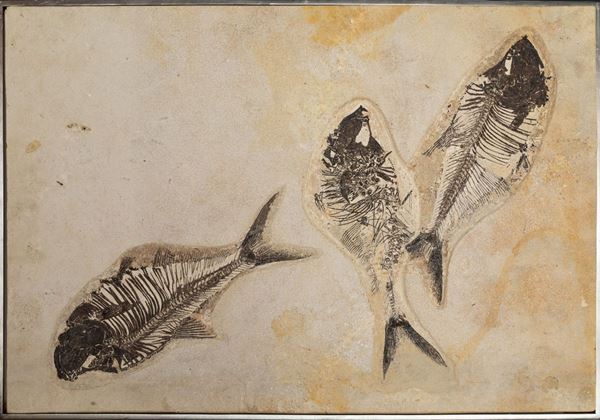
119
The tabletop is made in limestone from the Green River Formation, Wyoming, with real fossilised fish. Varnished metal base.
W. 81 - D. 56 - H. 45 Cm
W. 81 - D. 56 - H. 45 Cm