The variety of categories represented is one of the most fascinating aspects of the auction: manuscripts, sculptures, paintings, furniture, works of art, glass, clocks, and decorative objects engage in a dialogue that conveys a sense of continuous stylistic evolution, illustrating the transformation of decorative forms and artistic language over the centuries.
Opening the itinerary are important examples of medieval and Renaissance art, including the precious 15th-century Book of Hours for the Use of Rouen (lot 4), an illuminated manuscript originating from Northern France or Flanders, enriched with gold initials, miniatures, and elaborate decorations that testify to the exceptionally high quality of late medieval book production.
Among the most important groups in the auction is the selection of Mannerist and Baroque sculptures and bronzes. Of particular significance is the large pair of 17th-century bronze putti (lot 10), attributed to a Roman founder working in the circle of Gian Lorenzo Bernini. These works possess a striking theatrical presence and fully reflect the dynamism and dramatic tension of Baroque Rome.
Among the most extraordinary works in the entire sale is the Bust of Costanza Piccolomini Bonarelli (lot 11), a marble sculpture associated with the Bernini circle and probably attributable to Matteo Bonarelli. The work represents one of the rarest and most fascinating expressions of Gian Lorenzo Bernini’s immediate circle and directly recalls the celebrated marble bust of Costanza preserved at the Bargello Museum in Florence, currently on display at the Gallerie Nazionali di Arte Antica at Palazzo Barberini in the exhibition “Bernini and the Barberini.”
The sculpture encapsulates all the modernity and sensuality of Bernini’s artistic language: the face captured in a vivid and natural expression, the slightly disheveled hair, the parted lips, and the soft rendering of the drapery convey an extraordinary psychological intensity that feels remarkably modern for the 17th century. Even more compelling is the historical story linking Costanza to Bernini, whose muse and lover she was, making the bust not only a work of exceptional artistic significance but also a direct testimony to one of the most turbulent love affairs of Roman Baroque art.
Continuing through the catalogue, particular attention should be paid to the works in hardstones and semi-precious stones from the 17th and 18th centuries. Among these are the pair of marble tabletops from the Galleria dei Lavori Granducale in Florence (lot 22). Mounted on a pair of 19th-century mahogany consoles, the tabletops feature a ground decorated with ten red marble panels framed in black and white marble, enclosing 17th-century pietra dura and soft-stone inlays depicting birds, flowering racemes, and flower vases. Equally elegant is the octagonal casket with jasper plaques (lot 24), an 18th-century cabinetmaking work embellished with gilt bronzes.
Great attention should also be given to the refined group of Venetian lacquered furnishings from the 18th century, which fully embodies the decorative liveliness and ornamental taste of the Venetian tradition (lots 44 to 61).
Among the most interesting sections of the catalogue is a group of Russian works spanning different categories and functions, from devotional art to luxury craftsmanship. This section includes 18th- and 19th-century silver icons (lots 96 and 98), expressions of the Orthodox sacred tradition, alongside functional luxury objects such as the gold box from Saint Petersburg dating to the late 19th century (lot 104) and the gold cup produced in the same city and period (lot 105). These two works exemplify the sumptuous taste and outstanding level of decorative arts at the Russian Imperial court.
The catalogue also devotes considerable space to Old Master paintings, with a selection spanning different European schools. Among the most significant works are Winter Landscape with Skaters (lot 13), a delicate Northern European scene from the late 17th century, and above all the magnificent Portrait of a Lady with Flowers by Rosalba Carriera (lot 34), a pastel work that perfectly captures the elegance and grace of 18th-century Venetian portraiture. The softness of the complexion, the luminosity of the fabrics, and the psychological sensitivity of the sitter confirm Rosalba Carriera’s central role in the international dissemination of pastel painting among Europe’s great courts.
Of particular interest is also the section dedicated to 19th-century paintings. Highlights include the works by Francesco Zerilli (lots 81 to 85), one of the leading exponents of Sicilian vedutismo in the first half of the 19th century, alongside notable paintings by Federico Andreotti (lot 124) and Eugenio Zampighi (lot 125).
With this second edition of the Fine Art Selection sale, Cambi Casa d’Aste further consolidates its Milan-based project dedicated to Old Master art, presenting a catalogue that successfully combines scholarly rigor, collecting quality, and a remarkable variety of categories.
Opening the itinerary are important examples of medieval and Renaissance art, including the precious 15th-century Book of Hours for the Use of Rouen (lot 4), an illuminated manuscript originating from Northern France or Flanders, enriched with gold initials, miniatures, and elaborate decorations that testify to the exceptionally high quality of late medieval book production.
Among the most important groups in the auction is the selection of Mannerist and Baroque sculptures and bronzes. Of particular significance is the large pair of 17th-century bronze putti (lot 10), attributed to a Roman founder working in the circle of Gian Lorenzo Bernini. These works possess a striking theatrical presence and fully reflect the dynamism and dramatic tension of Baroque Rome.
Among the most extraordinary works in the entire sale is the Bust of Costanza Piccolomini Bonarelli (lot 11), a marble sculpture associated with the Bernini circle and probably attributable to Matteo Bonarelli. The work represents one of the rarest and most fascinating expressions of Gian Lorenzo Bernini’s immediate circle and directly recalls the celebrated marble bust of Costanza preserved at the Bargello Museum in Florence, currently on display at the Gallerie Nazionali di Arte Antica at Palazzo Barberini in the exhibition “Bernini and the Barberini.”
The sculpture encapsulates all the modernity and sensuality of Bernini’s artistic language: the face captured in a vivid and natural expression, the slightly disheveled hair, the parted lips, and the soft rendering of the drapery convey an extraordinary psychological intensity that feels remarkably modern for the 17th century. Even more compelling is the historical story linking Costanza to Bernini, whose muse and lover she was, making the bust not only a work of exceptional artistic significance but also a direct testimony to one of the most turbulent love affairs of Roman Baroque art.
Continuing through the catalogue, particular attention should be paid to the works in hardstones and semi-precious stones from the 17th and 18th centuries. Among these are the pair of marble tabletops from the Galleria dei Lavori Granducale in Florence (lot 22). Mounted on a pair of 19th-century mahogany consoles, the tabletops feature a ground decorated with ten red marble panels framed in black and white marble, enclosing 17th-century pietra dura and soft-stone inlays depicting birds, flowering racemes, and flower vases. Equally elegant is the octagonal casket with jasper plaques (lot 24), an 18th-century cabinetmaking work embellished with gilt bronzes.
Great attention should also be given to the refined group of Venetian lacquered furnishings from the 18th century, which fully embodies the decorative liveliness and ornamental taste of the Venetian tradition (lots 44 to 61).
Among the most interesting sections of the catalogue is a group of Russian works spanning different categories and functions, from devotional art to luxury craftsmanship. This section includes 18th- and 19th-century silver icons (lots 96 and 98), expressions of the Orthodox sacred tradition, alongside functional luxury objects such as the gold box from Saint Petersburg dating to the late 19th century (lot 104) and the gold cup produced in the same city and period (lot 105). These two works exemplify the sumptuous taste and outstanding level of decorative arts at the Russian Imperial court.
The catalogue also devotes considerable space to Old Master paintings, with a selection spanning different European schools. Among the most significant works are Winter Landscape with Skaters (lot 13), a delicate Northern European scene from the late 17th century, and above all the magnificent Portrait of a Lady with Flowers by Rosalba Carriera (lot 34), a pastel work that perfectly captures the elegance and grace of 18th-century Venetian portraiture. The softness of the complexion, the luminosity of the fabrics, and the psychological sensitivity of the sitter confirm Rosalba Carriera’s central role in the international dissemination of pastel painting among Europe’s great courts.
Of particular interest is also the section dedicated to 19th-century paintings. Highlights include the works by Francesco Zerilli (lots 81 to 85), one of the leading exponents of Sicilian vedutismo in the first half of the 19th century, alongside notable paintings by Federico Andreotti (lot 124) and Eugenio Zampighi (lot 125).
With this second edition of the Fine Art Selection sale, Cambi Casa d’Aste further consolidates its Milan-based project dedicated to Old Master art, presenting a catalogue that successfully combines scholarly rigor, collecting quality, and a remarkable variety of categories.
The Best Awards
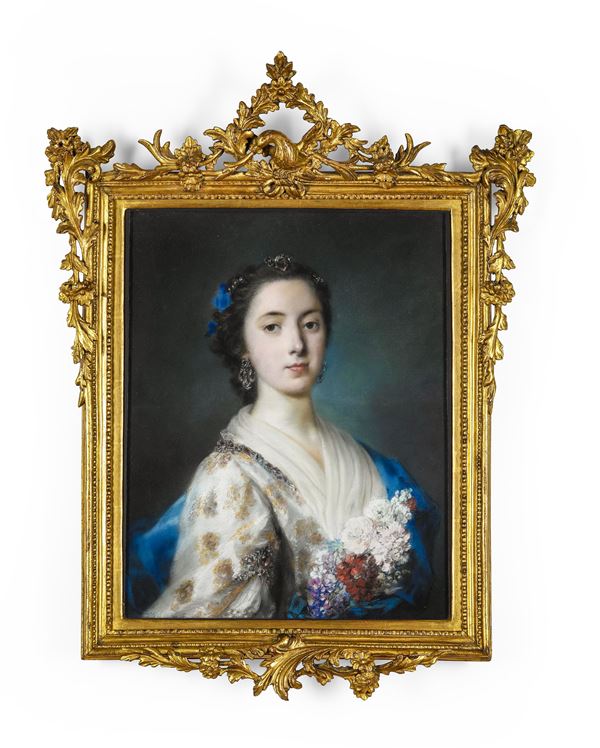
Lot N. 34
Rosalba Carriera
(Venezia, 1673 - Venezia, 1757)
Ritratto di dama con fiori
entro ricca cornice in legno intagliato e dorato reca al retro etichetta Thos. Agnew & Sons, London pastello su carta Largh. 460 - Alt. 580 mm
Estimate
€ 25.000,00 / 35.000,00
![Importate coppa in oro. San Pietroburgo, fine del XIX secolo, marchio dell'orafo e del saggiatore non [..]](https://imageapi.cambiaste.com/api/lotto/immagine/359965/0/600.jpg)
Lot N. 105
Importate coppa in oro. San Pietroburgo, fine del XIX secolo, marchio dell'orafo e del saggiatore non [..]
Coppa globulare in oro con castoni contenenti zaffiri e granati cabochon, entro riserve circolari monogramma coronato dello Zar Nicola II e stemma imperiale dei [..]
Estimate
€ 6.000,00 / 8.000,00
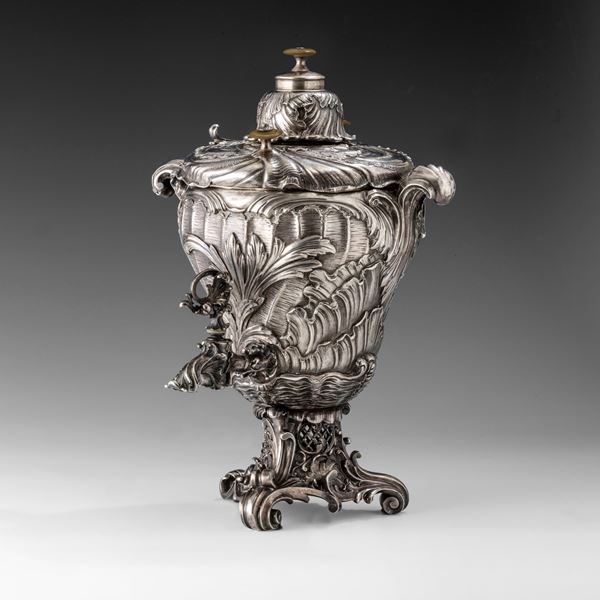
Lot N. 101
Importante samovar. San Pietroburgo, 1896
Corpo piriforme poggiante su base a tripode con piedi a ricciolo. Fastosi decori di gusto naturalistico con motivi a larghe foglie e volute sovrapposte
Estimate
€ 12.000,00 / 15.000,00
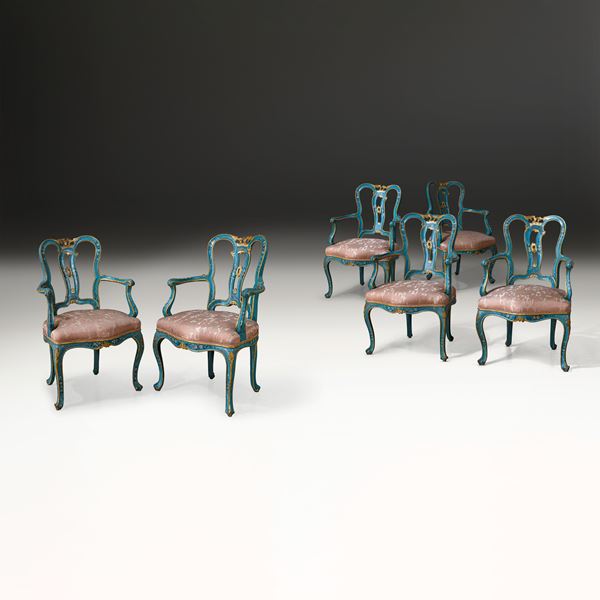
Lot N. 43
Gruppo di sei poltrone. Venezia, XVIII secolo
Impianto mistilineo in legno dipinto a fondo azzurro, ornato da decoro floreale policromo, profili dorati e intagli a pellacce e foglie dorate, schienale a giorno [..]
Estimate
€ 25.000,00 / 35.000,00
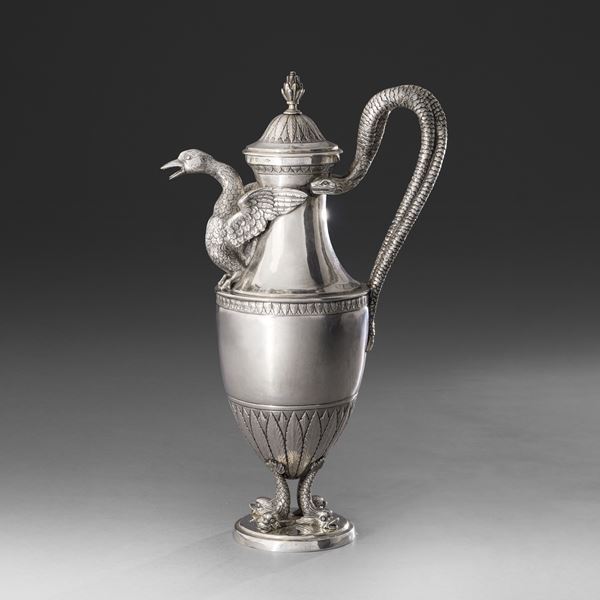
Lot N. 32
Giovacchino Belli
(1787 - 1822)
Rara caffettiera neoclassica. Roma, 1811-1822. Maestro argentiere Giovacchino Belli (1787-1822)
Elegante corpo a vaso con decori a foglie lanceolate di gusto neoclassico sostenuto da tritoni poggianti su plinto circolare modanato. Rara e inusuale la curiosa [..]
Estimate
€ 3.000,00 / 4.000,00
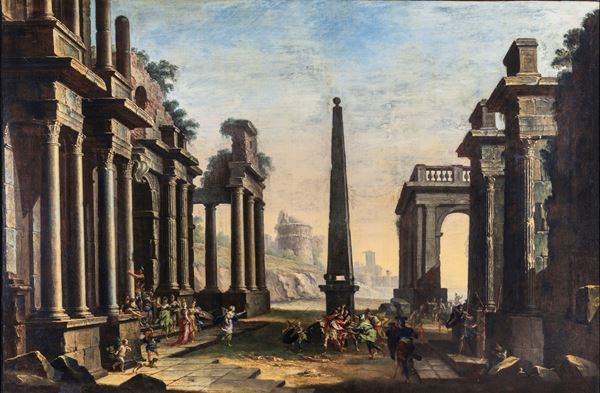
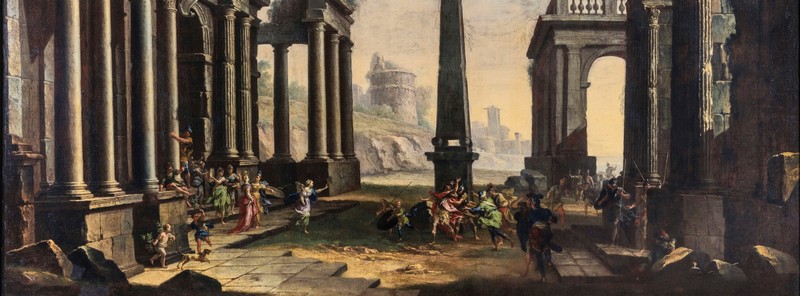
Lot N. 15
Giovanni Paolo Panini
(Piacenza, 1692 - Roma, 1765)
Achille strappato dalla reggia di Licomede
olio su tela cm 117X176
Estimate
€ 30.000,00 / 40.000,00
![Importante compendio di quattro saliere neoclassiche, Roma, XIX secolo. Maestro argentiere Pietro Paolo [..]](https://imageapi.cambiaste.com/api/lotto/immagine/338135/0/600.jpg)
Lot N. 31
Pietro Paolo Spagna
(1817 - 1861)
Importante compendio di quattro saliere neoclassiche, Roma, XIX secolo. Maestro argentiere Pietro Paolo [..]
Il prestigioso set, formato da quattro saliere doppie vermeil eseguite in perfetto stile Impero francese finemente cesellate si presenta con base ottagonale allungata [..]
Estimate
€ 10.000,00 / 12.000,00
![Coppia di piani in marmo con formelle in pietre dure e tenere. Galleria dei Lavori Granducale, Firenze, [..]](https://imageapi.cambiaste.com/api/lotto/immagine/364368/0/600.jpg)
Lot N. 22
Coppia di piani in marmo con formelle in pietre dure e tenere. Galleria dei Lavori Granducale, Firenze, [..]
Inseriti su una coppia di consoles in mogano del XIX secolo. I due piani presentano un fondo lastronato in broccatello su cui sono collocati dieci pannelli in marmo [..]
Estimate
€ 20.000,00 / 30.000,00
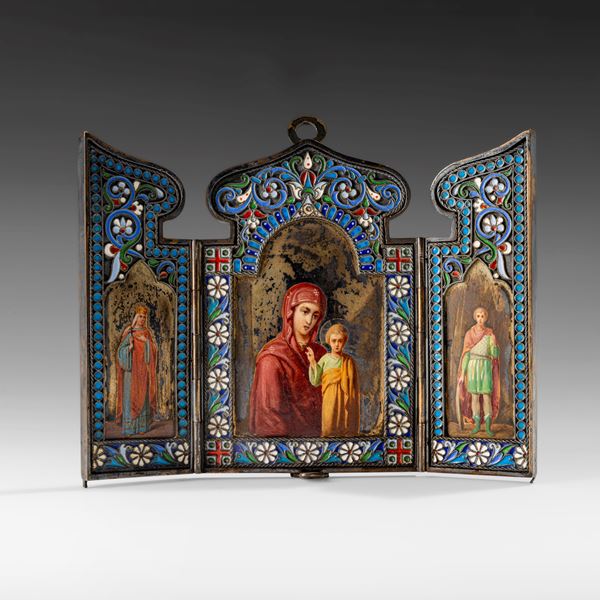
Lot N. 103
Icona da viaggio. Mosca, fine del XIX secolo. Maestro argentiere Ovchinnikov
All'interno dipinte al centro la Diapara di Kazan con ai lati Santa Caterina e San Pantaleo. Sul retro incisa iscrizione devozionale
Estimate
€ 2.500,00 / 3.000,00
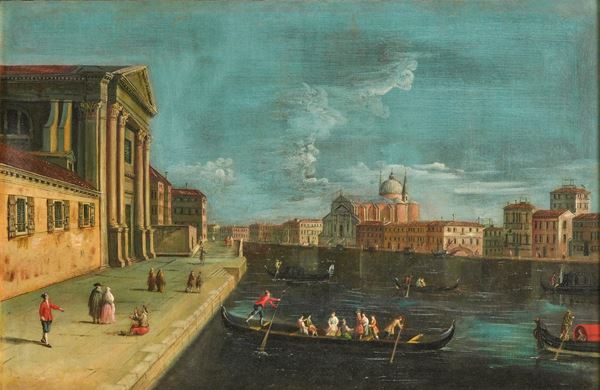
Lot N. 36
Apollonio Facchinetti detto Domenichini (conosciuto anche come Maestro della Fondazione Langmatt)
(Venezia, 1715 - Venezia, 1770)
Veduta del canale della Giudecca a Venezia con le chiese dello Spirito Santo e del Redentore
olio su tela cm 47X73
Estimate
€ 12.000,00 / 15.000,00
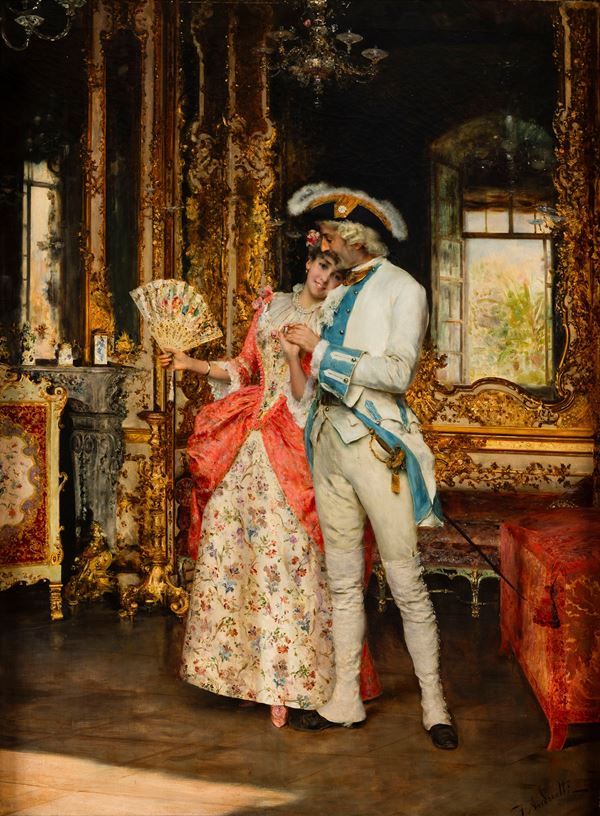
Lot N. 124
Federico Andreotti
(1847 - 1930)
La riconciliazione
firmato in basso a destra olio su tela cm 104,5X78
Estimate
€ 10.000,00 / 12.000,00
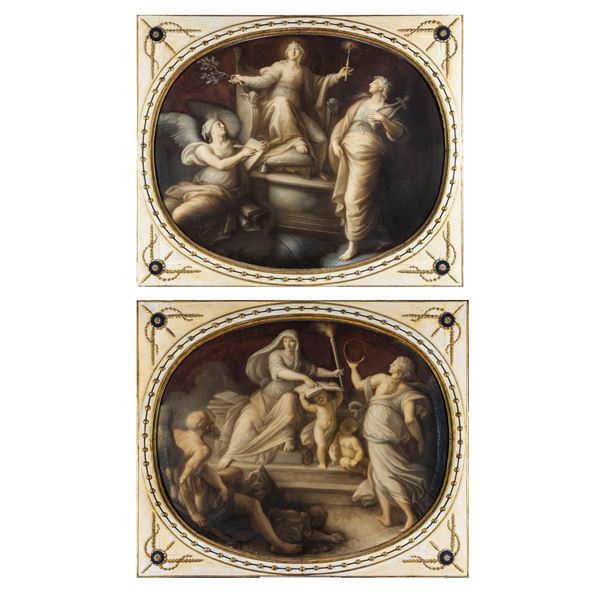
Lot N. 118
Artista romano del XVIII secolo Allegorie della Sapienza
coppia di dipinti olio su tela ovale Largh. 146 - Alt. 117,5 cm
Estimate
€ 15.000,00 / 20.000,00
Experts for the auction

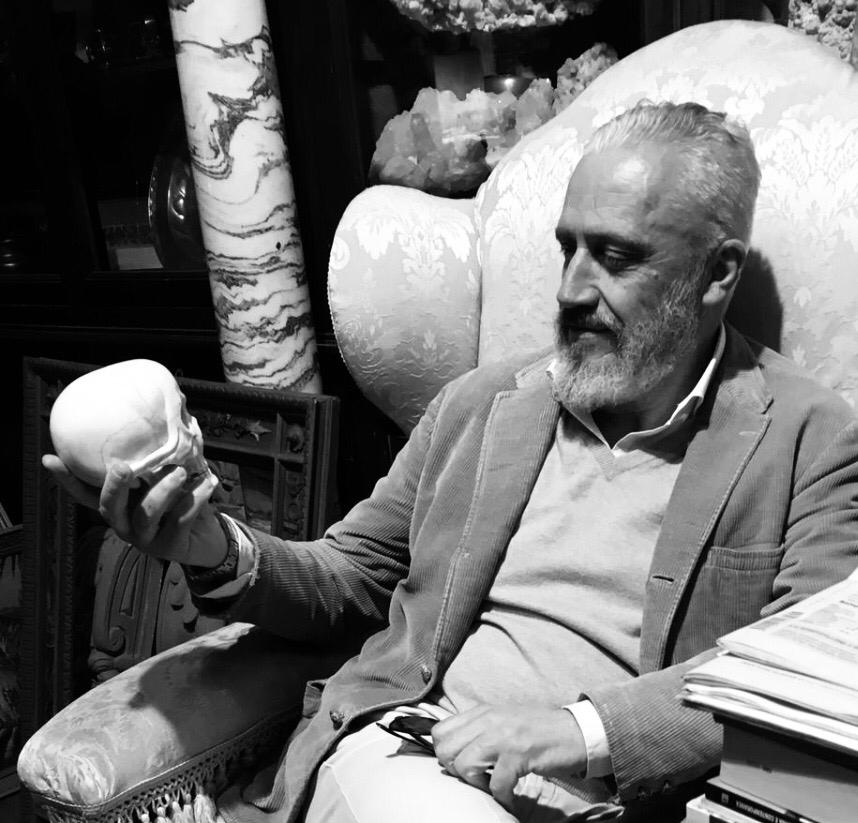

Giovanni Raspini
Collectors' Silvers
Giovanni Raspini
Lorenzo Bianchini Massoni
Sculpture