Evaluation Alberto Burri
Alberto Burri Valuations - Want to sell a Alberto Burri piece? Request a complimentary and confidential valuation!Cambi Casa d'Aste will review your submission and offer a free-of-charge estimate, if your item is suitable for our auctions.
biography
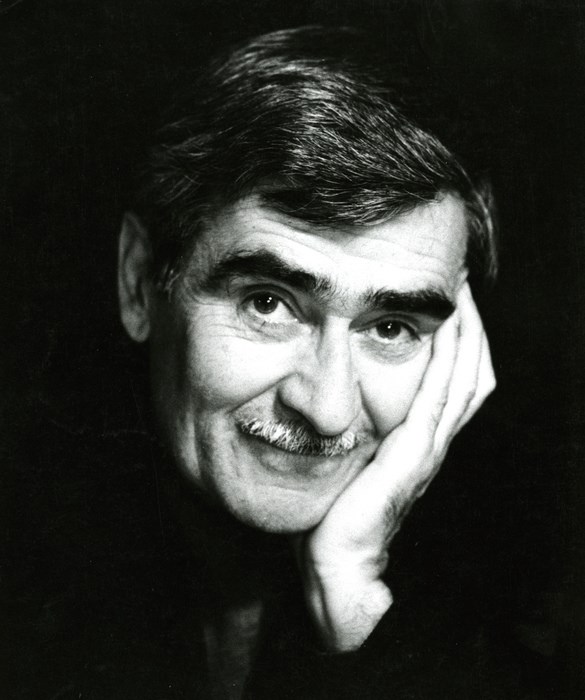
Alberto Burri was one of the most important Italian artists of the twentieth century, born on March 12, 1915, in Città di Castello, Italy. Son of Pietro, a wine merchant, and Carolina Torreggiani, an elementary school teacher, Burri graduated in medicine from the University of Perugia in 1940. During World War II, serving as a medical officer, he was captured by the British in Africa and interned in a prisoner-of-war camp in Hereford, Texas, USA. It was during this imprisonment that he decided to abandon his medical career and dedicate himself to art, beginning to paint as a self-taught artist.
After the war, in 1946, Burri settled in Rome and started developing an abstract and material-based painting style, using unconventional materials such as tar, iron, wood, earth, and glue. His art anticipated movements like Arte Povera and New Realism, standing out for the innovative use of matter as the main expressive element. His works are considered examples of Informal Art, a movement rejecting traditional figurative and abstract art in favor of new communication through material.
Burri held his first exhibitions in Rome in 1947 and 1948, supported by poets like Libero De Libero and Leonardo Sinisgalli. Throughout his career, his artistic research increasingly focused on the use of extra-pictorial materials such as pumice and tar, which became distinctive features of his work. He died in Nice, France, on February 13, 1995. His work remains highly regarded and studied, with numerous important sales and valuations at auction houses such as Cambi.
After the war, in 1946, Burri settled in Rome and started developing an abstract and material-based painting style, using unconventional materials such as tar, iron, wood, earth, and glue. His art anticipated movements like Arte Povera and New Realism, standing out for the innovative use of matter as the main expressive element. His works are considered examples of Informal Art, a movement rejecting traditional figurative and abstract art in favor of new communication through material.
Burri held his first exhibitions in Rome in 1947 and 1948, supported by poets like Libero De Libero and Leonardo Sinisgalli. Throughout his career, his artistic research increasingly focused on the use of extra-pictorial materials such as pumice and tar, which became distinctive features of his work. He died in Nice, France, on February 13, 1995. His work remains highly regarded and studied, with numerous important sales and valuations at auction houses such as Cambi.
Past lots of Alberto Burri

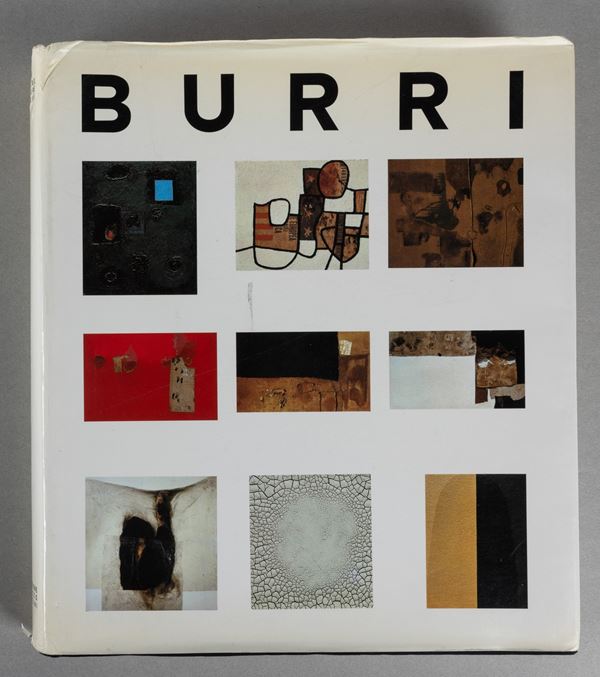
Alberto Burri©
(Città di Castello (PG), 1915 - Nizza, 1995)
Tempera
firmato e datato in alto a destra Timbro al retro della Galleria Blu, Milano tempera su carta Largh. 22 - Alt. 13,8 cm
Sold
Alberto Burri©
(Città di Castello (PG), 1915 - Nizza, 1995)
Cretto nero F
es. 83/90 firmato in basso a destra, numerato in basso a sinistra Stamperia 2RC, Roma acquaforte e acquatinta su carta Fabriano [..]
Sold
Alberto Burri©
(Città di Castello (PG), 1915 - Nizza, 1995)
Combustione (I)
dimensioni lastra: cm 36,4x30,8 es. 41/80, Edizioni 2RC, Roma firmato in basso a destra, numerato in basso a sinistra acquaforte [..]
Sold
Alberto Burri©
(Città di Castello (PG), 1915 - Nizza, 1995)
Lettera C - Lettera E
ess. XII/XV e XIV/XV ciascuna grafica è firmata in basso a destra e numerata in basso a sinistra serigrafia Largh. 50 - [..]
Sold
Alberto Burri©
(Città di Castello (PG), 1915 - Nizza, 1995)
Muffa
dimensioni lastra: cm 31,6x39,1 es. 123/150 su una tiratura di 150 esemplari, 12 prove di stampa numerate da 1/12 a 12/12 [..]
Sold
Alberto Burri©
(Città di Castello (PG), 1915 - Nizza, 1995)
Combustione
es. 76/90 firmato in basso a destra, numerato in basso a sinistra Edizioni Castelli, Roma acquaforte e litografia Largh. [..]
Sold
Alberto Burri©
(Città di Castello (PG), 1915 - Nizza, 1995)
Acquaforte G
es. 13/90 Firmata in basso a destra, numerata in basso a sinistra Edizioni Il Segnapassi, Pesaro Acquaforte e serigrafia [..]
Sold
Alberto Burri©
(Città di Castello (PG), 1915 - Nizza, 1995)
Trittico B
es. 30/90 firmato in basso a destra, numerato in basso a sinistra serigrafia Largh. 35 - Alt. 43 Cm
Sold
Alberto Burri
(Città di Castello (PG), 1915 - Nizza, 1995)
Bianchi e Neri I-C
es. 65/90 Firmata in basso a destra, numerata in basso a sinistra litografia, calcografia e collage d'acetato Largh. 53 [..]
Sold
Alberto Burri©
(Città di Castello (PG), 1915 - Nizza, 1995)
Bianchi e Neri I tav. C
es. 3/90 firmato in basso a destra, numerato in basso a sinistra litografia, calcografia e collage d'acetato Largh. 53 - [..]
Sold
Alberto Burri©
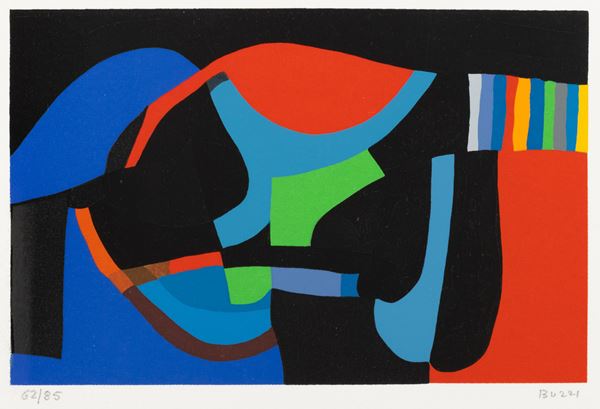
(Città di Castello (PG), 1915 - Nizza, 1995)
Serigrafia
es. 62/85 firmato in basso a destra, numerato in basso a sinistra serigrafia Largh. 43 - Alt. 35 cm
Sold
Alberto Burri©
(Città di Castello (PG), 1915 - Nizza, 1995)
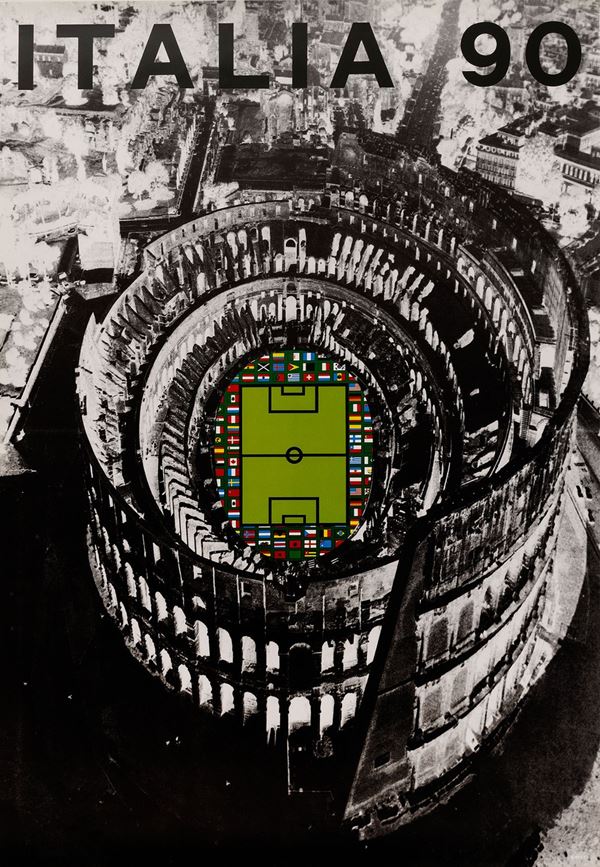
Mondiali di Calcio Italia ’90 - Roma
Affisso foto + offset, 1990. Cm 70 x 100. Qualità A
Sold
Alberto Burri
(Città di Castello (PG), 1915 - Nizza, 1995)
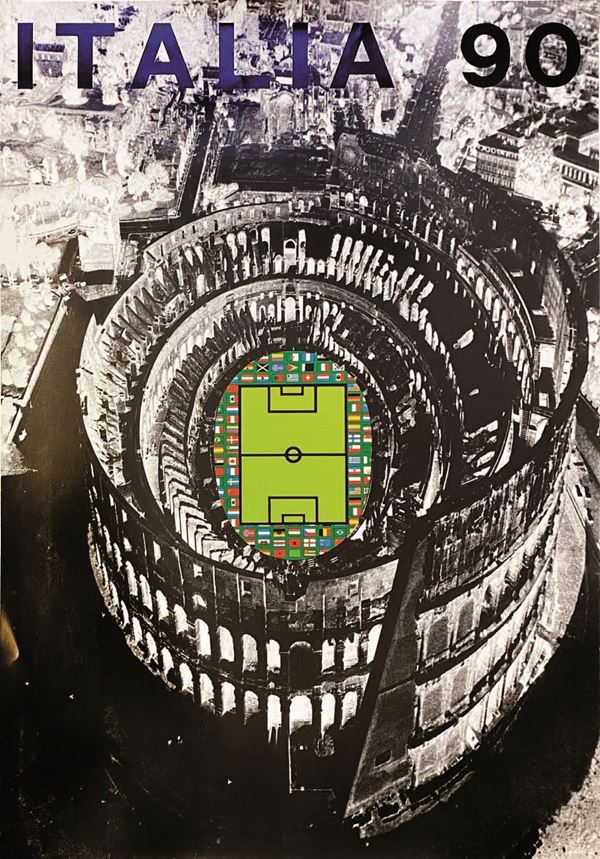
Alberto Burri (1915-1995) ITALIA 90
First edition offset poster 1990. Cm 100x70. QUALITY: A.
Sold
Alberto Burri©
(Città di Castello (PG), 1915 - Nizza, 1995)
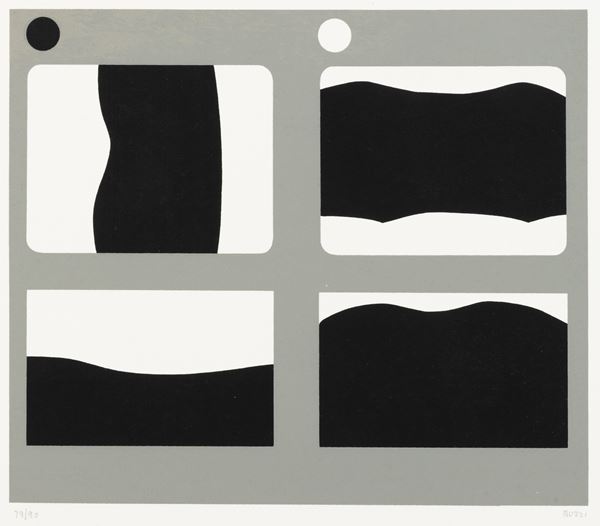
Lettere - D
es. 79/90 firmato in basso a destra, numerato in basso a sinistra serigrafia Largh. 48 - Alt. 34 cm
Alberto Burri©
(Città di Castello (PG), 1915 - Nizza, 1995)
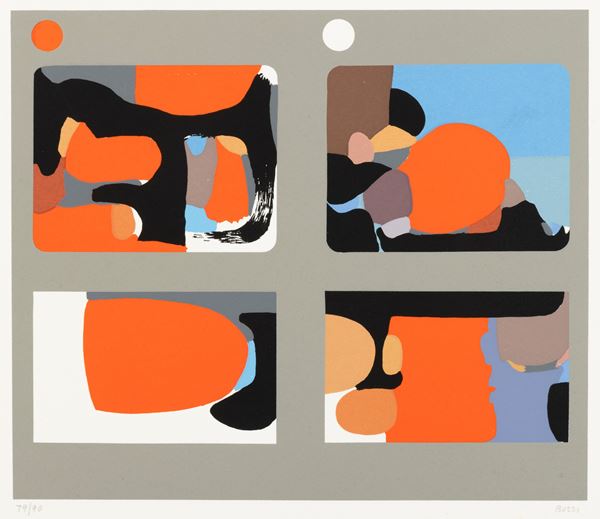
Lettere - C
es. 79/90 firmato in basso a destra, numerato in basso a sinistra serigrafia Largh. 50 - Alt. 35 cm
Alberto Burri©
(Città di Castello (PG), 1915 - Nizza, 1995)
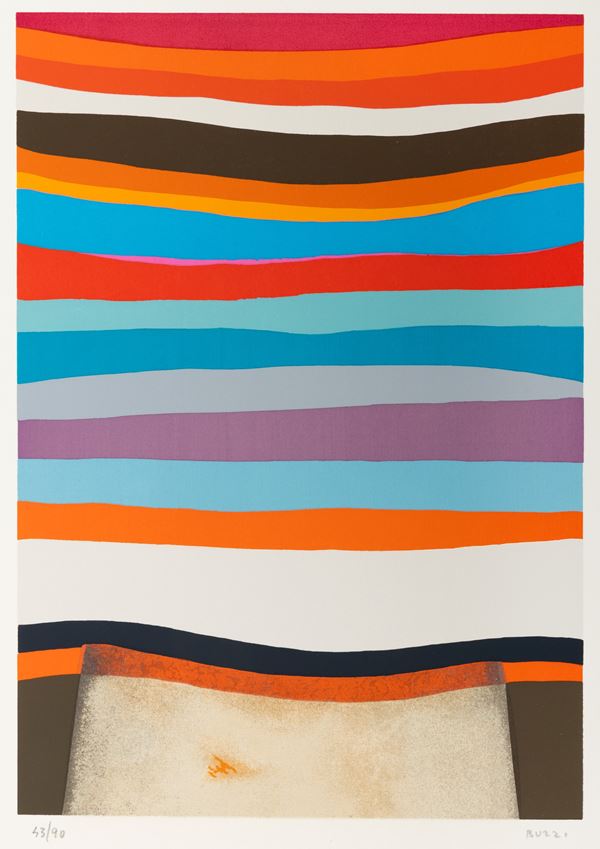
Trittico D - 1D
es. 43/90 firmato in basso a destra, numerato in basso a sinistra serigrafia Largh. 35 - Alt. 43 cm
Alberto Burri©
(Città di Castello (PG), 1915 - Nizza, 1995)
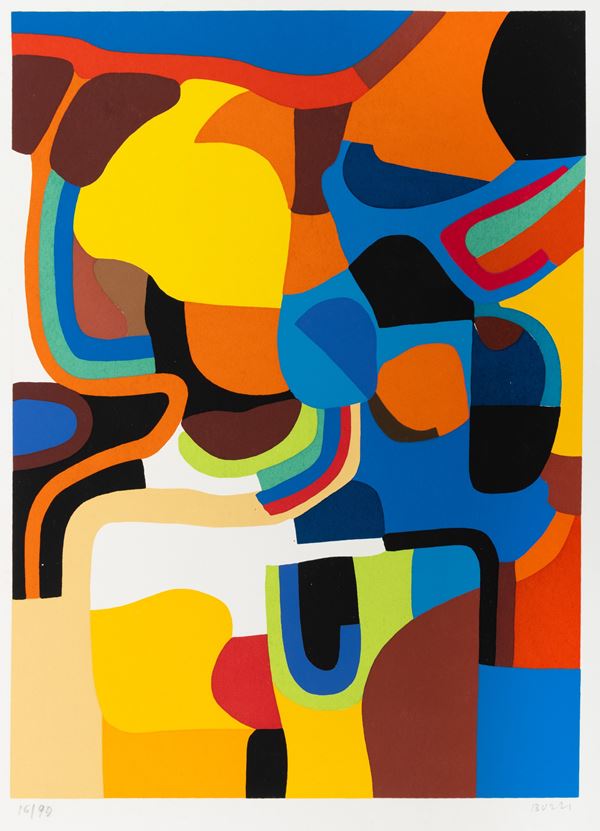
Serigrafia 3E
es. 16/90 firmato in basso a destra, numerato in basso a sinistra serigrafia Largh. 35 - Alt. 43 cm
Alberto Burri©
(Città di Castello (PG), 1915 - Nizza, 1995)
Serigrafia 16
es. P.A. firmato in basso a destra, numerato in basso a sinistra serigrafia Largh. 66,5 - Alt. 62,3 cm
Alberto Burri©
(Città di Castello (PG), 1915 - Nizza, 1995)
Burri. Contributi al catalogo sistematico
Catalogo a cura della Fondazione Palazzo Albizzini, Città di Castello, Petruzzi Editore, Città di Castello, pp. 544, copertina [..]