Maiolica represents one of the highest and most refined artistic expressions of Italian Renaissance culture, bearing witness to the extraordinary ingenuity and creative sensitivity of the artists of the time. This same expressive power can be found in our Montelupo bowl, made in the mid-16th century. At the center of the umbone on the front is a painted scene of the Crucifixion with the Virgin Mary and Saint John. Around it, on the rim, are partitions enclosing stylized oak branches alternating on a white and blue ground in the so-called “a quartieri” style.
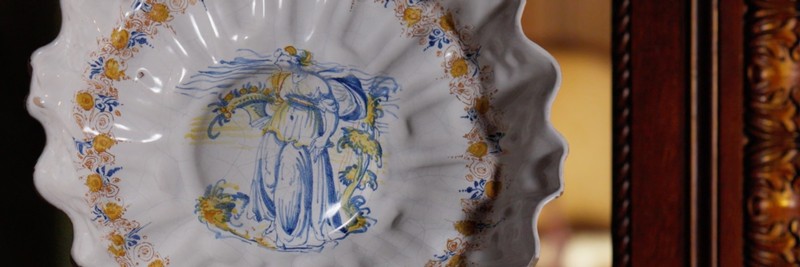
Moving to Faenza, in the penultimate quarter of the 16th century, we present an important bowl with a mold-shaped wall, at the center of which stands a female figure striding forward, holding a basket of fruit in her right hand—likely an allegory of abundance or a depiction of Pomona, the Roman goddess of fruit.
Another bowl, this time in colorless glass, made in Venice between the late 15th and early 16th centuries, features a decoration in polychrome enamels depicting two mythological figures, probably tritons or aquatic spirits emerging from a stylized river landscape. This decoration reveals a late Gothic-Renaissance visual language with references to classical iconographic repertories typical of Murano production between the 15th and 16th centuries.
The Faenza tureen painted by Filippo Comerio at the Ferniani Factory represents a marvelous example of the vibrant beauty of 18th-century maiolica. The piece features a rather shallow rectangular basin topped with a lid adorned with sail-like points and a Rococo scroll handle. On the four outer sides are festoons in relief, supported on the longer side by a leonine mask. Here, the artist—active between 1776 and 1781—displays his unmistakable style in two small painted scenes on the lid, confirming himself as a brilliant interpreter of Arcadian taste, rendered with freshness of touch and chromatic restraint.
Between the 18th and 19th centuries, Russian porcelain experienced an extraordinary period of artistic development. A decisive moment was the founding of the Imperial Manufactory in Saint Petersburg, exemplified here by a plate made for Tsar Paul I, son of Empress Catherine II and Peter III. On this plate, the Tsar’s monogram is framed by a garland of oak leaves, a symbol of longevity and strength, while on the rim, in gold, a luminous flowering stem stands out. This dynamic flourishing of porcelain production also led to the creation of private manufactories, such as the one founded in 1818 in Arkhangelskoye near Moscow by Prince Nikolai Borisovich Yusupov. We present six plates from this workshop, decorated in polychrome with exceptional skill and refinement; their decoration features various types of roses rendered in gold on the front, framed by fine lines and a gold band with a leafy stem.
The Best Awards
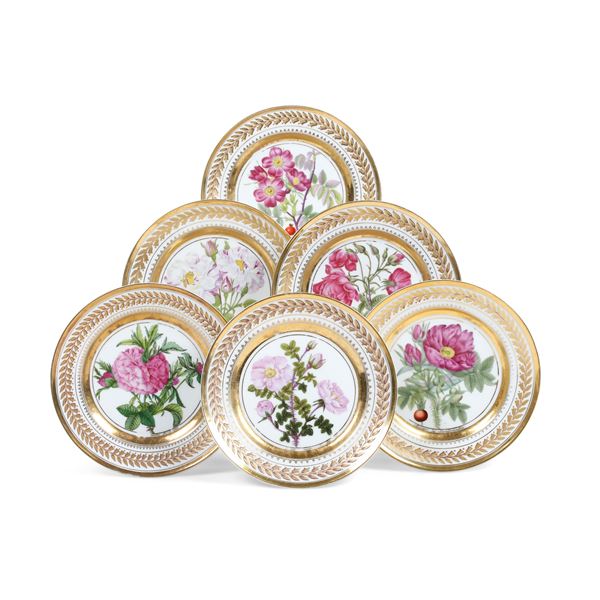
Lot N. 222
Sei piatti Russia, Archangelski, Manifattura del principe Nikolaj Jusupov (1750-1831), 1825 circa
Porcellana. Marca: "Archangelski 1825" in oro. Diametro cm 23,3. Conservazione: ottima; insignificanti usure all'oro I piatti sono decorati in policromia con eccezionale [..]
Estimate
€ 2.000,00 / 4.000,00
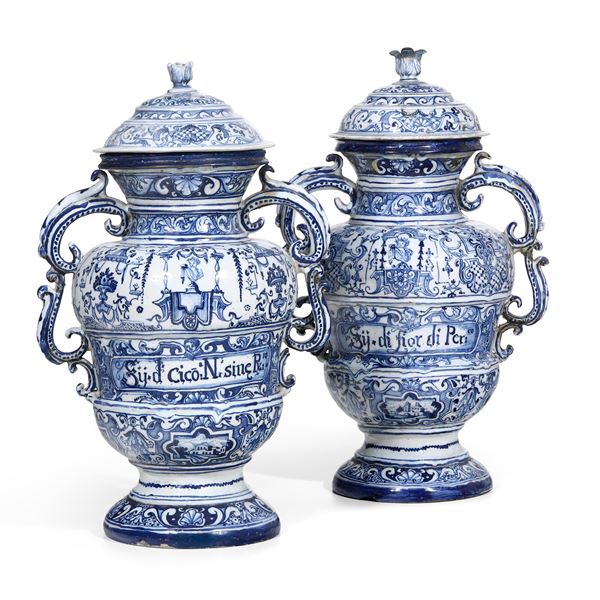
Lot N. 102
Coppia di grandi vasi Savona, Fabbrica Chiodo e Peirano, 1736
Marca: lanterna in blu. Dimensioni: altezza cm 63 circa. Conservazione: un coperchio ricomposto in restauro; l’altro con piccolo restauro al bordo e alla presa; [..]
Estimate
€ 4.000,00 / 8.000,00
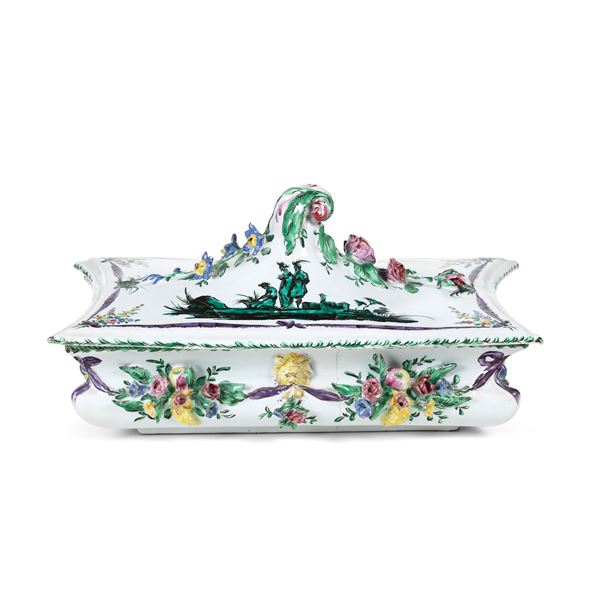
Lot N. 131
Legumiera Faenza, Filippo Comerio presso la Fabbrica Ferniani, 1778- 1781
Maiolica. Marca: assente. Dimensioni: altezza cm 19,5; cm 39x23. Conservazione: felatura dal bordo superiore che scende verso il centro del contenitore; piccole [..]
Estimate
€ 3.000,00 / 5.000,00
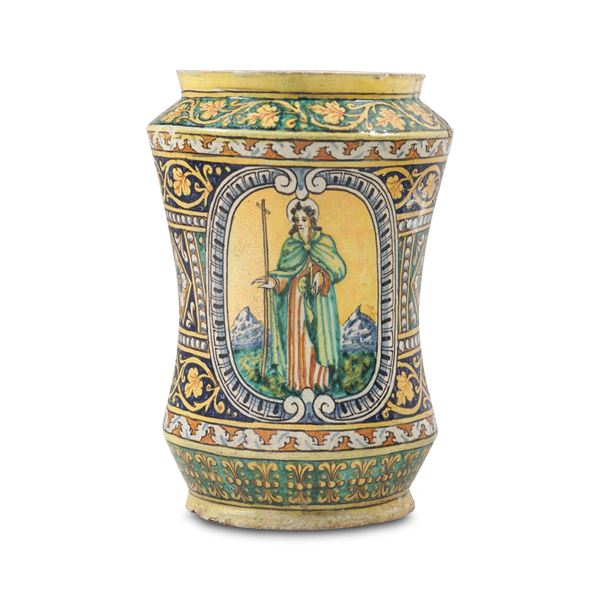
Lot N. 66
Grande albarello Palermo, fabbrica dei Lazzaro, inizio del XVII secolo
Maiolica. Altezza cm 35,8; diametro base 18,7. Conservazione: piccole seccature al bordo inferiore Albarello di notevoli proporzioni, con corpo “a rocchetto”, [..]
Estimate
€ 800,00 / 1.600,00
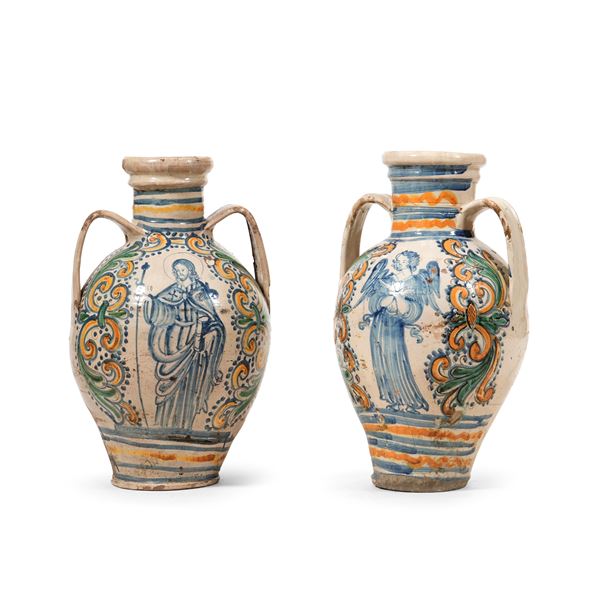
Lot N. 86
Coppia di anfore Caltagirone, 1700 e 1736
Maiolica. Dimensioni: altezza cm 69; diametro base cm 19. Conservazione: un vaso in ottime condizioni con qualche piccola sbeccatura; l'altro presenta felature, [..]
Estimate
€ 500,00 / 1.000,00
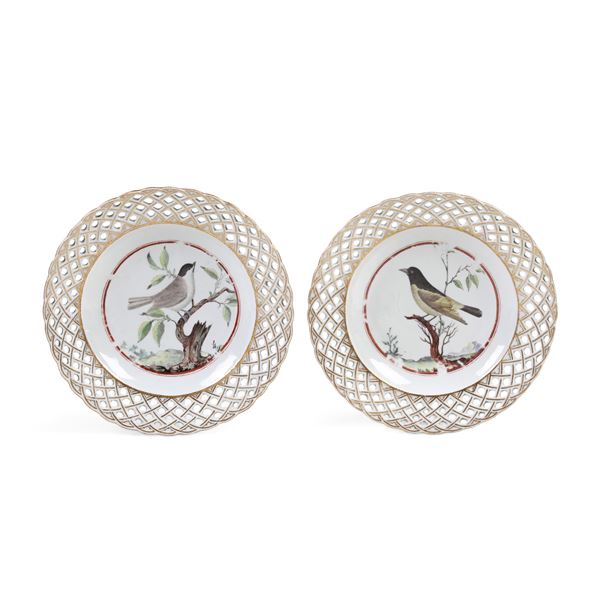
Lot N. 215
Coppia di piatti Russia, San Pietroburgo, Manifattura Imperiale, 1750-1760 circa
Porcellana. Marca: aquila bicipite in nero. Diametro cm 22,5. Conservazione: piccole usure alla policromia e insignificanti all'oro Questi piatti da dessert dalla [..]
Estimate
€ 2.400,00 / 3.200,00
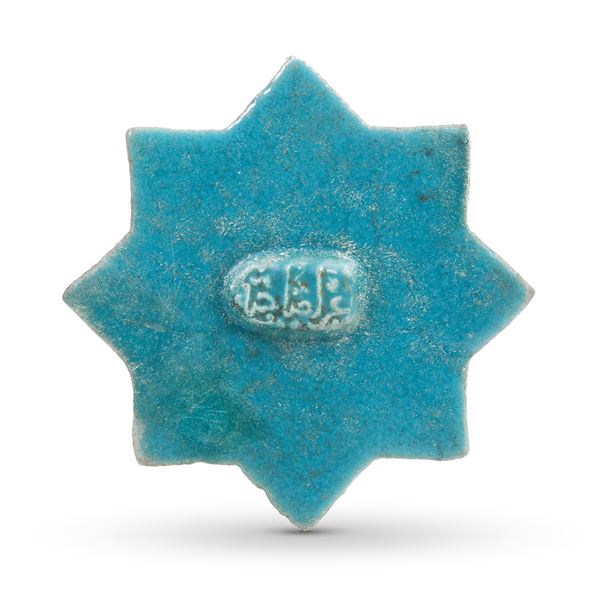
Lot N. 13
Mattonella calligrafica Persia (Iran), probabilmente Kashan, XII-XIV secolo
Pasta artificiale ("fritta"). Dimensioni: cm 12,3 x 12,2. Conservazione: rotta in due frammenti con piccola integrazione Rara mattonella architettonica dalla caratteristica [..]
Estimate
€ 350,00 / 450,00
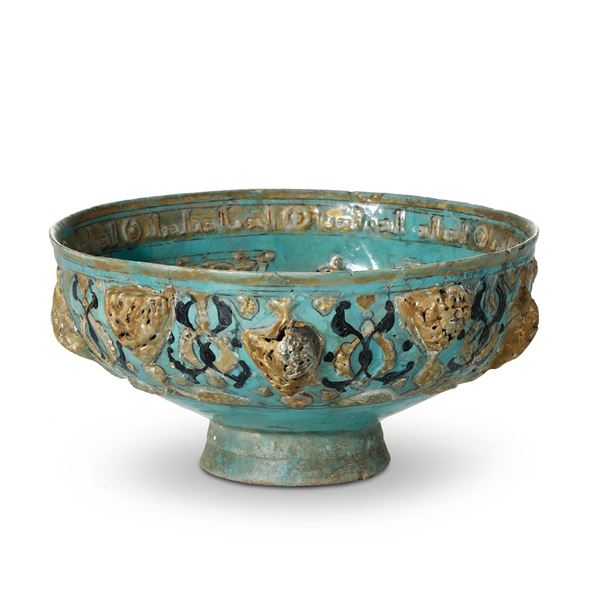
Lot N. 7
Rara coppa Persia, inizio del XIII secolo
Pasta artificiale ("fritta"). Dimensioni: altezza cm 10,5 circa; diametro cm 21 circa. Conservazione: rotta in più frammenti e restaurata. Provenienza: Galleria [..]
Estimate
€ 6.000,00 / 12.000,00
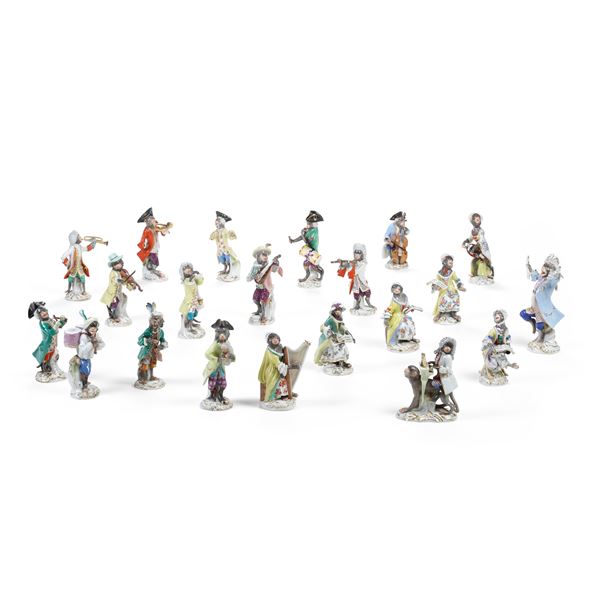
Lot N. 256
Figurine di scimmiette musicanti Meissen, XX secolo Modelli di J.J.Kaendler
Porcellana. Marca: spade in blu. Altezza massima cm 17. Conservazione: tredici figurine in ottimo stato, le altre con piccole mancanze o piccole rotture da incollare [..]
Estimate
€ 6.000,00 / 10.000,00
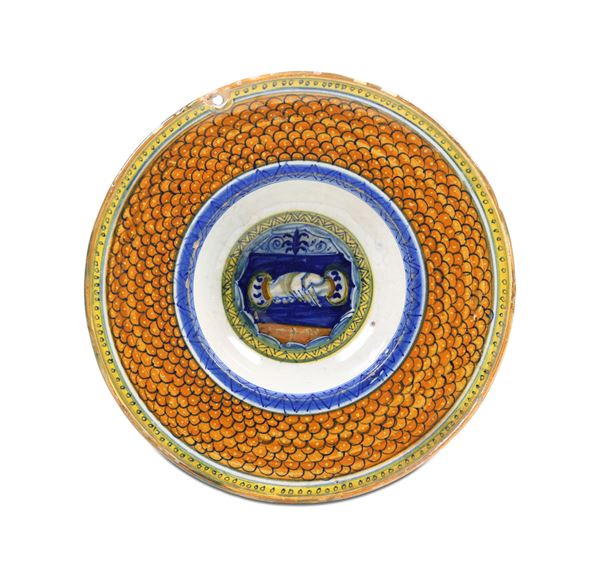
Lot N. 51
Piatto Faenza, fine XV- inizio XVI secolo
Maiolica. Dimensioni: altezza cm 4,3; diametro cm 20,9. Conservazione: ottima; piccole sbeccature al bordo; insignificante felatura all'altezza del foro sulla tesa [..]
Estimate
€ 1.200,00 / 1.800,00
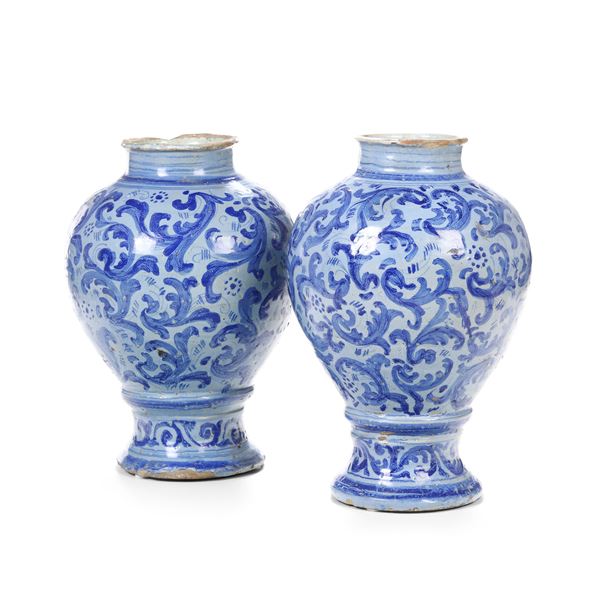
Lot N. 87
Coppia di vasi Caltagirone, XVIII secolo
Maiolica. Altezza cm 36; cm 35,5. Conservazione: un vaso in ottimo stato con piccole, l'altro con sbeccature più accentuate ai bordi Siamo in presenza di una coppia [..]
Estimate
€ 3.700,00 / 4.200,00
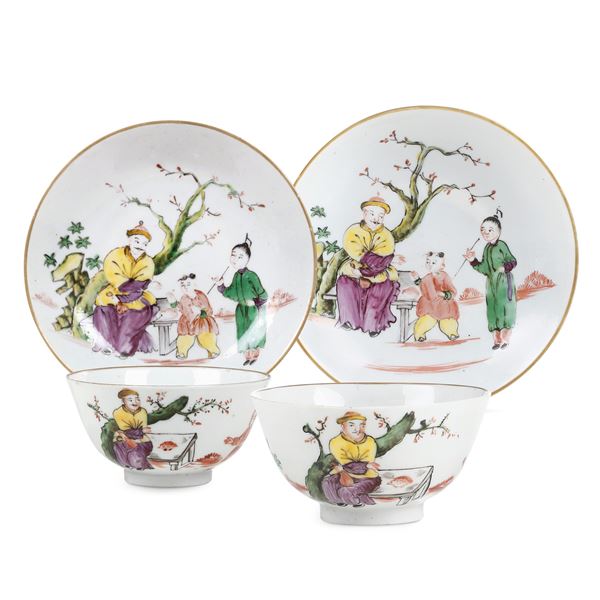
Lot N. 189
Coppia di tazze con piattino Venezia, Manifattura Cozzi, 1770 circa
Porcellana. Marca: ancora in rosso. Dimensioni: altezza tazza cm 4,1; diametro piattino cm 11,9. Conservazione: ottima La tazza e il piattino sono decorati con [..]
Estimate
€ 3.000,00 / 4.000,00
Experts for the auction